Harnessing the phyllosphere microbiota of wild foxtail millet for designing beneficial cross-kingdom synthetic communities
Xiaoyu Zai, Feng Zhu, Meicheng Zhao, Xianmin Diao, Fusuo Zhang, Francisco Dini-Andreote, Chrats Melkonian, Marnix H Medema, Jos M Raaijmakers, Viviane Cordovez, Chunxu Song

TL;DR
This study explores how the leaf microbiome of wild foxtail millet can be used to create synthetic microbial communities that protect domesticated crops from fungal infections.
Contribution
The paper introduces a novel framework for designing cross-kingdom synthetic microbial communities using wild crop microbiota to mitigate biotic stress in domesticated plants.
Findings
Wild foxtail millet's phyllosphere microbiota varies with soil, climate, and plant genetics.
Core bacterial and yeast genera correlate with pathogenic fungi like Alternaria.
Synthetic communities designed from these microbes protect domesticated millet from leaf infections.
Abstract
Understanding the interplay between mechanisms in plant microbiome assembly and functioning of wild ancestors has led to the proposal of a novel strategy to enhance resilience to the (a)biotic stresses of domesticated crops. The challenge is determining how to harness the diverse microbiota of wild crop ancestors in their natural habitats in order to design effective synthetic microbial communities (SynComs) that reconstitute specific microbiome-associated plant phenotypes. In this study, we profiled the phyllosphere microbiota of wild green foxtail collected from seven geographically diverse natural ecosystems and showed that variations in soil parameters and climatic conditions as well as plant genetic distance significantly correlated with bacterial and fungal community compositions. Environmental selection and dispersal limitation differently governed the assembly of bacterial and…
Genes, proteins, chemicals, diseases, species, mutations and cell lines named across the full text — each resolved to its canonical identifier and authoritative record.
Click any figure to enlarge with its caption.
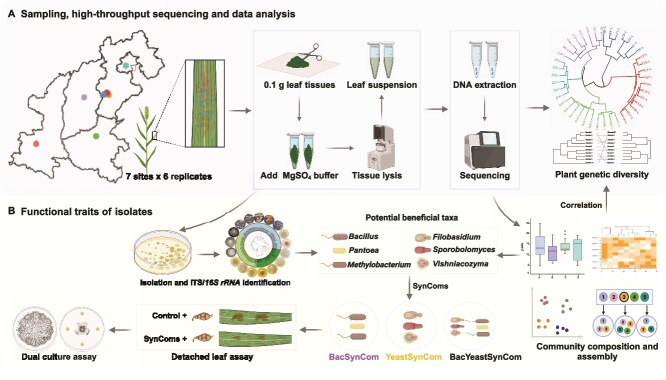 Figure 1
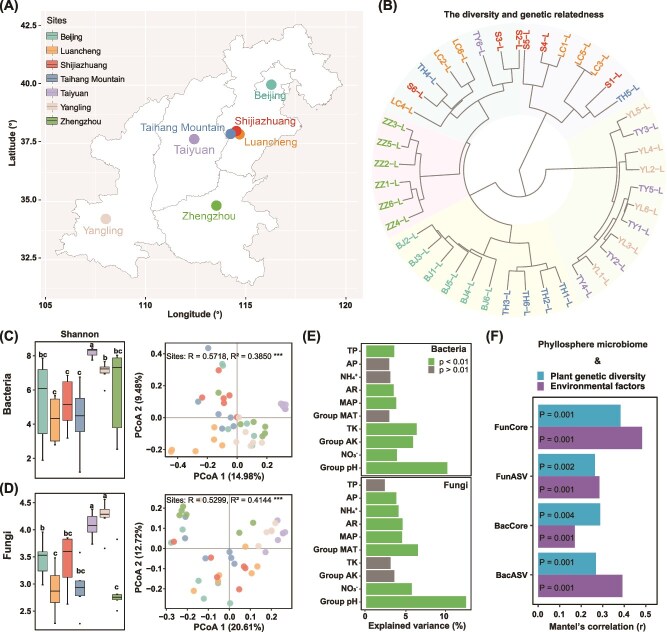 Figure 2
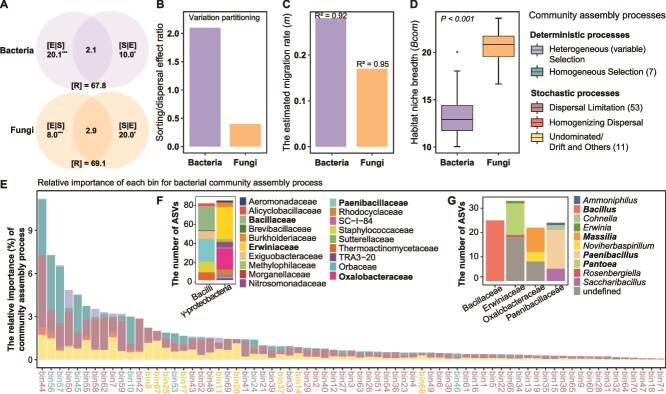 Figure 3
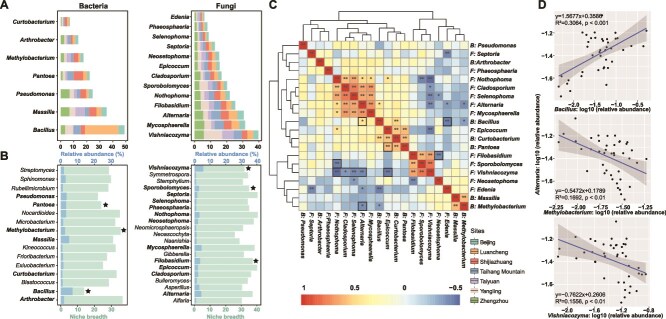 Figure 4
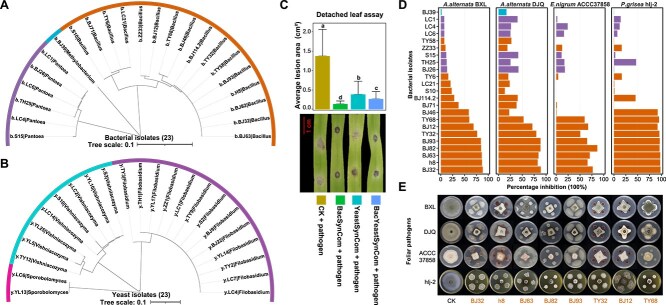 Figure 5
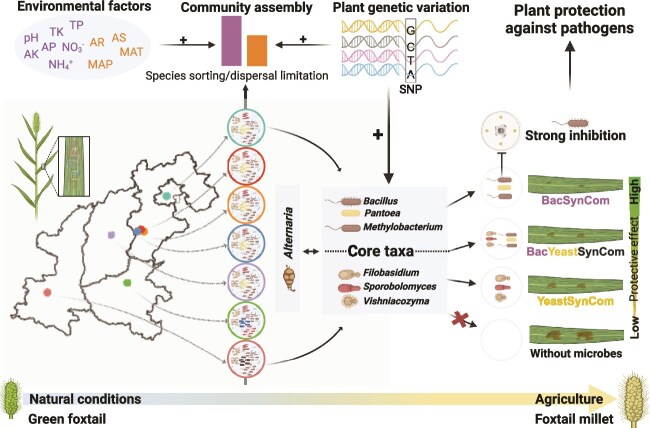 Figure 6
Peer Reviews
No public reviews on file for this paper yet. If you reviewed it on a platform where reviews are public (OpenReview, ICLR, NeurIPS, ICML), you can paste yours below so the community can read it here.
Videos
No videos yet. Explain this paper in a talk, walkthrough, or lecture? Add one.
Taxonomy
TopicsSeed and Plant Biochemistry · Plant Parasitism and Resistance · Microbial Community Ecology and Physiology