Adenosquamous carcinoma of the gallbladder: case report of a rare entity
Sara El Ghaffouli, Mouna Khmou, Manal El Beyeg, Soumya El Graini, Rachida Latib, Youssef Mahdi, Basma El-Khannoussi

TL;DR
This paper reports a rare case of adenosquamous carcinoma of the gallbladder in a 56-year-old woman who underwent extensive surgery.
Contribution
The novelty lies in presenting a detailed clinical case of a rare gallbladder cancer subtype with aggressive behavior.
Findings
Adenosquamous carcinoma of the gallbladder is rare and more aggressive than adenocarcinoma.
Radical cholecystectomy with liver resection was performed for a moderately differentiated ASC case.
Complete surgical resection remains the primary treatment approach for this aggressive subtype.
Abstract
Adenocarcinoma constitutes 90%–95% of all malignant gallbladder (GB) neoplasms, making it the predominant subtype. In contrast, adenosquamous carcinoma (ASC) is significantly less common and comprises both glandular and squamous components. This subtype is more aggressive and has a worse prognosis than GB adenocarcinoma. Currently, complete surgical resection remains the cornerstone of treatment. In this paper, we present the case of a 56-year-old female diagnosed with moderately differentiated ASC of the GB, who underwent radical cholecystectomy, including the resection of liver segments IVb and V.
Genes, proteins, chemicals, diseases, species, mutations and cell lines named across the full text — each resolved to its canonical identifier and authoritative record.
Click any figure to enlarge with its caption.
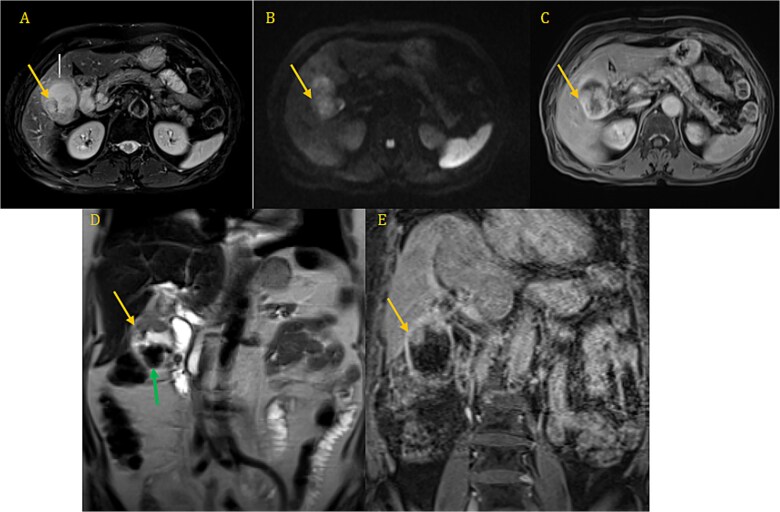 Figure 1
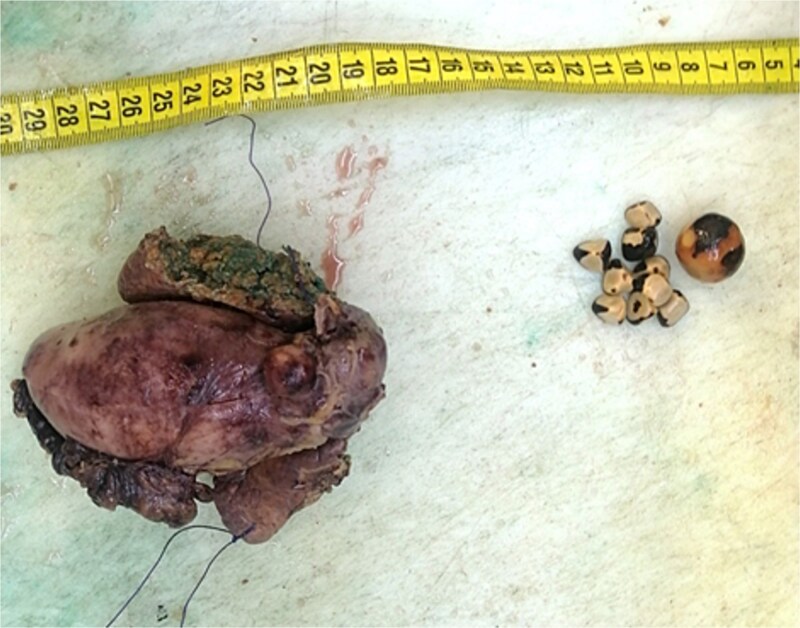 Figure 2
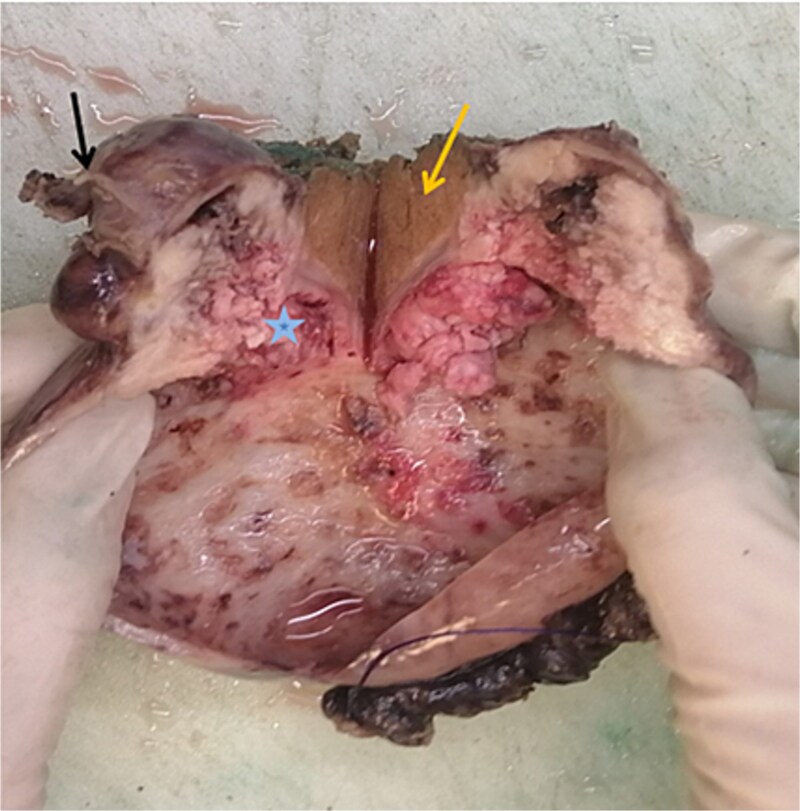 Figure 3
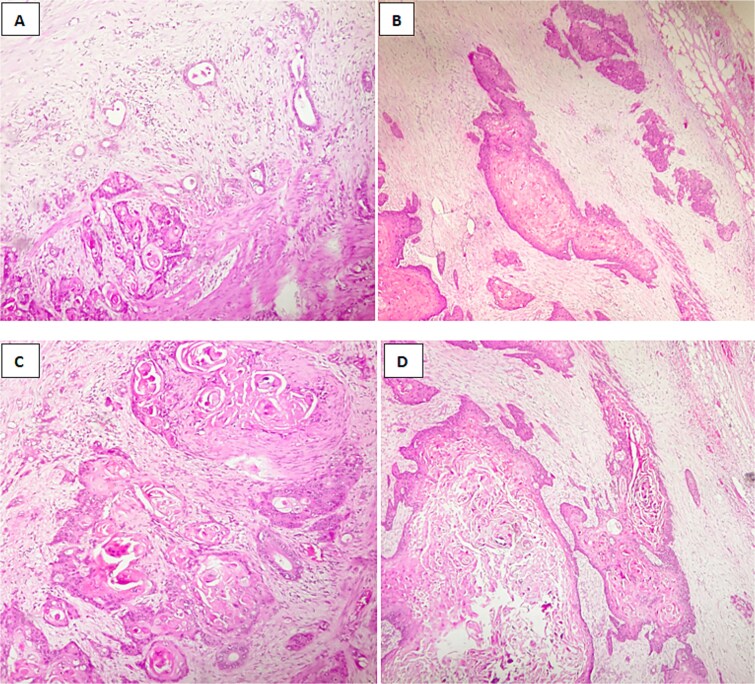 Figure 4
Peer Reviews
No public reviews on file for this paper yet. If you reviewed it on a platform where reviews are public (OpenReview, ICLR, NeurIPS, ICML), you can paste yours below so the community can read it here.
Videos
No videos yet. Explain this paper in a talk, walkthrough, or lecture? Add one.
Taxonomy
TopicsCholangiocarcinoma and Gallbladder Cancer Studies · Peptidase Inhibition and Analysis · Plant Disease Resistance and Genetics