Association of weight-adjusted waist index and Albuminuria in children and adolescents: A national population-based study
Jiawen Huo, Jianfeng Liu, Jiying Chen, Qiaolin Li, lanling Shen, Juanjuan Liang, Jie Jiang

TL;DR
This study explores how a new measure of body fat, called the weight-adjusted waist index (WWI), relates to early kidney damage in children and adolescents.
Contribution
The study introduces WWI as a novel anthropometric indicator and shows its potential for assessing kidney risk in youth.
Findings
Higher WWI was significantly associated with lower odds of albuminuria in adolescents.
WWI showed better discriminatory ability for albuminuria than BMI or waist circumference.
The association between WWI and albuminuria varied by age group and was U-shaped in the youngest children.
Abstract
Albuminuria is a recognized marker of early kidney damage and cardiometabolic risk in pediatric populations. While central obesity is known to contribute to renal dysfunction, the relevance of the weight-adjusted waist index (WWI), a novel indicator of central adiposity, has not been fully explored in children and adolescents. This study included 4,000 participants aged 3–19 years from the National Health and Nutrition Examination Survey (NHANES) 2017–2020. WWI was calculated as waist circumference divided by the square root of body weight. Albuminuria was defined as an albumin-creatinine ratio (ACR) > 30 mg/g. Multivariable logistic regression, subgroup analyses, threshold effect modeling, and receiver operating characteristic (ROC) curves were used to evaluate the association between WWI and albuminuria. Higher WWI was significantly associated with lower odds of albuminuria in the…
Genes, proteins, chemicals, diseases, species, mutations and cell lines named across the full text — each resolved to its canonical identifier and authoritative record.
Click any figure to enlarge with its caption.
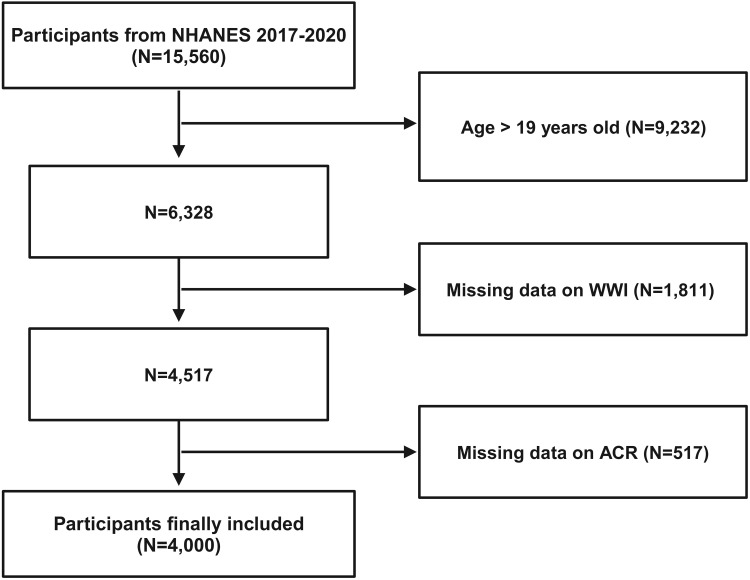 Figure 1
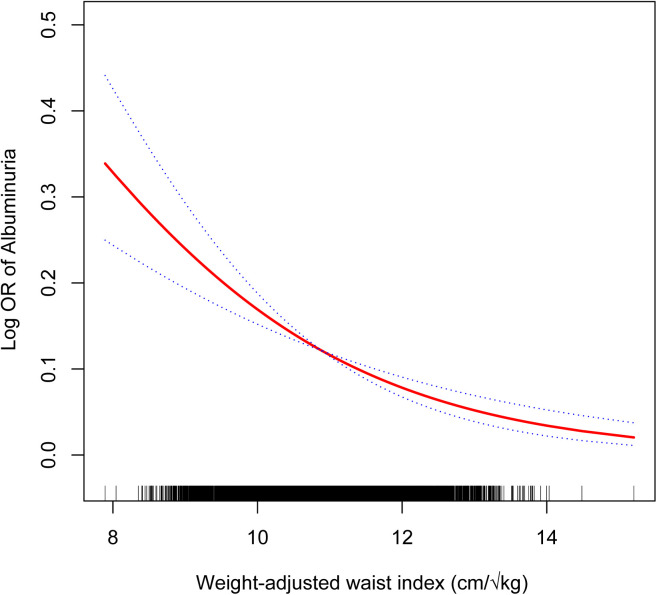 Figure 2
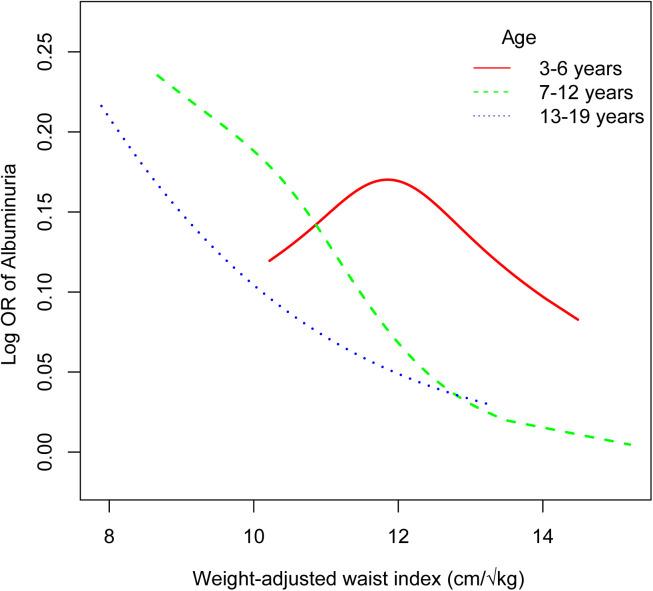 Figure 3
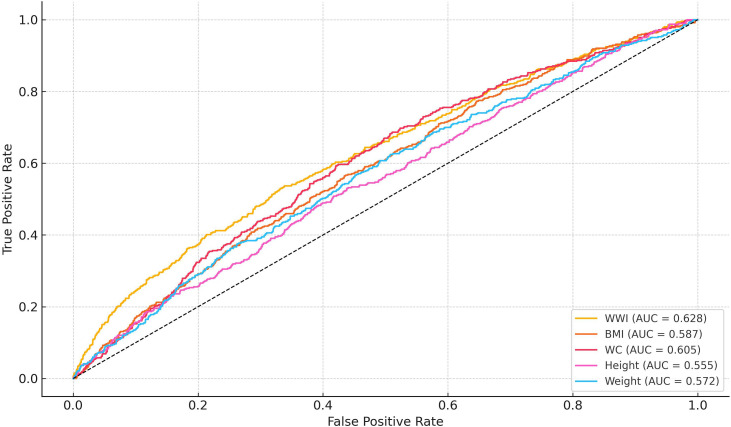 Figure 4
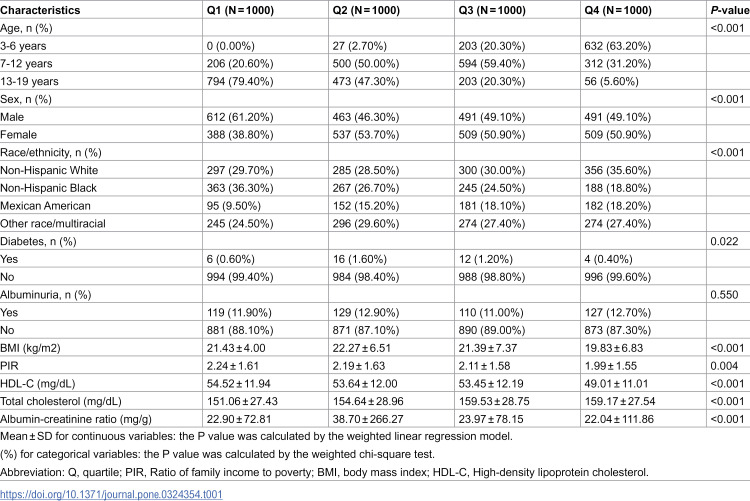 Figure 5
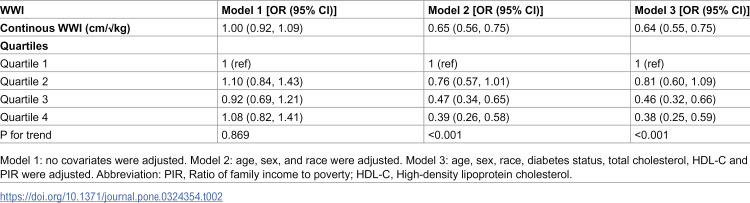 Figure 6
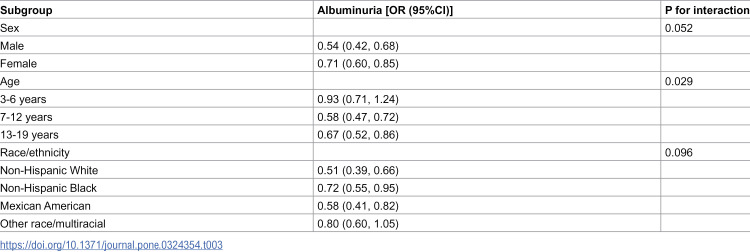 Figure 7
 Figure 8
Peer Reviews
No public reviews on file for this paper yet. If you reviewed it on a platform where reviews are public (OpenReview, ICLR, NeurIPS, ICML), you can paste yours below so the community can read it here.
Videos
No videos yet. Explain this paper in a talk, walkthrough, or lecture? Add one.
Taxonomy
TopicsBirth, Development, and Health · Obesity, Physical Activity, Diet · Body Composition Measurement Techniques