Genetic diversity and relationships of broomcorn millet based on trnT-trnL and GBSSI sequences
Xiaohan Yu, Funa Tan, Xiaoxing Wang, Jiandong Ren, Shaoxiong Liu, Yue Wang, Xuxia Xin, Ruonan Wang, Yingxing Zhang, Zhaoyan Chen, Jishan Xiang, Minxuan Liu

TL;DR
This study explores the genetic diversity and spread of broomcorn millet using DNA sequences to trace its origin and movement across regions.
Contribution
The study provides new insights into the domestication and dispersal routes of broomcorn millet using chloroplast and nuclear DNA sequences.
Findings
Broomcorn millet likely originated in a core area in northern China and spread westward and eastward.
Xinjiang played a crucial role in the westward spread of broomcorn millet into Eurasia.
GBSSI sequences showed higher diversity compared to the highly conserved trnT-trnL sequences.
Abstract
Broomcorn millet (Panicum miliaceum L.) is the oldest crop originating in China. The routes of transmission have been the focus of broomcorn millet research. This study evaluated genetic diversity and relationship of 430 broomcorn millet accessions (369 domestic accessions from nine regions and 61 foreign accessions from twenty-four counties) based on the chloroplast DNA trnT-trnL spacer sequence and nuclear DNA GBSSI sequence to explore the domestication of broomcorn millet. The trnT-trnL sequence was highly conserved, while the diversity of GBSSI sequence was significantly higher. Results of this study suggest that broomcorn millet may have originated from the core area (including Shanxi, Shaanxi, Inner Mongolia, Ningxia and Gansu) and then spread westward to Xinjiang and into Eurasia, or eastward from Shanxi to Hebei, Inner Mongolia and northeast China. Xinjiang is crucial for…
Genes, proteins, chemicals, diseases, species, mutations and cell lines named across the full text — each resolved to its canonical identifier and authoritative record.
Click any figure to enlarge with its caption.
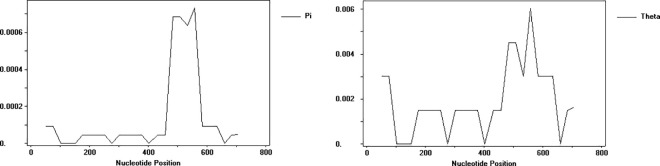 Figure 1
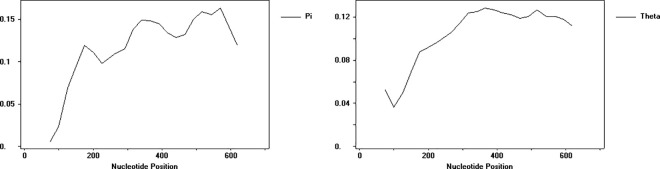 Figure 2
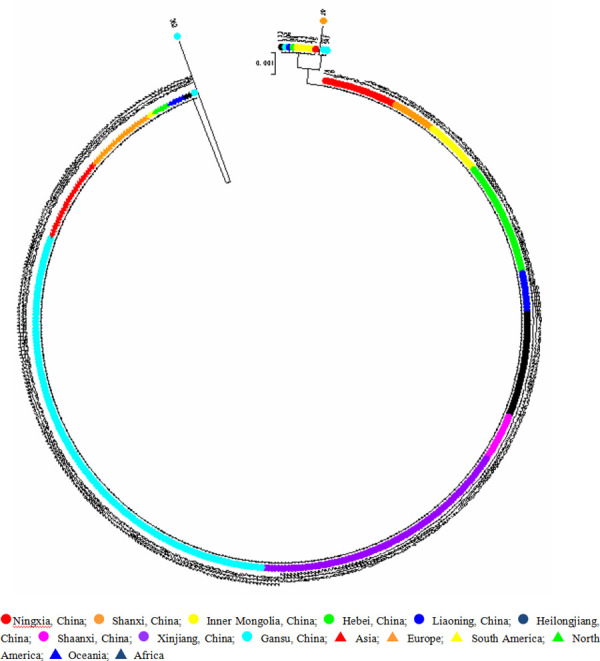 Figure 3
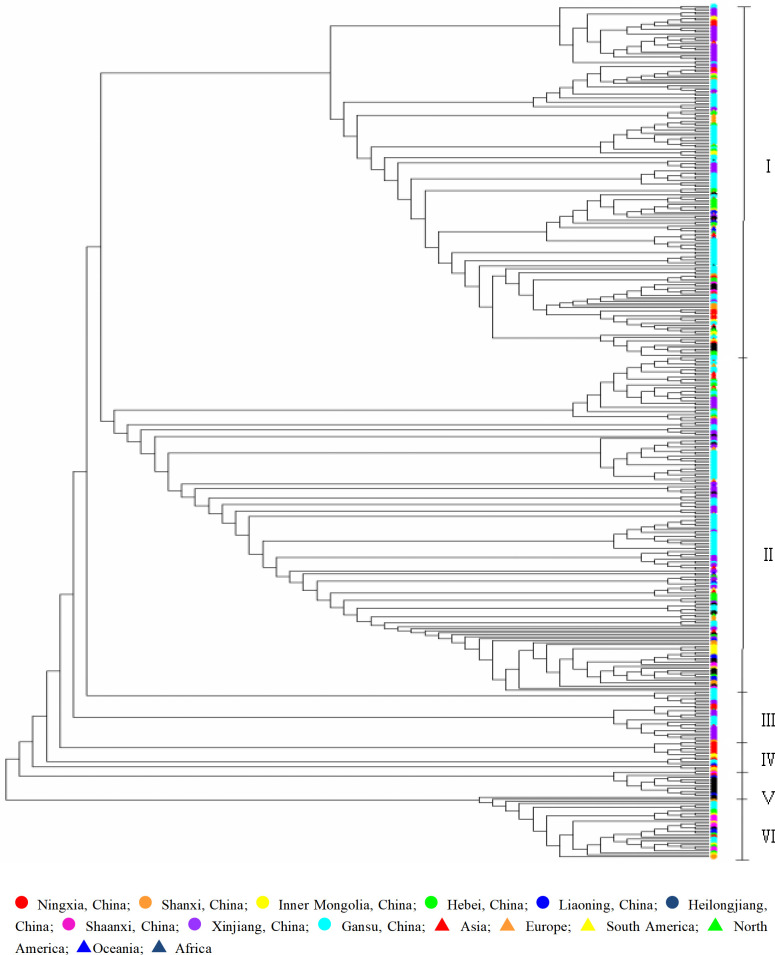 Figure 4
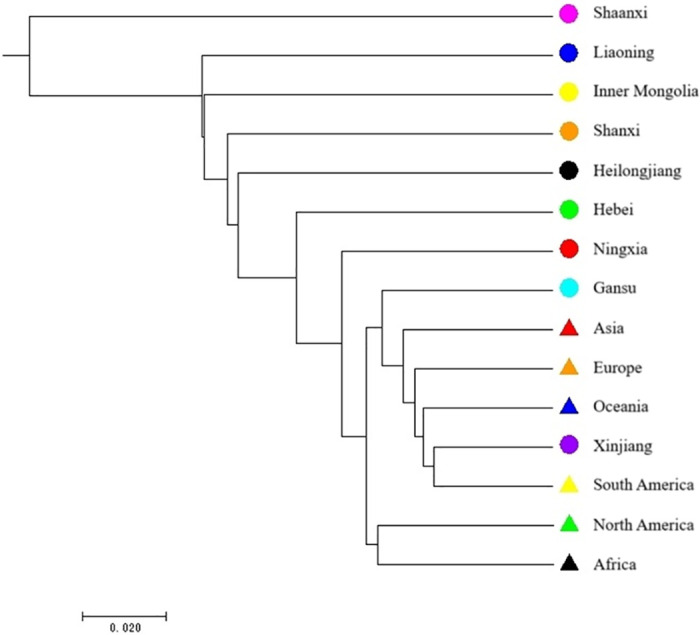 Figure 5
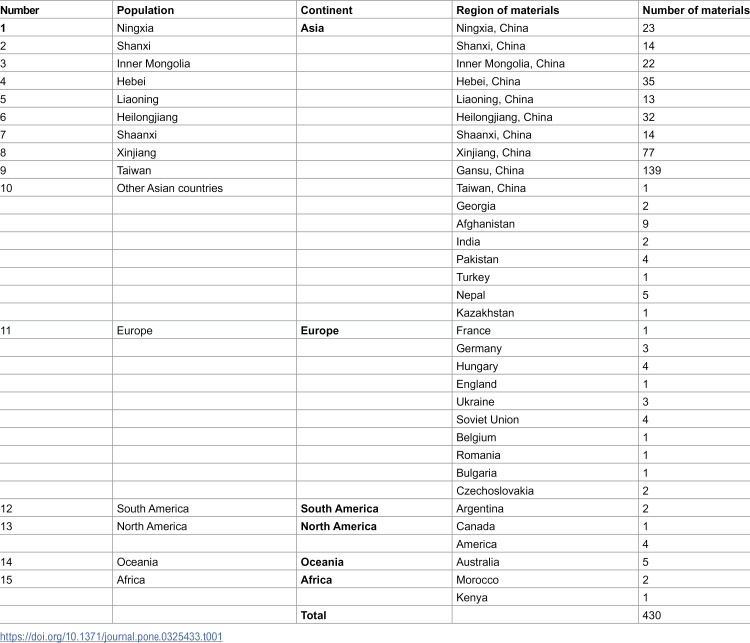 Figure 6
 Figure 7
 Figure 8
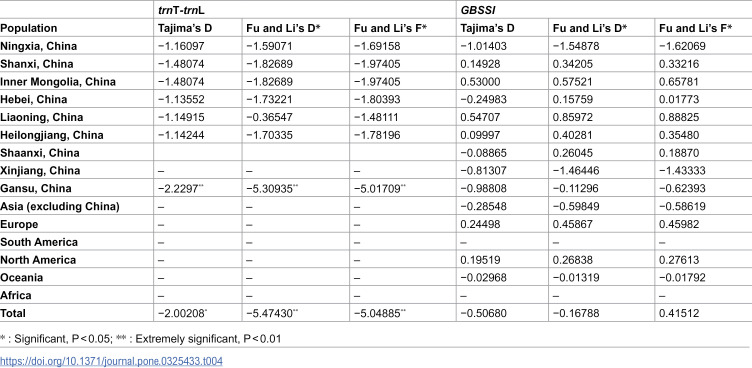 Figure 9
 Figure 10
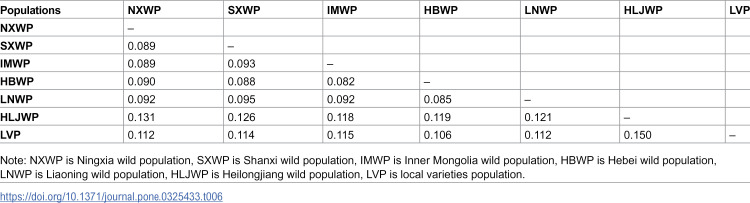 Figure 11
Peer Reviews
No public reviews on file for this paper yet. If you reviewed it on a platform where reviews are public (OpenReview, ICLR, NeurIPS, ICML), you can paste yours below so the community can read it here.
Videos
No videos yet. Explain this paper in a talk, walkthrough, or lecture? Add one.
Taxonomy
TopicsPlant Taxonomy and Phylogenetics · Genetic diversity and population structure · Plant Pathogens and Fungal Diseases