Nested PCR amplification of the mitochondrial hypervariable region for non-invasive eDNA detection of Cryptobranchus alleganiensis
Patrick Kurtz, Jorge Santo Domingo, Robert Alexander Pyron, David Wendell

TL;DR
This paper introduces a new non-invasive eDNA method to detect the endangered Eastern hellbender salamander in aquatic ecosystems.
Contribution
A novel nested PCR strategy with significantly improved detection sensitivity for C. alleganiensis eDNA.
Findings
Nested PCR targeting the mitochondrial control region improves detection sensitivity by an order of magnitude.
The method is specific to Cryptobranchus salamanders and works across multiple PCR techniques.
DNA sequencing confirms the specificity of the primers against other amphibian DNA templates.
Abstract
Environmental DNA (eDNA) has proven an invaluable tool in detecting elusive, endangered, or otherwise hard-to-identify species in aquatic ecosystems. The Eastern hellbender salamander (Cryptobranchus alleganiensis) is a fully aquatic amphibian with an increasingly threatened population due to its reliance on exceptional surface water with high levels of dissolved oxygen and low sediment. C. alleganiensis habitat and animal loss has been documented through conservation work, resulting in the U.S. Fish and Wildlife Service recently recommending C. alleganiensis as endangered under the Endangered Species Act. Recent natural disasters in population strongholds have emphasized the need for continued conservation efforts, including reliable, non-invasive methods for monitoring C. alleganiensis populations. Using eDNA extractions from environmental waters, we have developed a nested polymerase…
Genes, proteins, chemicals, diseases, species, mutations and cell lines named across the full text — each resolved to its canonical identifier and authoritative record.
Click any figure to enlarge with its caption.
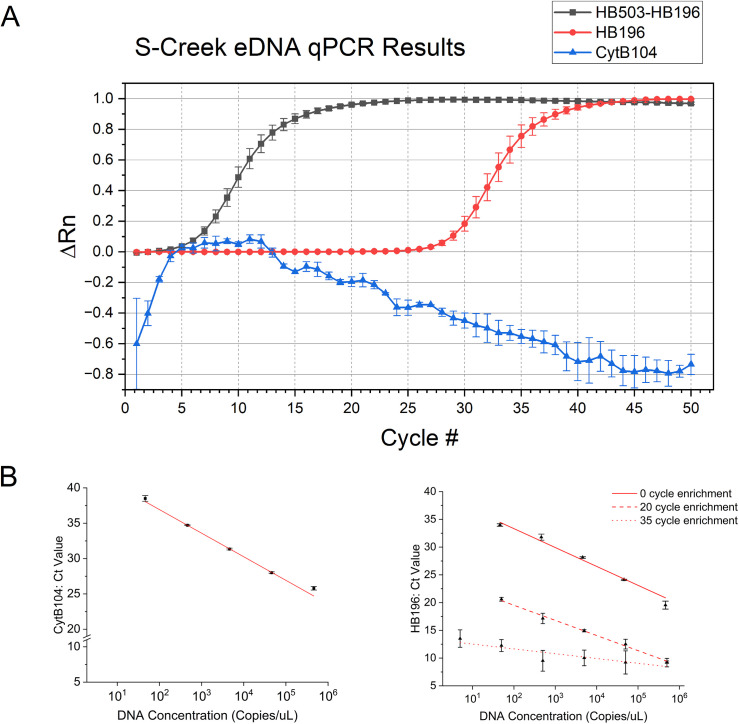 Figure 1
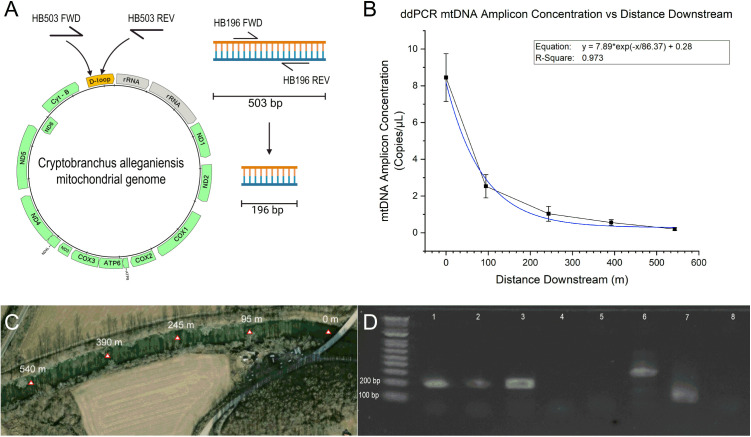 Figure 2
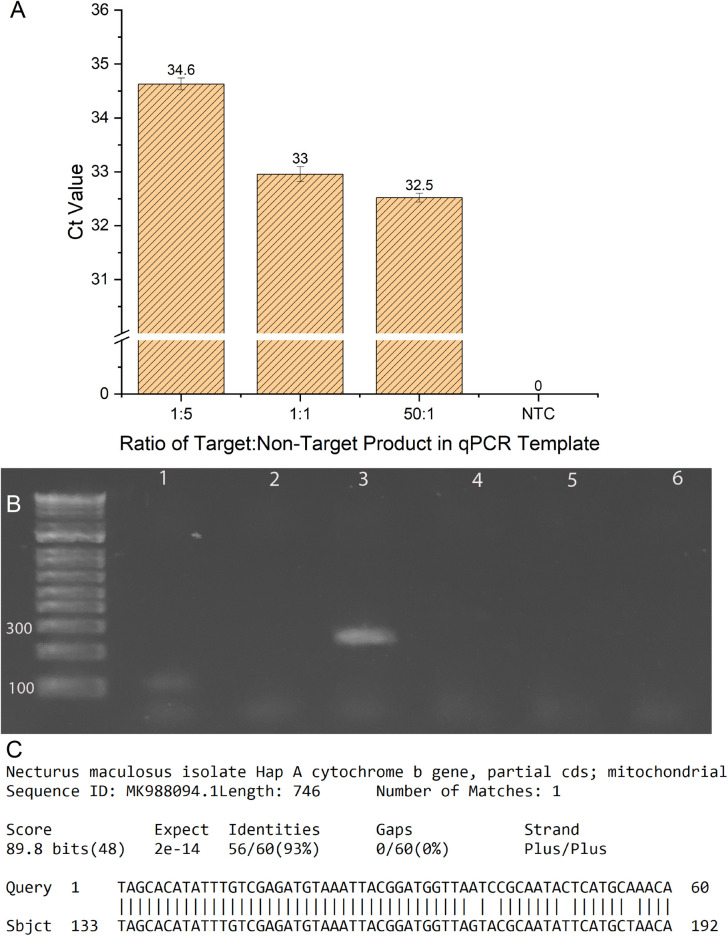 Figure 3
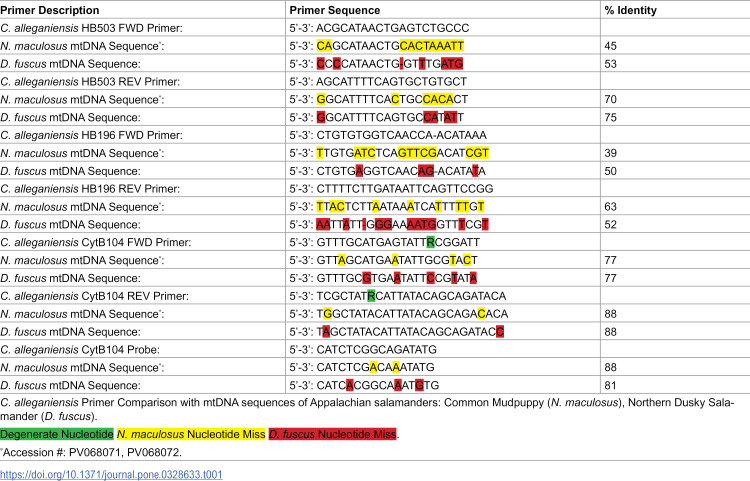 Figure 4
Peer Reviews
No public reviews on file for this paper yet. If you reviewed it on a platform where reviews are public (OpenReview, ICLR, NeurIPS, ICML), you can paste yours below so the community can read it here.
Videos
No videos yet. Explain this paper in a talk, walkthrough, or lecture? Add one.
Taxonomy
TopicsEnvironmental DNA in Biodiversity Studies · Identification and Quantification in Food · Genomics and Phylogenetic Studies