An ICEEMDAN and SAX-based method for determining English reading comprehension status using functional near-infrared spectroscopy signals
Ural Akincioglu, Onder Aydemir, Ahmet Cil, Muhammed Baydere

TL;DR
This paper introduces a new method using brain signals to assess English reading comprehension quickly and objectively.
Contribution
The novel contribution is combining ICEEMDAN and SAX for analyzing fNIRS signals to determine reading comprehension status.
Findings
The proposed method achieved a classification accuracy of 89.02% using a double-validation labeling strategy.
Using k-NN classifier, the method showed effectiveness in determining reading comprehension status from fNIRS data.
The ICEEMDAN and SAX-based approach outperformed single-labeling strategies in accuracy.
Abstract
Accurate, rapid, and objective reading comprehension assessments, which are critical in both daily and educational lives, can be effectively conducted using brain signals. In this study, we proposed an improved complementary ensemble empirical mode decomposition with adaptive noise (ICEEMDAN) and symbolic aggregate approximation (SAX)-based method for determining the whole text reading comprehension status in English using functional near-infrared spectroscopy (fNIRS) signals. A total of 450 trials were recorded from 15 healthy participants as they read English texts. To facilitate labeling, participants were asked to rate their comprehension of the text using self-assessment scores, followed by answering a multiple-choice question with four options that comprehensively covered the whole text’s content. The proposed method consists of pre-processing, feature extraction, and…
Genes, proteins, chemicals, diseases, species, mutations and cell lines named across the full text — each resolved to its canonical identifier and authoritative record.
Click any figure to enlarge with its caption.
 Figure 1
 Figure 2
 Figure 3
 Figure 4
 Figure 5
 Figure 6
 Figure 7
 Figure 8
 Figure 9
 Figure 10
 Figure 11
 Figure 12
 Figure 13
 Figure 14
 Figure 15
 Figure 16
 Figure 17
 Figure 18
 Figure 19
 Figure 20
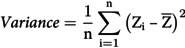 Figure 21
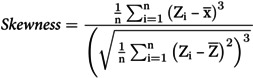 Figure 22
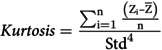 Figure 23
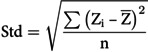 Figure 24
 Figure 25
 Figure 26
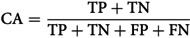 Figure 27
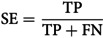 Figure 28
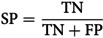 Figure 29
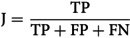 Figure 30
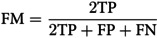 Figure 31
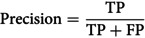 Figure 32
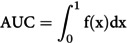 Figure 33
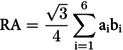 Figure 34
 Figure 35
 Figure 36
 Figure 37
 Figure 38
 Figure 39
 Figure 40
 Figure 41
 Figure 42
 Figure 43
 Figure 44
 Figure 45
 Figure 46
 Figure 47
 Figure 48
 Figure 49
 Figure 50
Peer Reviews
No public reviews on file for this paper yet. If you reviewed it on a platform where reviews are public (OpenReview, ICLR, NeurIPS, ICML), you can paste yours below so the community can read it here.
Videos
No videos yet. Explain this paper in a talk, walkthrough, or lecture? Add one.
Taxonomy
TopicsEEG and Brain-Computer Interfaces · Heart Rate Variability and Autonomic Control · Advanced Chemical Sensor Technologies