Optimal Reference Gene Selection and Potential Target Gene Identification During Xanthomonas phaseoli pv. dieffenbachiae–Anthurium andreanum Infection
Shu-Cheng Chuang, Shefali Dobhal, Teresita D. Amore, Anne M. Alvarez, Mohammad Arif

TL;DR
This study identifies stable reference genes and potential target genes involved in the interaction between a bacterial pathogen and Anthurium plants.
Contribution
The study provides validated reference genes and identifies gumD as a potential virulence gene in the Xpd–Anthurium pathosystem.
Findings
rpoD and gyrB were the most stable reference genes during Xpd–Anthurium interactions.
gumD was highly upregulated after 1 hour of interaction, suggesting a role in virulence.
atpD and thyA showed less stable expression profiles across time points.
Abstract
Xanthomonas phaseoli pv. dieffenbachiae (Xpd), the causal agent of bacterial blight in Anthurium within the Araceae family, is listed as an EPPO A2 quarantine organism. Although the whole genome of Xpd has been sequenced, the molecular mechanisms underlying anthurium bacterial blight (ABB) remain unknown. Selecting an optimal reference gene is crucial for obtaining accurate and reliable gene expression profiles during the initial interactions between Xpd and Anthurium. The stability of four reference genes was evaluated by applying three statistical methods—BestKeeper, geNorm, and delta Ct (ΔCt)—using reverse-transcription quantitative PCR (RT-qPCR) data. The rpoD and gyrB genes exhibited the most consistent gene expression profiles, whereas atpD and thyA were less stable at four time points (0, 0.5, 1, and 2 h) during the interactions between Xpd and susceptible A. andreanum cultivar…
Genes, proteins, chemicals, diseases, species, mutations and cell lines named across the full text — each resolved to its canonical identifier and authoritative record.
Click any figure to enlarge with its caption.
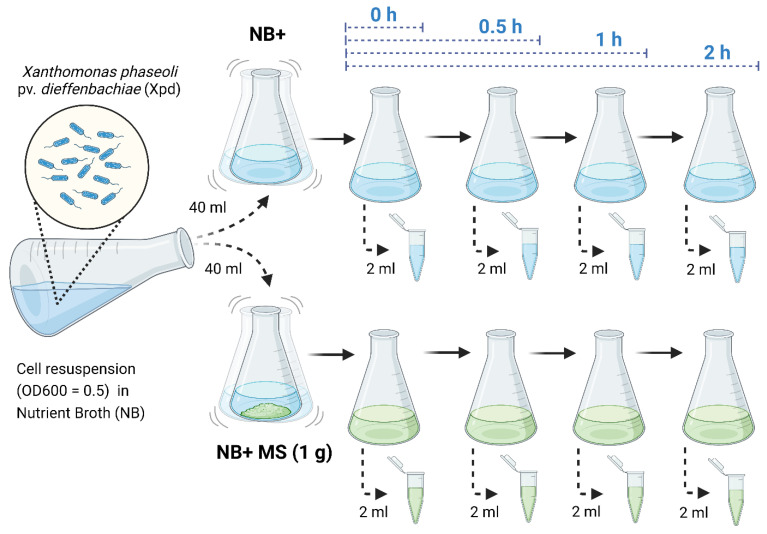 Figure 1
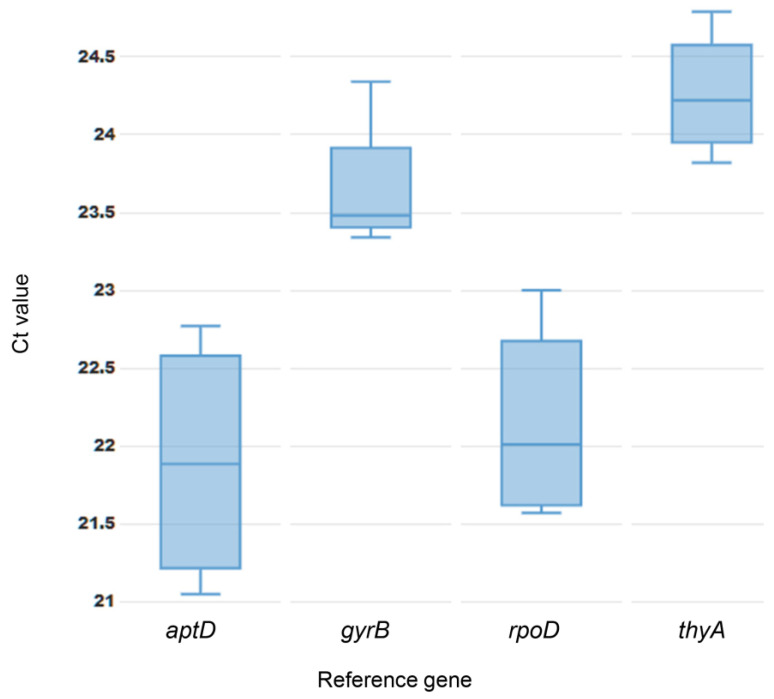 Figure 2
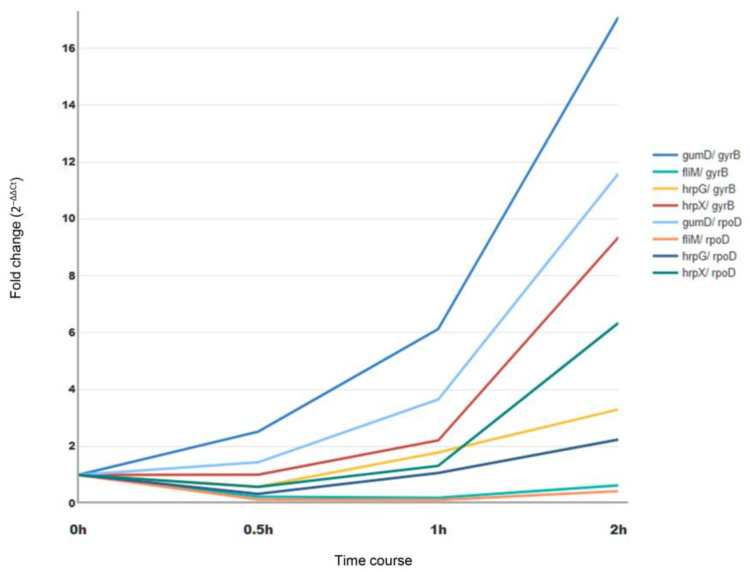 Figure 3
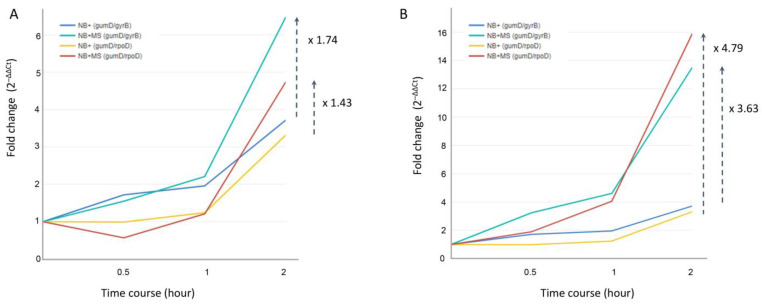 Figure 4
Peer Reviews
No public reviews on file for this paper yet. If you reviewed it on a platform where reviews are public (OpenReview, ICLR, NeurIPS, ICML), you can paste yours below so the community can read it here.
Videos
No videos yet. Explain this paper in a talk, walkthrough, or lecture? Add one.
Taxonomy
TopicsPlant Pathogenic Bacteria Studies · Genomics and Phylogenetic Studies · Aquaculture disease management and microbiota