Prevalence of Urinary Incontinence and Overactive Bladder Among Female University Students in Kazakhstan
Yerzhan Sharapatov, Aluadin Nurberdiev, Nurbol Keulimzhayev, Aigul Botabayeva, Medet Toleubayev, Mariya Dmitriyeva, Rano Zhankina

TL;DR
This study found that 27.5% of female university students in Kazakhstan experience urinary incontinence, with childbirth and physical activity as key risk factors.
Contribution
The study provides new prevalence data and identifies risk factors for urinary incontinence and overactive bladder in young Kazakhstani women.
Findings
Urinary incontinence affected 27.5% of participants, with childbirth increasing the risk by 2.3 times.
Overactive bladder was reported by 10.1% of participants, with childbirth and chronic diseases as significant risk factors.
Physical activity level was associated with both urinary incontinence and overactive bladder.
Abstract
Background/Objectives: The aim of this research is to study the prevalence of urinary incontinence (UI) and overactive bladder (OAB) among female university students in Kazakhstan and to analyze the risk factors associated with these conditions. Methods: A total of 574 female university students aged 18 to 40 years participated in this cross-sectional, questionnaire-based study. Self-completed questionnaires including the International Consultation on Urinary Incontinence Questionnaire Short Form (ICIQ-UI-SF), the V8 Overactive Bladder Questionnaire (OAB-V8), and data on demographic and general characteristics of the participants were collected. The frequency, type, and severity of UI, as well as factors associated with these conditions were analyzed. Results: The median age of the participants was 22.00 years (IQR 19.00–24.00). The prevalence of UI among female students was 27.5% (n =…
Genes, proteins, chemicals, diseases, species, mutations and cell lines named across the full text — each resolved to its canonical identifier and authoritative record.
Click any figure to enlarge with its caption.
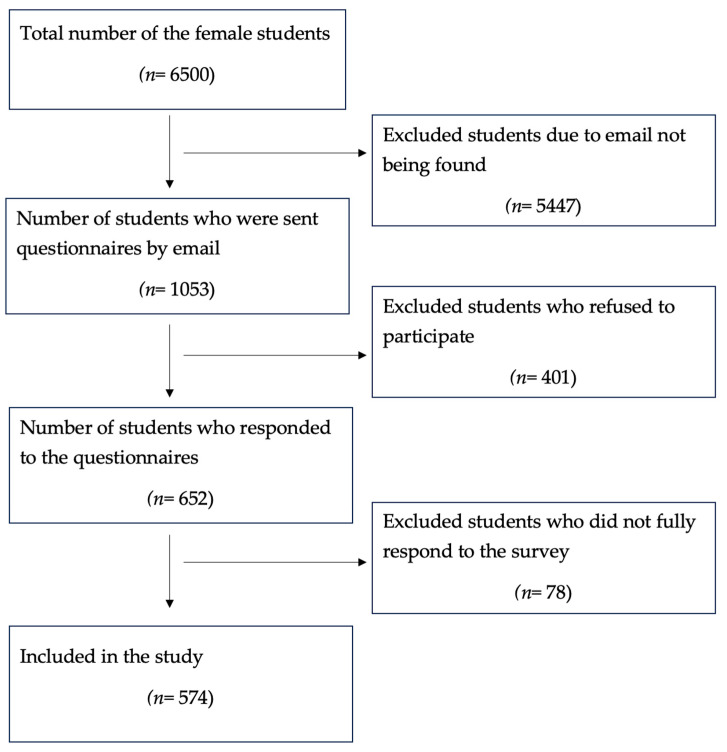 Figure 1
Peer Reviews
No public reviews on file for this paper yet. If you reviewed it on a platform where reviews are public (OpenReview, ICLR, NeurIPS, ICML), you can paste yours below so the community can read it here.
Videos
No videos yet. Explain this paper in a talk, walkthrough, or lecture? Add one.
Taxonomy
TopicsPelvic floor disorders treatments · Urinary Bladder and Prostate Research · Urinary Tract Infections Management