Exploring the Role of Cognitive Reserve and Human–Animal Interaction in Late-Life Depression: A Moderation Analysis
Nathália Saraiva de Albuquerque, Natália Silva Sessegolo, Carmen Moret-Tatay, Tatiana Quarti Irigaray

TL;DR
This study finds that having pets can strengthen the protective effect of cognitive reserve against depression in older adults.
Contribution
The study demonstrates that pet companionship moderates the relationship between cognitive reserve and depressive symptoms in older adults.
Findings
Cognitive reserve was significantly associated with fewer depressive symptoms among older adults who owned pets.
The protective effect of cognitive reserve was not observed in older adults without pets.
The study highlights the potential of human–animal interaction as a protective factor against late-life depression.
Abstract
Background/Objectives: Depression impairs the quality of life in older adults and represents a significant public health issue. Cognitive reserve may act as a protective factor against depressive symptoms in older adults. Additionally, interaction with pets may serve as another potential protective factor against these symptoms. Thus, this study aimed to evaluate whether higher cognitive reserve could predict a reduction in depressive symptoms in older adults and to investigate the moderating role of pet companionship in this relationship. Methods: The following instruments were used: a Sociodemographic Data Sheet, the Modified Telephone Interview for Cognitive Status (TICS-M), the Cognitive Reserve Index Questionnaire (CRIq), and the Geriatric Depression Scale (GDS-15). Data were collected via video calls through WhatsApp and analyzed using a moderation analysis with PROCESS for SPSS.…
Genes, proteins, chemicals, diseases, species, mutations and cell lines named across the full text — each resolved to its canonical identifier and authoritative record.
Click any figure to enlarge with its caption.
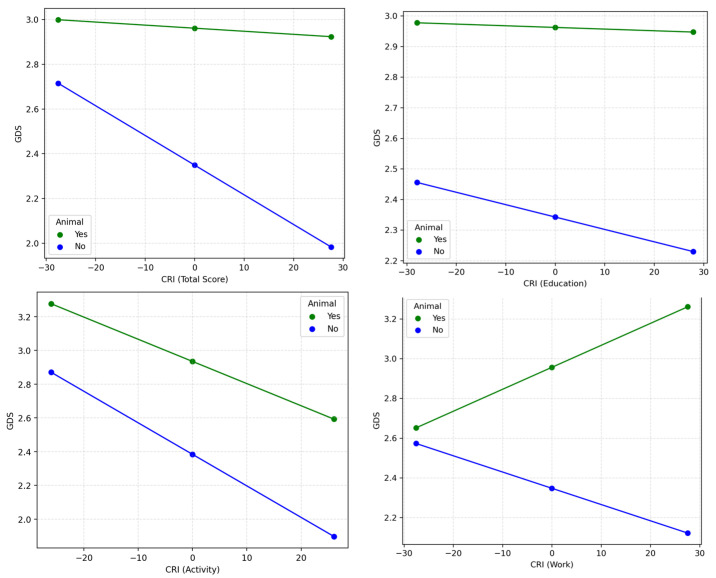 Figure 1
Peer Reviews
No public reviews on file for this paper yet. If you reviewed it on a platform where reviews are public (OpenReview, ICLR, NeurIPS, ICML), you can paste yours below so the community can read it here.
Videos
No videos yet. Explain this paper in a talk, walkthrough, or lecture? Add one.
Taxonomy
TopicsHuman-Animal Interaction Studies · Neuroendocrine regulation and behavior · Behavioral Health and Interventions