Expression and Biological Activity Analysis of Recombinant Fibronectin3 Protein in Bacillus subtilis
Chaozheng Lu, Guangxin Xu, Yin Tian, Zhiwei Yi, Xixiang Tang

TL;DR
This study successfully expresses a key part of fibronectin in Bacillus subtilis and shows it promotes cell migration and adhesion, useful for tissue repair.
Contribution
A novel method for expressing the FN3 domain of fibronectin in Bacillus subtilis with validated biological activity.
Findings
FN3 was expressed in Bacillus subtilis with a yield of 5.4 mg/L and a molecular weight of 27.3 kDa.
FN3 at 20 μg/mL significantly enhanced cell migration and at 10 μg/mL improved cell adhesion.
FN3 demonstrated good biocompatibility and potential for tissue repair applications.
Abstract
Fibronectin (FN), a primary component of the extracellular matrix (ECM), features multiple structural domains closely linked to various cellular behaviors, including migration, spreading, adhesion, and proliferation. The FN3 domain, which contains the RGD sequence, is critical in tissue repair because it enables interaction with integrin receptors on the cell surface. However, the large molecular weight of wild-type FN presents challenges for its large-scale production through heterologous expression. Therefore, this study focused on cloning the FN3 functional domain of full-length FN for expression and validation. This study selected Bacillus subtilis as the expression host due to its prominent advantages, including efficient protein secretion, absence of endotoxins, and minimal codon bias. The recombinant vector pHT43-FN3 was successfully constructed through homologous recombination…
Genes, proteins, chemicals, diseases, species, mutations and cell lines named across the full text — each resolved to its canonical identifier and authoritative record.
Click any figure to enlarge with its caption.
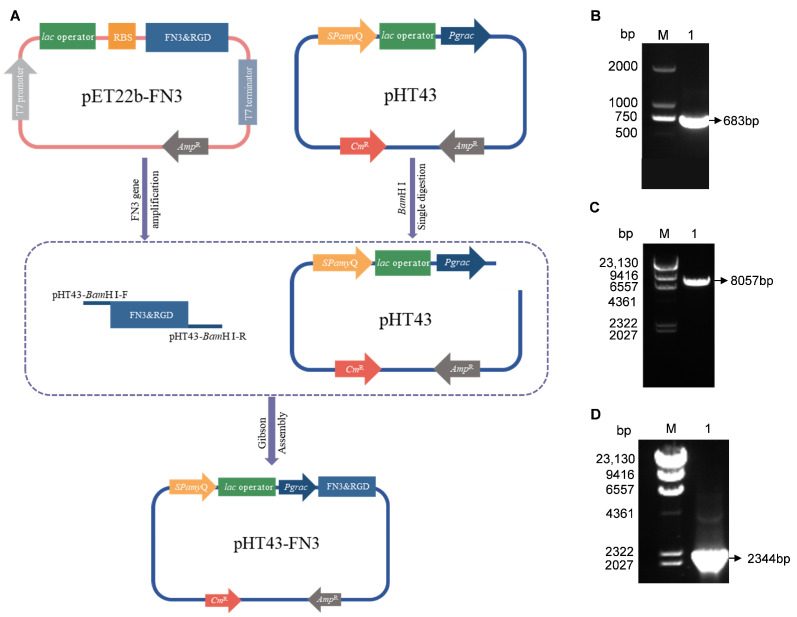 Figure 1
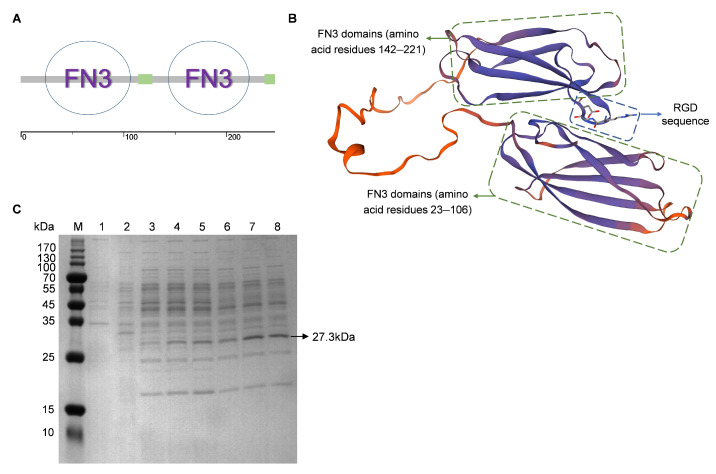 Figure 2
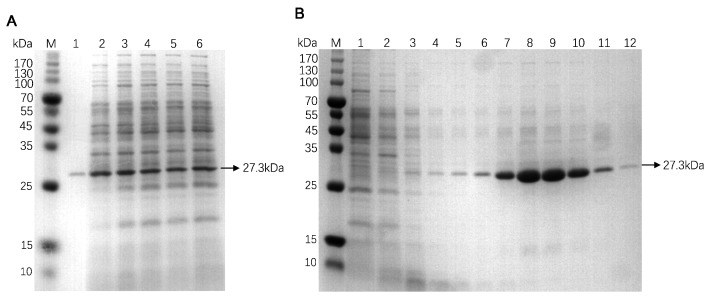 Figure 3
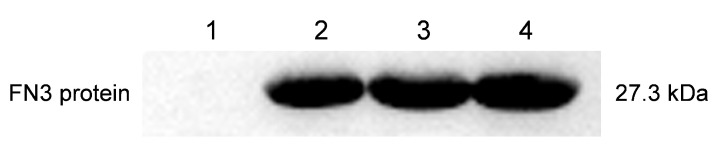 Figure 4
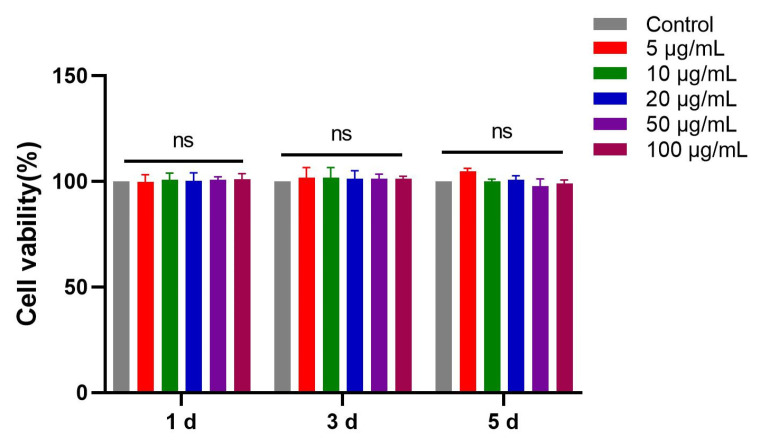 Figure 5
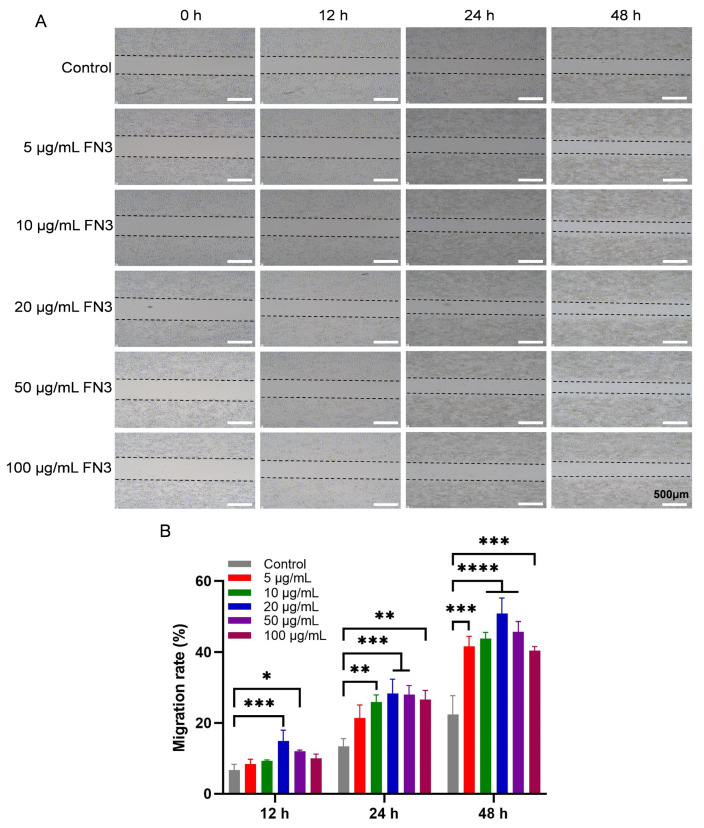 Figure 6
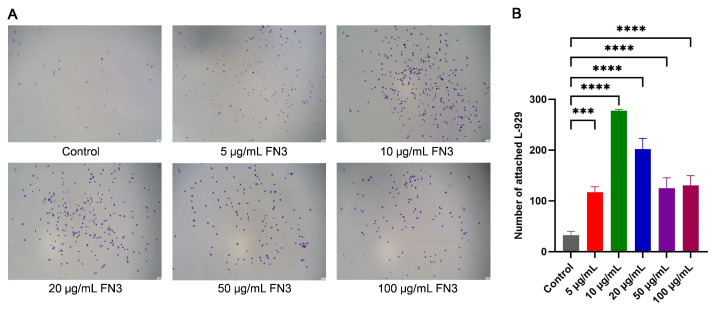 Figure 7
Peer Reviews
No public reviews on file for this paper yet. If you reviewed it on a platform where reviews are public (OpenReview, ICLR, NeurIPS, ICML), you can paste yours below so the community can read it here.
Videos
No videos yet. Explain this paper in a talk, walkthrough, or lecture? Add one.
Taxonomy
TopicsCell Adhesion Molecules Research · Protease and Inhibitor Mechanisms · Antimicrobial Peptides and Activities