Pulmonary Hypertension Secondary to Fungal Infections: Underexplored Pathological Links
Andrea Jazel Rodríguez-Herrera, Sabrina Setembre Batah, Maria Júlia Faci do Marco, Carlos Mario González-Zambrano, Luciane Alarcão Dias-Melicio, Alexandre Todorovic Fabro

TL;DR
This paper discusses how fungal infections can lead to pulmonary hypertension through various mechanisms, highlighting the need for more research and clinical attention.
Contribution
The paper identifies and explains three key mechanisms linking fungal infections to pulmonary hypertension.
Findings
Fungal infections can cause endothelial injury through emboli or autoimmune reactions.
Chronic fungal infections drive vascular remodeling via inflammation and fibrosis.
Granulomatous diseases like paracoccidioidomycosis can cause distant vascular remodeling post-infection.
Abstract
Background/Objective: Pulmonary fungal infections are a significant diagnostic challenge, primarily affecting immunocompromised individuals, such as those with HIV, cancer, or organ transplants, and they often lead to substantial morbidity and mortality if untreated. These infections trigger acute inflammatory and immune responses, which may progress to chronic inflammation. This process involves myofibroblast recruitment, the deposition of extracellular matrix, and vascular remodeling, ultimately contributing to pulmonary hypertension. Despite its clinical relevance, pulmonary hypertension secondary to fungal infections remains under-recognized in practice and poorly studied in research. Results/Conclusion: This narrative mini-review explores three key mechanisms underlying vascular remodeling in this context: (1) endothelial injury caused by fungal emboli or autoimmune reactions, (2)…
Genes, proteins, chemicals, diseases, species, mutations and cell lines named across the full text — each resolved to its canonical identifier and authoritative record.
Click any figure to enlarge with its caption.
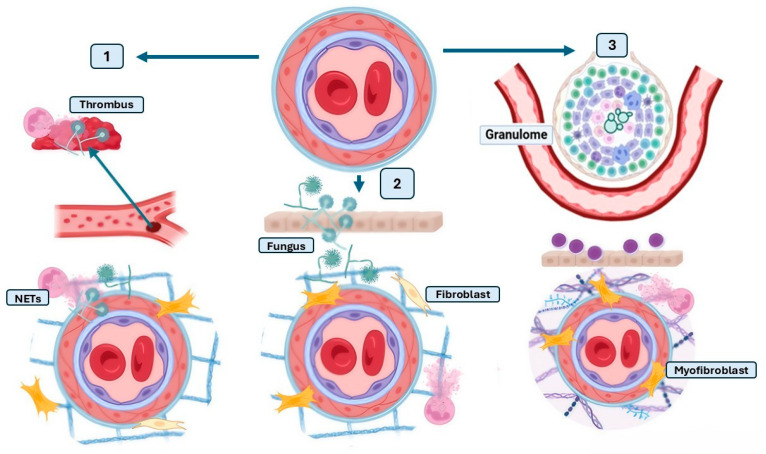 Figure 1
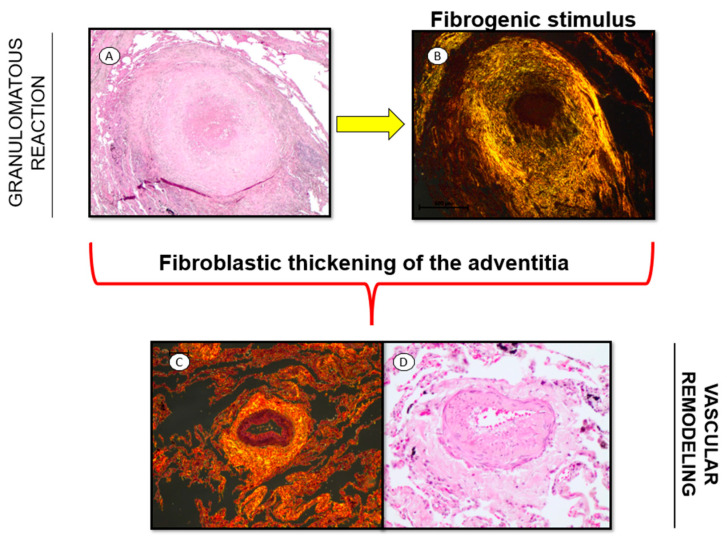 Figure 2
Peer Reviews
No public reviews on file for this paper yet. If you reviewed it on a platform where reviews are public (OpenReview, ICLR, NeurIPS, ICML), you can paste yours below so the community can read it here.
Videos
No videos yet. Explain this paper in a talk, walkthrough, or lecture? Add one.
Taxonomy
TopicsNeutrophil, Myeloperoxidase and Oxidative Mechanisms · Chronic Obstructive Pulmonary Disease (COPD) Research · Medical and Biological Ozone Research