Eye Movement Patterns as Indicators of Text Complexity in Arabic: A Comparative Analysis of Classical and Modern Standard Arabic
Hend Al-Khalifa

TL;DR
This study uses eye movement patterns to compare how people read Classical and Modern Standard Arabic texts, finding that Classical Arabic is more complex and affects reading behavior differently.
Contribution
The study introduces a comparative analysis of eye movement patterns in Classical and Modern Standard Arabic, revealing language-specific effects on reading complexity.
Findings
Classical Arabic text elicits more fixations, longer fixation durations, and more frequent revisits compared to Modern Standard Arabic.
Sentence-level features significantly predict eye movement patterns in both Classical and Modern Standard Arabic texts.
Readers show less sensitivity to readability variations in Classical Arabic compared to Modern Standard Arabic.
Abstract
This study investigates eye movement patterns as indicators of text complexity in Arabic, focusing on the comparative analysis of Classical Arabic (CA) and Modern Standard Arabic (MSA) text. Using the AraEyebility corpus, which contains eye-tracking data from readers of both CA and MSA text, we examined differences in fixation patterns, regression rates, and overall reading behavior between these two forms of Arabic. Our analyses revealed significant differences in eye movement metrics between CA and MSA text, with CA text consistently eliciting more fixations, longer fixation durations, and more frequent revisits. Multivariate analysis confirmed that language type has a significant combined effect on eye movement patterns. Additionally, we identified different relationships between text features and eye movements for CA versus MSA text, with sentence-level features emerging as…
Genes, proteins, chemicals, diseases, species, mutations and cell lines named across the full text — each resolved to its canonical identifier and authoritative record.
Click any figure to enlarge with its caption.
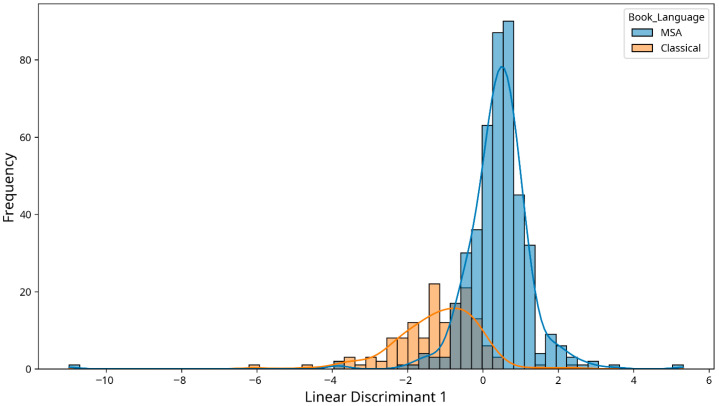 Figure 1
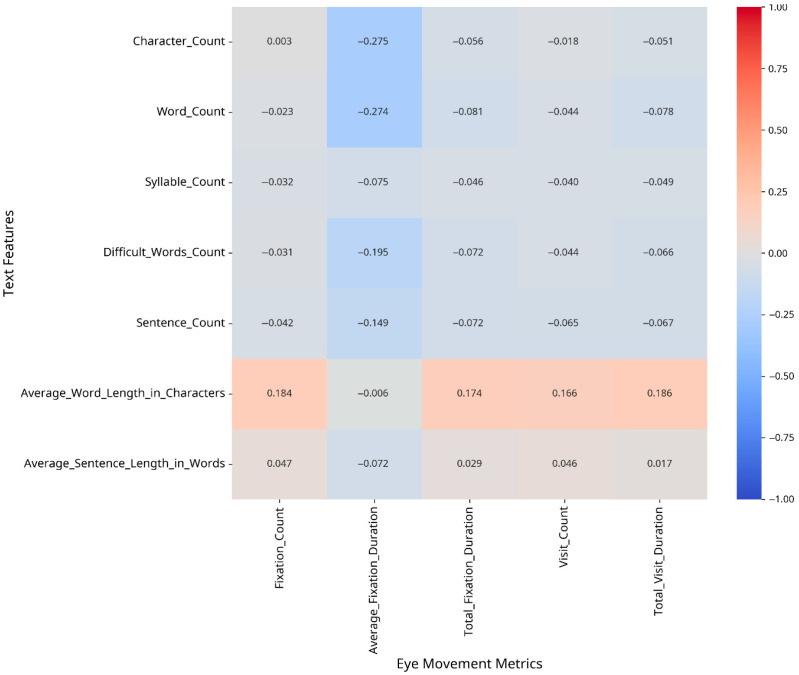 Figure 2
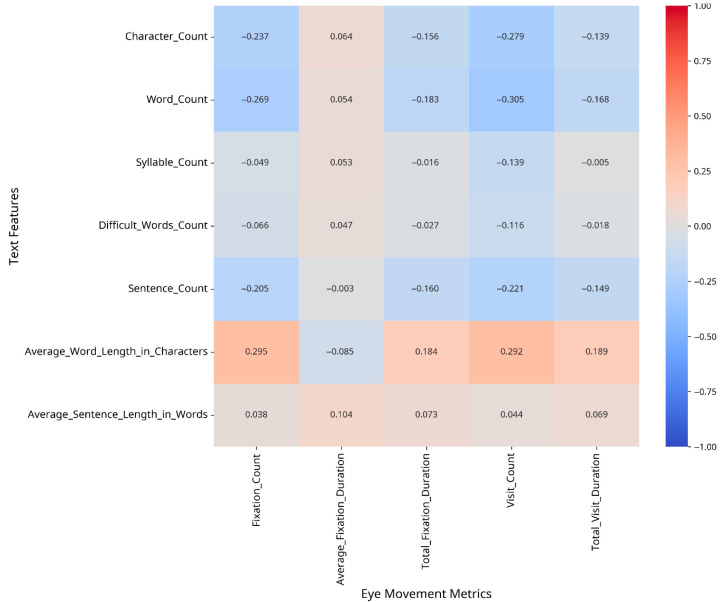 Figure 3
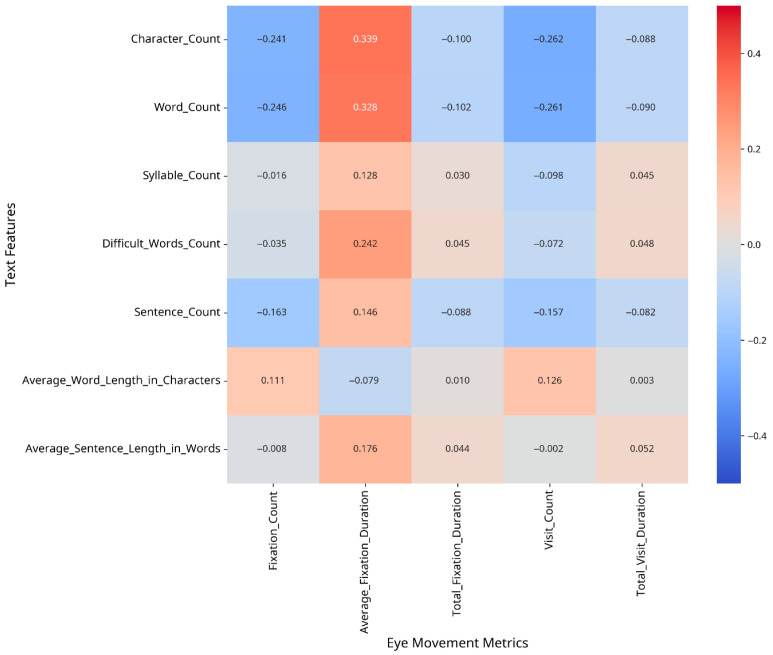 Figure 4
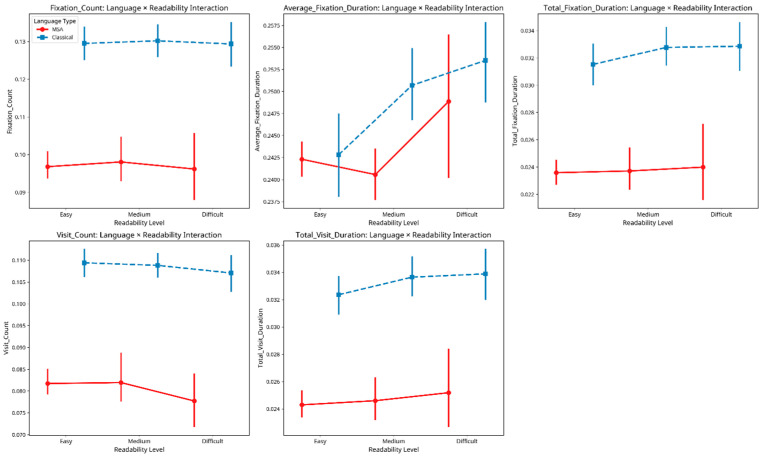 Figure 5
Peer Reviews
No public reviews on file for this paper yet. If you reviewed it on a platform where reviews are public (OpenReview, ICLR, NeurIPS, ICML), you can paste yours below so the community can read it here.
Videos
No videos yet. Explain this paper in a talk, walkthrough, or lecture? Add one.
Taxonomy
TopicsText Readability and Simplification · Reading and Literacy Development · Neurobiology of Language and Bilingualism