Novel Surgical Approach for Limbal Dermoid Excision: Utilizing Bowman’s Membrane Lenticule and Autologous Limbal Stem Cell Transplantation for Enhanced Epithelial Healing and Visual Outcomes
Dharamveer Singh Choudhary, Maya Hada, Kavita Ghanolia, Jeba Shaheen, Ajay Dhakad, Bhuvanesh Sukhlal Kalal

TL;DR
A new surgical method for removing limbal dermoids uses a Bowman’s membrane lenticule and stem cell transplant to improve healing and vision.
Contribution
The study introduces a novel surgical technique combining Bowman’s membrane lenticule and autologous limbal stem cell transplantation for limbal dermoid excision.
Findings
The mean epithelialization time was 3.36 weeks, showing rapid healing.
Visual acuity significantly improved from 0.136 to 0.336 decimal units post-surgery.
Corneal thickness increased significantly from 294 to 484 microns after the procedure.
Abstract
Limbal dermoids are congenital, benign, choristomatous growths affecting the corneal-limbal junction. Conventional excision techniques often result in persistent epithelial defects, corneal thinning, and vascularization due to sectoral limbal stem cell deficiency. This study investigated a novel surgical approach for limbal dermoid excision, utilizing Bowman’s membrane lenticule and autologous limbal stem cell transplantation, aimed at improving epithelial healing and visual outcomes. Thirty-four subjects (24 females, 10 males; mean age 8.33 ± 6.47 years) with limbal dermoids underwent the procedure. After dermoid excision, a Bowman’s membrane lenticule was placed over the defect and tucked 1 mm beneath the surrounding tissue. Sectoral limbal reconstruction was then performed using the AutoSLET technique. Pre- and postoperative assessments included visual acuity, corneal thickness, and…
Genes, proteins, chemicals, diseases, species, mutations and cell lines named across the full text — each resolved to its canonical identifier and authoritative record.
Click any figure to enlarge with its caption.
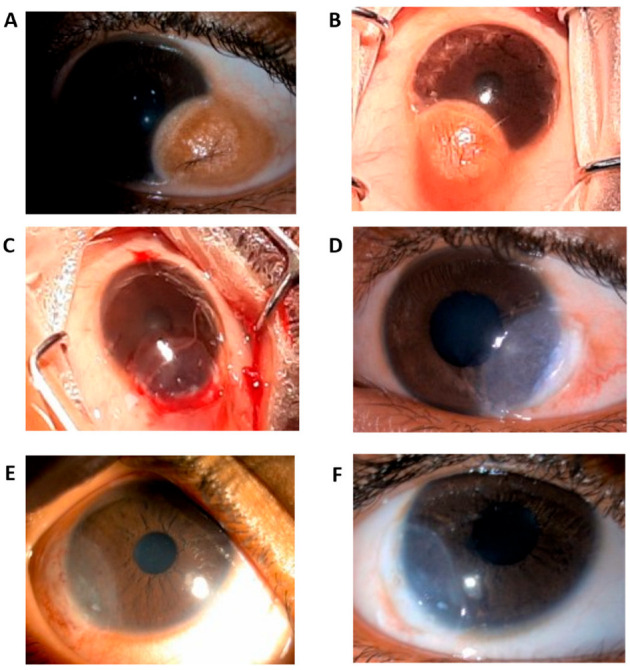 Figure 1
Peer Reviews
No public reviews on file for this paper yet. If you reviewed it on a platform where reviews are public (OpenReview, ICLR, NeurIPS, ICML), you can paste yours below so the community can read it here.
Videos
No videos yet. Explain this paper in a talk, walkthrough, or lecture? Add one.
Taxonomy
TopicsGenetic and rare skin diseases. · Corneal Surgery and Treatments · Hedgehog Signaling Pathway Studies