Comparative Analysis of Mechanical Variables in Different Exercises Performed with a Rotational Inertial Device in Professional Soccer Players: A Pilot Study
Álvaro Murillo-Ortiz, Luis Manuel Martínez-Aranda, Moisés Falces-Prieto, Samuel López-Mariscal, Francisco Javier Iglesias-García, Javier Raya-González

TL;DR
This study compares how different exercises using a rotational inertial device affect mechanical variables in professional soccer players' legs.
Contribution
The study introduces a novel approach to assess and train limb-specific mechanical variables in soccer players using rotational inertial devices.
Findings
Quadriceps hip exercises produced higher mechanical values than quadriceps knee exercises in both limbs.
Hamstring hip exercises showed greater values except for peak force, which was higher in hamstring knee exercises.
Abductor exercises revealed significant between-limb differences, while other exercises showed minimal differences.
Abstract
Background: Soccer performance is largely dependent on high-intensity, unilateral actions such as sprints, jumps, and changes of direction. These demands can lead to strength and power differences between limbs, highlighting the importance of individualised assessment in professional players. Rotational inertial devices offer a valuable method to evaluate and train these mechanical variables separately for each leg. The aim of this study was twofold: (a) to characterise the mechanical variables derived from several lower-body strength exercises performed on rotational inertial devices, all targeting the same muscle group; and (b) to compare the mechanical variables between the dominant and non-dominant leg for each exercise. Methods: Twenty-six male professional soccer players (age = 26.3 ± 5.1 years; height = 182.3 ± 0.6 cm; weight = 75.9 ± 5.9 kg; body mass index = 22.8 ± 1.1 kg/m2;…
Genes, proteins, chemicals, diseases, species, mutations and cell lines named across the full text — each resolved to its canonical identifier and authoritative record.
Click any figure to enlarge with its caption.
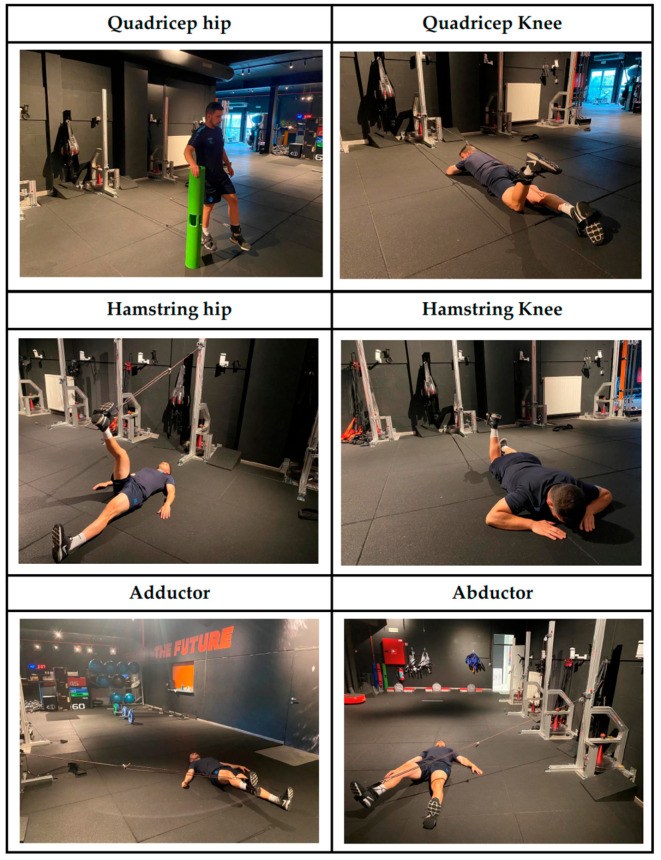 Figure 1
Peer Reviews
No public reviews on file for this paper yet. If you reviewed it on a platform where reviews are public (OpenReview, ICLR, NeurIPS, ICML), you can paste yours below so the community can read it here.
Videos
No videos yet. Explain this paper in a talk, walkthrough, or lecture? Add one.
Taxonomy
TopicsSports Performance and Training · Sports injuries and prevention · Sports Dynamics and Biomechanics