Effects of Docosahexaenoic Acid on Prostate Cancer
Guilherme Henrique Tamarindo, Gustavo Matheus Amaro, Alana Della Torre da Silva, Rejane Maira Góes

TL;DR
This review explores how docosahexaenoic acid (DHA), an omega-3 fatty acid, specifically affects prostate cancer through various biological mechanisms.
Contribution
The paper clarifies DHA's unique role in prostate cancer, distinct from other omega-3 fatty acids, based on in vitro and in vivo evidence.
Findings
DHA downregulates androgen signaling and lipid metabolism in prostate cancer cells.
DHA disrupts membrane composition and induces apoptosis and ROS overproduction in cancer cells.
DHA influences the tumor microenvironment by inhibiting cancer-associated fibroblast differentiation and resolving inflammation.
Abstract
The polyunsaturated fatty acids of the omega-3 class have been widely investigated due to their antitumor properties, including in prostate cancer (PCa). Among them is docosahexaenoic acid (DHA, C22:6 ω-3), whose biological activity is higher than other omega-3s, exhibiting a stronger impact on PCa. The specific mechanisms triggered by DHA are blurred by studies that used a blend of omega-3s, delaying the understanding of its biological role, and hence alternative therapeutic approaches. DHA is differentially processed between normal and malignant epithelial PCa cells, which suggests its function as a tumor suppressor. At cell-specific level, it downregulates key pathways in PCa, such as androgen signaling and lipid metabolism, but also changes membrane composition by disrupting phospholipid balance and increasing unsaturation status, arrests the cell cycle, and induces apoptosis and…
Genes, proteins, chemicals, diseases, species, mutations and cell lines named across the full text — each resolved to its canonical identifier and authoritative record.
Click any figure to enlarge with its caption.
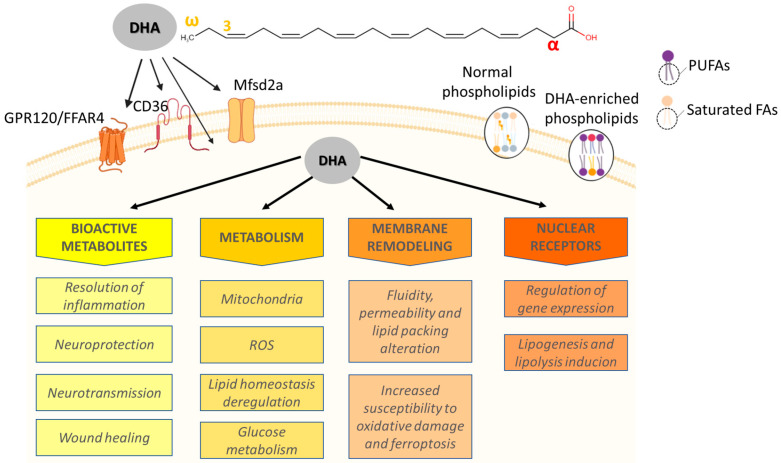 Figure 1
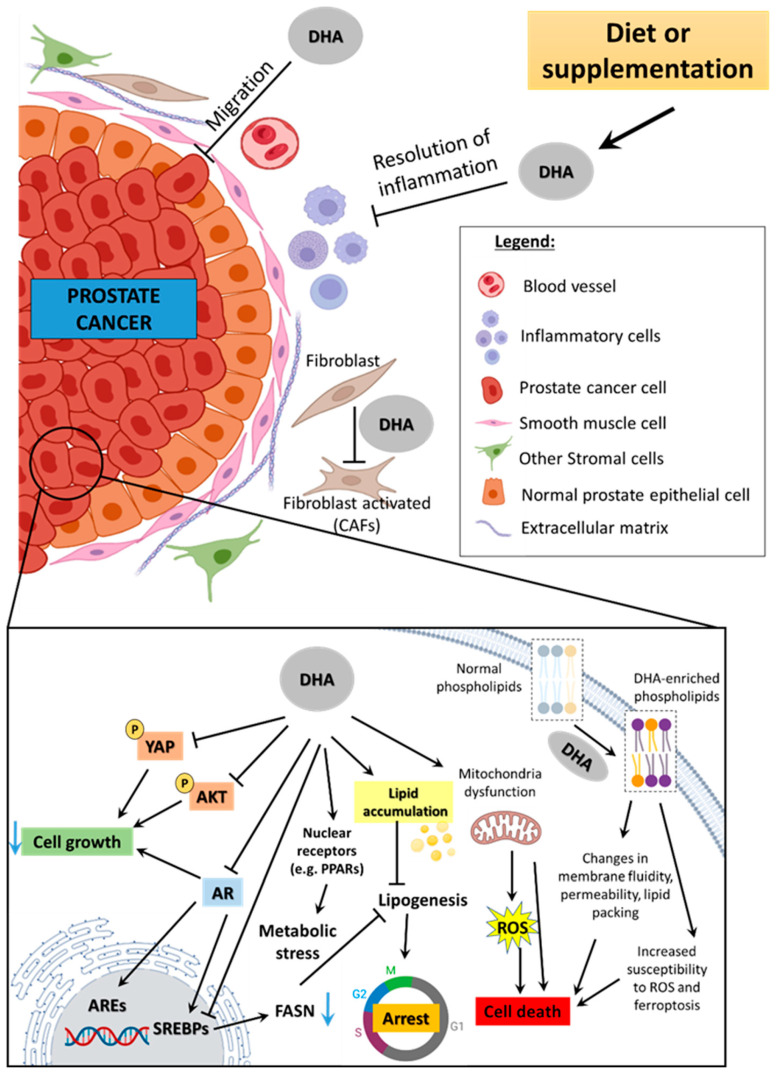 Figure 2
Peer Reviews
No public reviews on file for this paper yet. If you reviewed it on a platform where reviews are public (OpenReview, ICLR, NeurIPS, ICML), you can paste yours below so the community can read it here.
Videos
No videos yet. Explain this paper in a talk, walkthrough, or lecture? Add one.
Taxonomy
TopicsCancer, Lipids, and Metabolism · Fatty Acid Research and Health · Eicosanoids and Hypertension Pharmacology