Iliotibial Band Behavior Assessed Through Tensor Fasciae Latae Electromyographic Activity with Different Foot Orthoses in Recreational Runners According to Foot Type: A Cross-Sectional Study
Ruben Sanchez-Gomez, Álvaro Gómez Carrión, Ismael Ortuño Soriano, Paola Sanz Wozniak, Ignacio Zaragoza García, Fatma Ben Waer, Cristina Iona Alexe, Dan Iulian Alexe

TL;DR
This study examines how different foot types and orthoses affect TFL muscle activity in runners, suggesting that pronating insoles may help reduce TFL activation and potentially prevent ITBS.
Contribution
The study introduces a novel approach to understanding ITBS by analyzing TFL EMG activity in relation to foot type and orthotic use.
Findings
Supinators showed higher TFL activation compared to neutral foot types during baseline conditions.
Pronating insoles significantly reduced TFL activity in both neutral and supinated foot types.
The study recommends assessing foot type and using pronating insoles as a complementary treatment for ITBS.
Abstract
Background: Iliotibial band syndrome (ITBS) through the tensor fascia latae (TFL) is a well-known pathology among runners whose etiology is not completely clear, nor is the effectiveness of plantar insoles for different types of feet known well enough for them to be considered a possible approach for this issue. Objective: to understand how foot type and foot orthotics may influence the electromyographic (EMG) activity of the TFL. Methods: A total of 41 healthy recreational runners (mean age 32.66 ± 3.51) were recruited for the present cross-sectional study, categorizing them as neutral (NEUg = 15), supinators (SUPg = 15), and pronators (PROg = 11) according to the foot postural index, over a period of 11 months. The EMG of the TFL was measured using a surface electromyograph device while they ran on a treadmill at a constant speed of 9 km/h for 3 min, randomly using supinating (SUP),…
Genes, proteins, chemicals, diseases, species, mutations and cell lines named across the full text — each resolved to its canonical identifier and authoritative record.
Click any figure to enlarge with its caption.
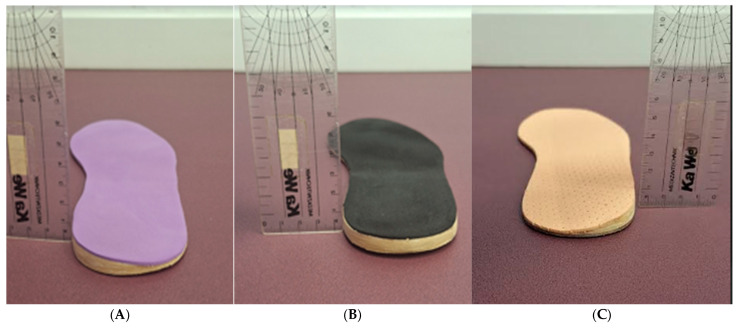 Figure 1
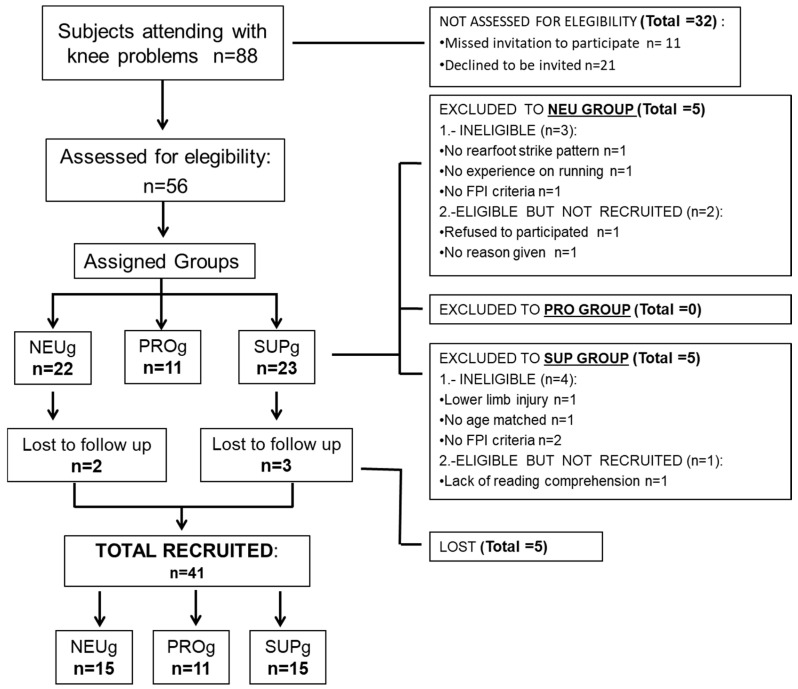 Figure 2
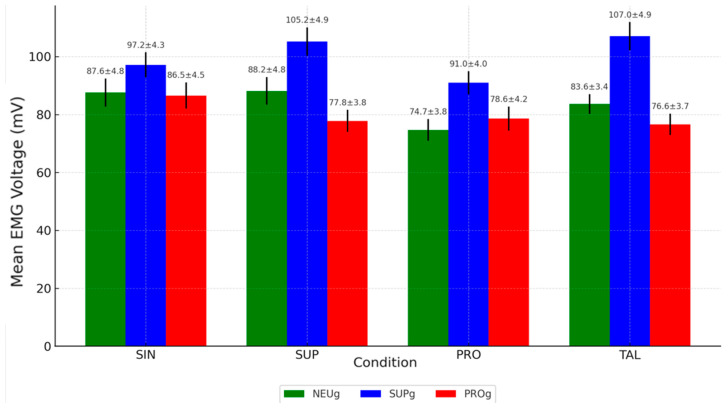 Figure 3
Peer Reviews
No public reviews on file for this paper yet. If you reviewed it on a platform where reviews are public (OpenReview, ICLR, NeurIPS, ICML), you can paste yours below so the community can read it here.
Videos
No videos yet. Explain this paper in a talk, walkthrough, or lecture? Add one.
Taxonomy
TopicsLower Extremity Biomechanics and Pathologies · Foot and Ankle Surgery · Sports injuries and prevention