Analysis of Movement Variability During the Spike Jump Action in Young and High-Level Female Volleyball Players: Differences Between Categories and Playing Positions
Jordi Català, Gerard Moras, Víctor Toro-Román, Carla Pérez-Chirinos Buxadé, Silvia Tuyà-Viñas, Bruno Fernández-Valdés

TL;DR
This study compares movement variability during volleyball spike jumps in young and high-level female players, finding differences based on age and playing position.
Contribution
The study introduces a novel comparison of movement variability in spike jumps across age categories and playing positions in female volleyball players.
Findings
Movement variability increases when performing spike jumps with a ball compared to without a ball.
Younger players (U-14) show higher movement variability than older players.
Hitters demonstrate lower movement variability compared to middle blockers and liberos.
Abstract
Objectives: The aim of this study was to analyze and compare movement variability (MV) during the spike jump (S) action with and without a ball in volleyball players of different categories and playing positions. Methods: A total of 48 volleyball players participated in this study. The players were divided according to the following categories: under-14 (U-14) (n = 12); U-16 (n = 12); U-19 (n = 12); and SENIOR (n = 12). Also, they were divided according to playing position: hitters (n = 24); liberos (n = 5); middle blockers (n = 12); and setters (n = 7). The S action with and without a ball was analyzed. Acceleration was analyzed using an IMU device. Acceleration was used to calculate MV through sample entropy (SampEn). Results: Differences were observed in all categories when comparing the S action with and without the ball (p < 0.001). SampEn was higher in the U-14 category (p <…
Genes, proteins, chemicals, diseases, species, mutations and cell lines named across the full text — each resolved to its canonical identifier and authoritative record.
Click any figure to enlarge with its caption.
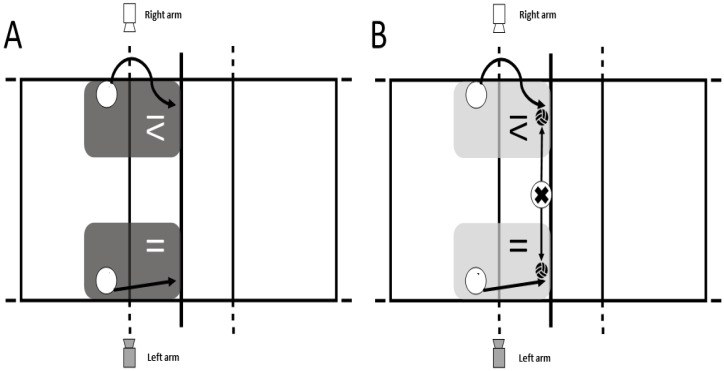 Figure 1
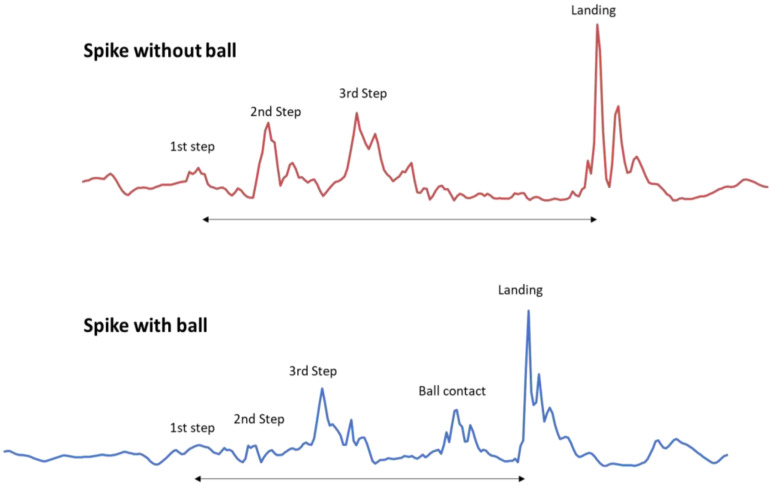 Figure 2
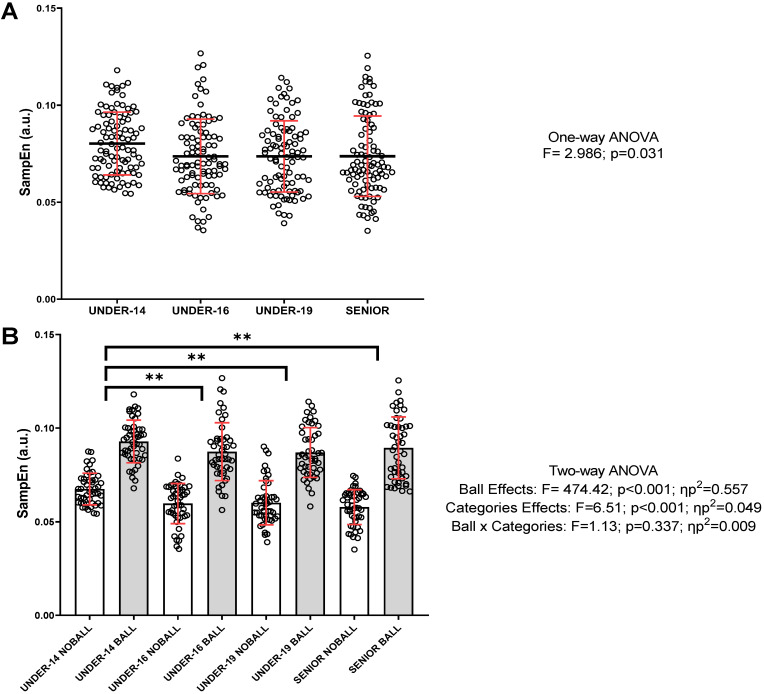 Figure 3
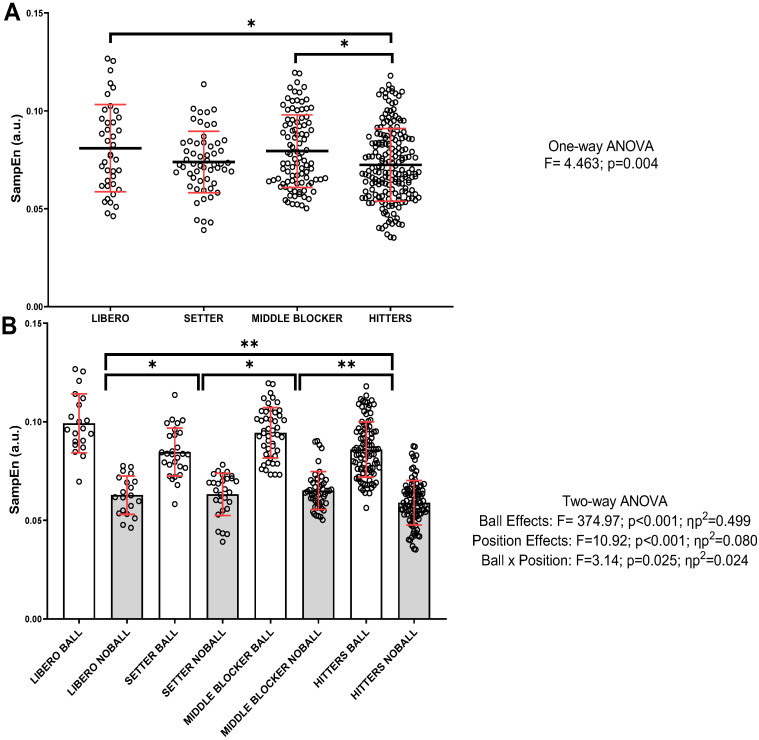 Figure 4
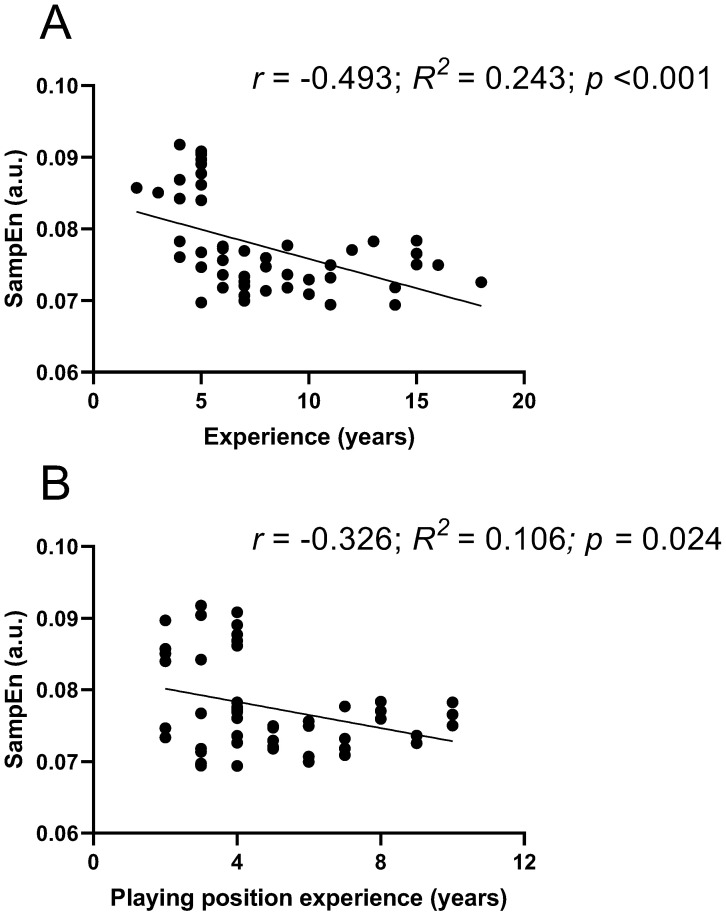 Figure 5
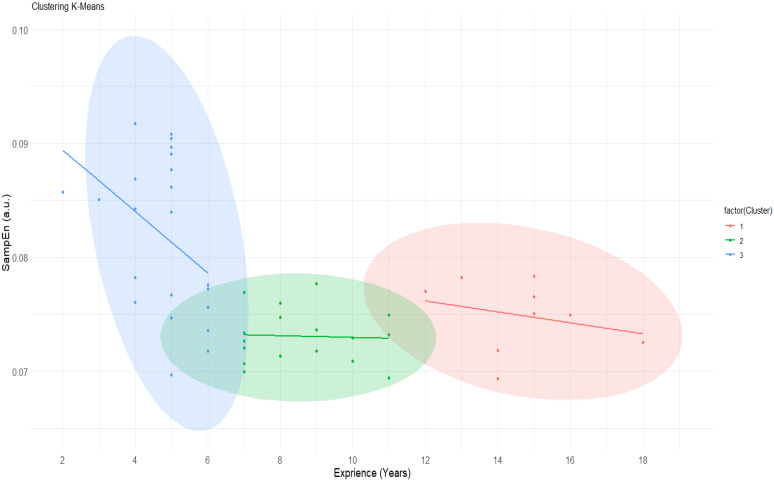 Figure 6
Peer Reviews
No public reviews on file for this paper yet. If you reviewed it on a platform where reviews are public (OpenReview, ICLR, NeurIPS, ICML), you can paste yours below so the community can read it here.
Videos
No videos yet. Explain this paper in a talk, walkthrough, or lecture? Add one.
Taxonomy
TopicsSports Performance and Training · Sports Dynamics and Biomechanics · Sport Psychology and Performance