Qatar’s National Expanded Metabolic Newborn Screening Program: Incidence and Outcomes
Tala Jamaleddin, Karen El-Akouri, Sumaya Abiib, Rola Mitri, Mamatha Ramaswamy, Sara Musa, Rehab Ali, Noora Shahbeck, Hilal Al Rifai, Ghassan Abdoh, Tawfeg Ben-Omran, Osama Y. Al-Dirbashi, Mashael Al-Shafai

TL;DR
This study reports the incidence of inherited metabolic disorders in newborns in Qatar and highlights the effectiveness of genetic testing in diagnosing these conditions.
Contribution
The study provides novel incidence data for inherited metabolic disorders in Qatar and evaluates the diagnostic yield of genetic testing methods.
Findings
The incidence of inherited metabolic disorders in Qatar is 1:1105, with classical homocystinuria being the most common.
Aminoacidopathies were the most prevalent category of disorders detected through newborn screening.
Genetic testing confirmed 90% of cases, with high confirmation rates for targeted and single gene testing.
Abstract
Background: Newborn screening is an essential public health strategy that aims to detect a range of conditions, including inborn errors of metabolism, in neonates shortly after birth. The timely identification is crucial due to the asymptomatic nature of many conditions at birth, but which can lead to significant health complications if left untreated. Through this study, we aimed to investigate the incidence of IEMs screened by the Qatar National Newborn Screening Program. Methods: We retrospectively analyzed a total of 351,223 newborns screened from 2010 to 2023. The incidence for the studied IEMs was calculated and correlated with demographics, consanguinity, and family history. In addition, the diagnostic yield of different tests utilized was assessed. Results: Our study revealed a total of 318 positive cases with IEMs, and a significantly high incidence of 1:1105 for IEMs in Qatar.…
Genes, proteins, chemicals, diseases, species, mutations and cell lines named across the full text — each resolved to its canonical identifier and authoritative record.
Click any figure to enlarge with its caption.
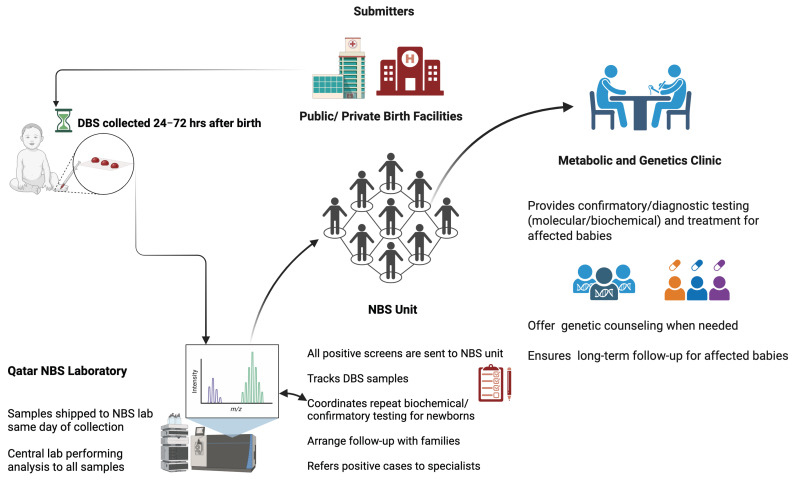 Figure 1
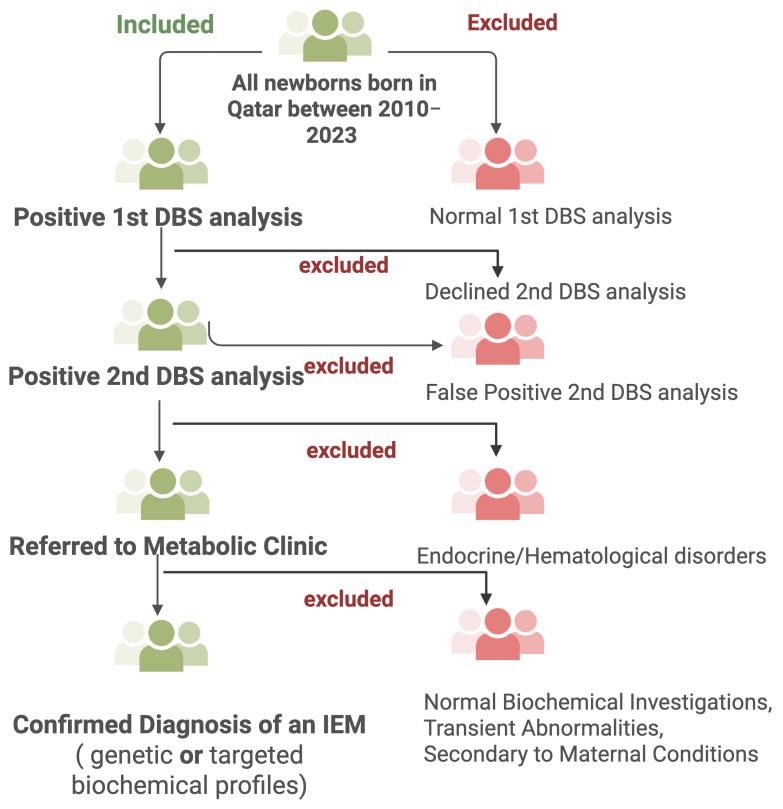 Figure 2
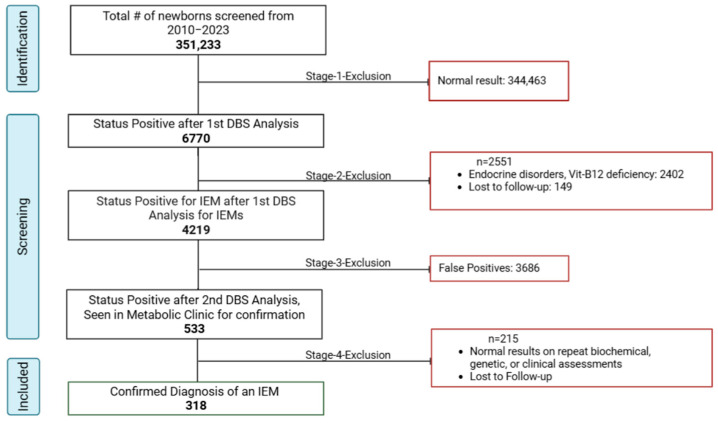 Figure 3
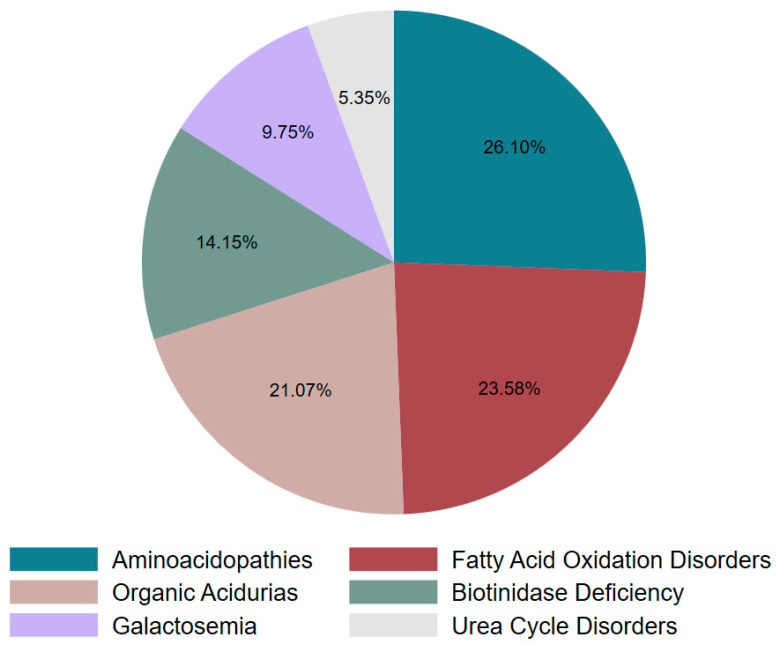 Figure 4
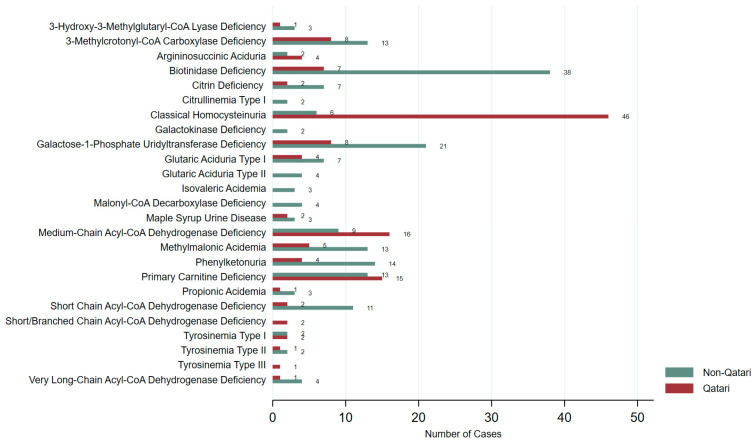 Figure 5
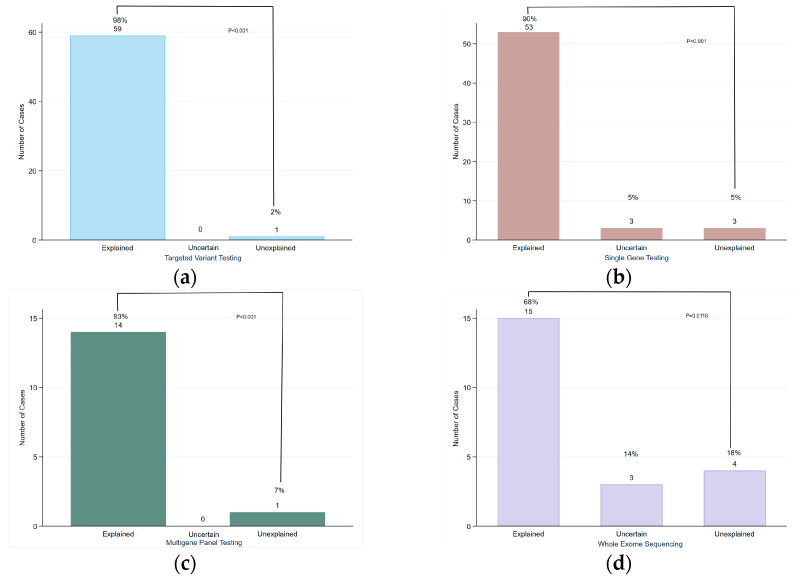 Figure 6
Peer Reviews
No public reviews on file for this paper yet. If you reviewed it on a platform where reviews are public (OpenReview, ICLR, NeurIPS, ICML), you can paste yours below so the community can read it here.
Videos
No videos yet. Explain this paper in a talk, walkthrough, or lecture? Add one.
Taxonomy
TopicsMetabolism and Genetic Disorders · Folate and B Vitamins Research · Diet and metabolism studies