Crack Cocaine Smoke Induces Tissue Degeneration in Rat Submandibular Glands by Toll-like Signaling Pathway
Lorrany da Silva Avanci, Daniel Vitor de Souza, Gabriel Carvalhal de Aguiar, Thiago Guedes Pinto, Barbara dos Anjos Rosario, Milena de Barros Viana, Yasmin Alaby Martins Ferreira, Viviane Carlin Cordaro, Luciana Pellegrini Pisani, Daniel Araki Ribeiro

TL;DR
Crack cocaine smoke causes damage to rat salivary glands, increasing cell aging and growth.
Contribution
This study reveals how crack cocaine smoke harms salivary glands via toll-like signaling in rats.
Findings
Crack cocaine smoke caused histopathological changes in all exposed rat groups.
Exposure increased BCL-2, P16, and Ki-67 expression, indicating cell senescence and proliferation.
MYD88 expression was significantly higher only in the highest dose group.
Abstract
Background: This study investigated the impact of crack cocaine smoke exposure on the submandibular salivary gland of Wistar rats. Methods: The animals were distributed into four groups: control (CTRL); 25 mg exposure (CK25); 50 mg exposure (CK50); and 100 mg exposure (CK100). The animals were exposed to crack cocaine smoke once a day for five consecutive days. Results: Exposure to crack cocaine smoke-induced histopathological changes in submandibular salivary glands in all groups under exposure. The immunohistochemical analysis demonstrates that exposure to crack cocaine smoke led to an increase in BCL-2 and P16 expression in all groups exposed to crack cocaine (p < 0.05). The analysis of Ki-67 expression revealed a significant increase in immunoreactive cells across all exposure groups (p < 0.05). Although MYD88 expression was observed in all crack cocaine-exposed groups, only the…
Genes, proteins, chemicals, diseases, species, mutations and cell lines named across the full text — each resolved to its canonical identifier and authoritative record.
Click any figure to enlarge with its caption.
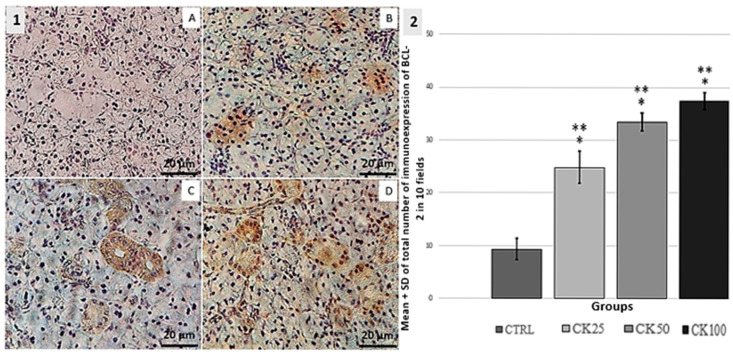 Figure 1
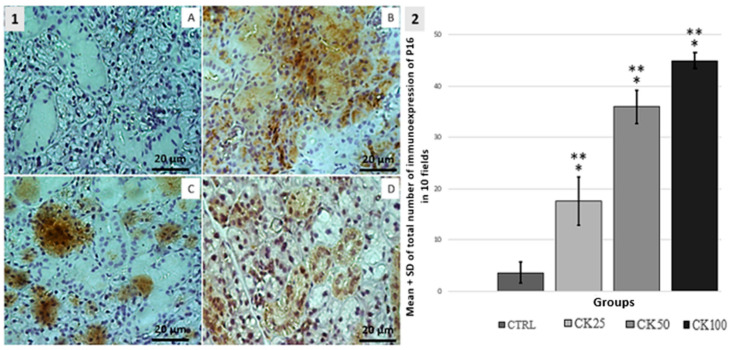 Figure 2
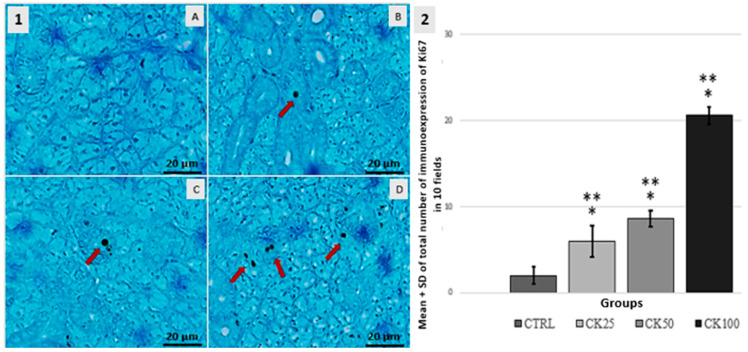 Figure 3
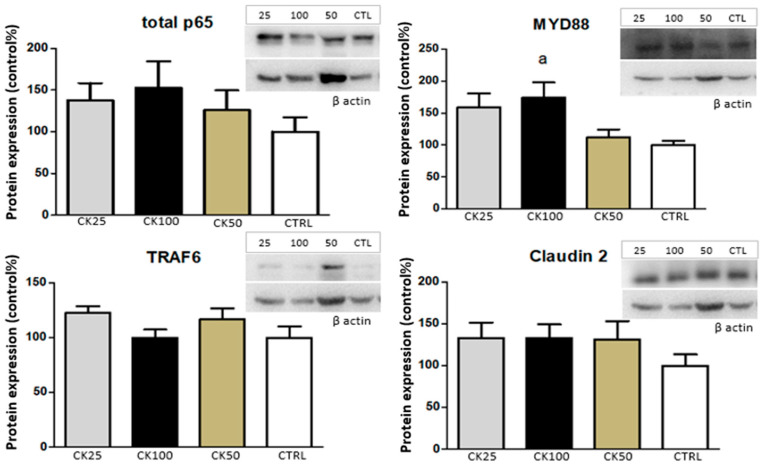 Figure 4
Peer Reviews
No public reviews on file for this paper yet. If you reviewed it on a platform where reviews are public (OpenReview, ICLR, NeurIPS, ICML), you can paste yours below so the community can read it here.
Videos
No videos yet. Explain this paper in a talk, walkthrough, or lecture? Add one.
Taxonomy
TopicsBiochemical effects in animals · Salivary Gland Disorders and Functions · Biochemical Analysis and Sensing Techniques