Audiovisual Perception of Sentence Stress in Cochlear Implant Recipients
Hartmut Meister, Moritz Wächtler, Pascale Sandmann, Ruth Lang-Roth, Khaled H. A. Abdel-Latif

TL;DR
This study explores how cochlear implant users and people with typical hearing use visual cues like facial movements to understand sentence stress when acoustic cues are limited.
Contribution
The study introduces a novel use of virtual characters to investigate audiovisual sentence stress perception in cochlear implant recipients.
Findings
CI users and TH participants performed similarly in congruent audiovisual conditions, but CI users better utilized visual cues.
TH participants showed greater pupil dilation in visual-only conditions, suggesting deeper visual processing.
CI users exhibited individual differences in cue reliability, especially in incongruent audiovisual conditions.
Abstract
Background/Objectives: Sentence stress as part of linguistic prosody plays an important role for verbal communication. It emphasizes particularly important words in a phrase and is reflected by acoustic cues such as the voice fundamental frequency. However, visual cues, especially facial movements, are also important for sentence stress perception. Since cochlear implant (CI) recipients are limited in their use of acoustic prosody cues, the question arises as to what extent they are able to exploit visual features. Methods: Virtual characters were used to provide highly realistic but controllable stimuli for investigating sentence stress in groups of experienced CI recipients and typical-hearing (TH) peers. In addition to the proportion of correctly identified stressed words, task load was assessed via reaction times (RTs) and task-evoked pupil dilation (TEPD), and visual attention was…
Genes, proteins, chemicals, diseases, species, mutations and cell lines named across the full text — each resolved to its canonical identifier and authoritative record.
Click any figure to enlarge with its caption.
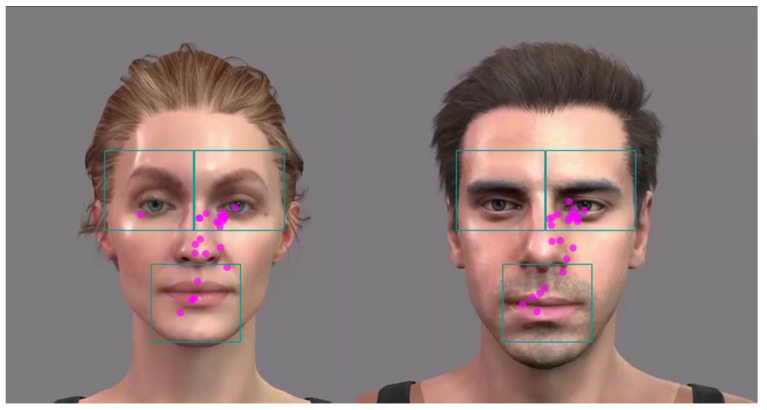 Figure 1
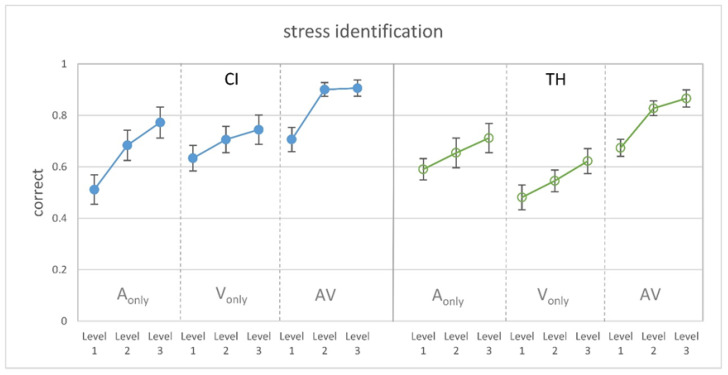 Figure 2
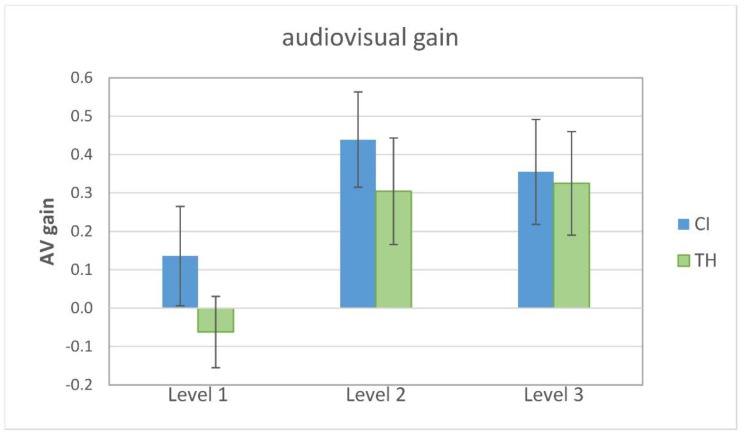 Figure 3
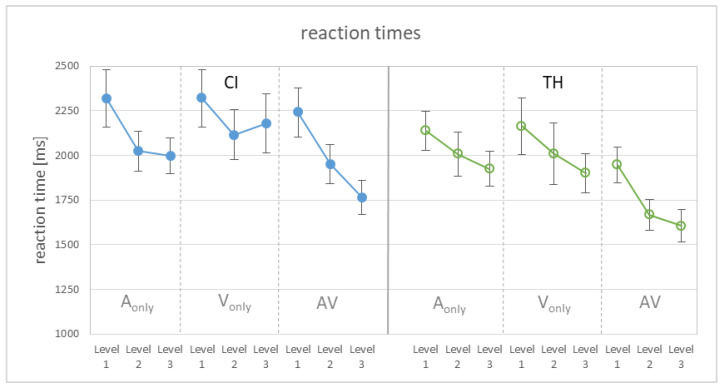 Figure 4
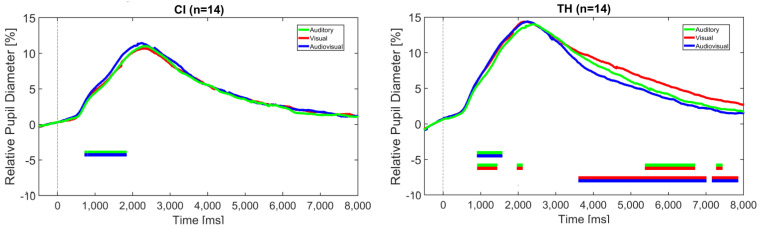 Figure 5
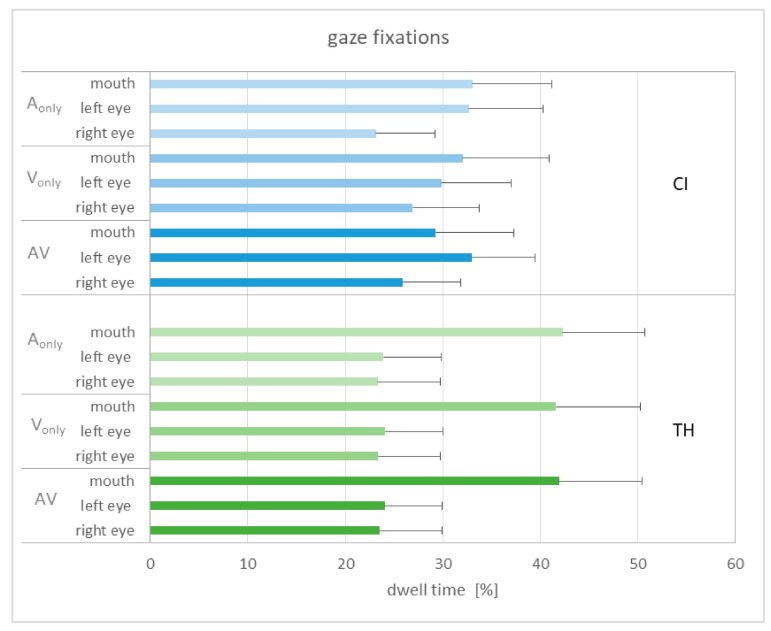 Figure 6
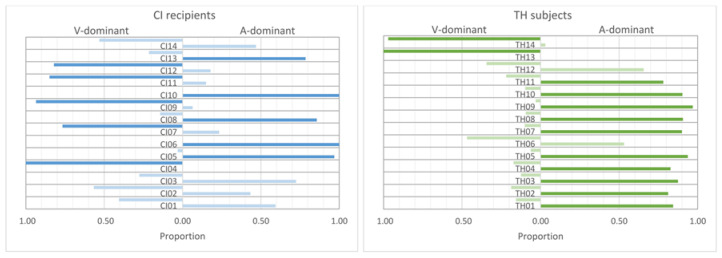 Figure 7
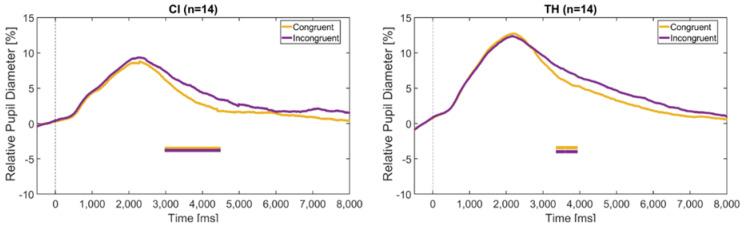 Figure 8
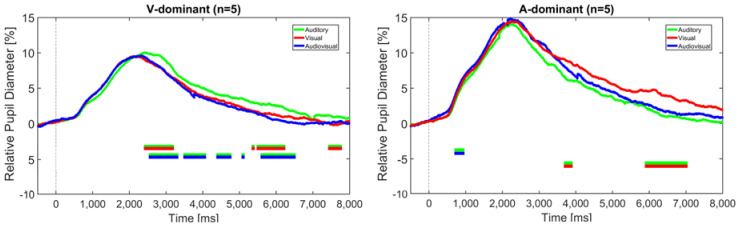 Figure 9
Peer Reviews
No public reviews on file for this paper yet. If you reviewed it on a platform where reviews are public (OpenReview, ICLR, NeurIPS, ICML), you can paste yours below so the community can read it here.
Videos
No videos yet. Explain this paper in a talk, walkthrough, or lecture? Add one.
Taxonomy
TopicsMultisensory perception and integration · Hearing Loss and Rehabilitation · Categorization, perception, and language