Contribution of Cytology to the Diagnosis of Chediak-Higashi Syndrome
Mohammed Ayoub Naamane, Asmaa Harrach, Soukaina Boussif, Hanaa Bencharef, Bouchra Oukkache

TL;DR
This paper highlights how cytology helps diagnose Chediak-Higashi syndrome, especially in areas where genetic testing is not available.
Contribution
The study emphasizes the importance of cytological analysis in diagnosing CHS in resource-limited settings.
Findings
Cytological analysis revealed giant granules in granulocytes in all five CHS patients.
All patients developed hemophagocytic lymphohistiocytosis and died from complications.
Parental consanguinity was present in all cases, indicating a genetic component.
Abstract
Chediak-Higashi syndrome (CHS) is a rare autosomal recessive disorder characterized by partial oculocutaneous albinism, recurrent infections, and giant intracytoplasmic granules in leukocytes. Early diagnosis is critical to prevent the onset of severe complications, particularly the accelerated phase. We conducted a descriptive case series in the Hematology Laboratory of Ibn Rochd University Hospital Center, Casablanca. All patients diagnosed with CHS based on cytological analysis were included. Complete blood counts were performed using the SYSMEX® XN-1500 analyzer (Sysmex Corporation, Kobe, Japan), and peripheral blood and bone marrow smears were stained with May-Grünwald Giemsa. Five patients (three girls and two boys) were identified, with a mean age of four years and 11 months. Parental consanguinity was present in all cases. Clinical findings included oculocutaneous albinism…
Genes, proteins, chemicals, diseases, species, mutations and cell lines named across the full text — each resolved to its canonical identifier and authoritative record.
Click any figure to enlarge with its caption.
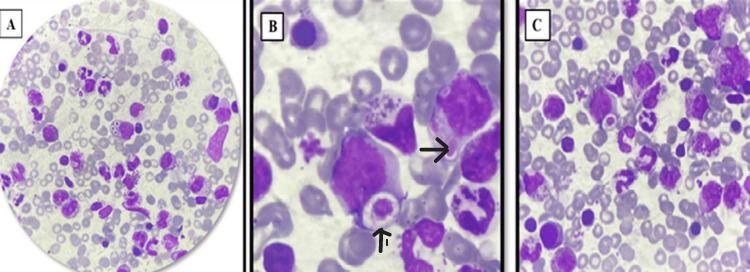 Figure 1
Peer Reviews
No public reviews on file for this paper yet. If you reviewed it on a platform where reviews are public (OpenReview, ICLR, NeurIPS, ICML), you can paste yours below so the community can read it here.
Videos
No videos yet. Explain this paper in a talk, walkthrough, or lecture? Add one.
Taxonomy
TopicsAutoimmune and Inflammatory Disorders Research · T-cell and Retrovirus Studies · Acute Lymphoblastic Leukemia research