Introducing an Experimental Route to Identify and Unify Lab‐Scale Redox‐Flow Battery Cell Performances via Molar Fluxes and Cell Constants
Sebastian Fricke, Luuk Kortekaas, Martin Winter, Mariano Grünebaum

TL;DR
This paper introduces a new experimental method to compare and optimize lab-scale redox flow battery performance using molar fluxes and key parameters.
Contribution
The paper introduces K1critical, ζ, and K2 as novel parameters to standardize and compare lab-scale RFB performance.
Findings
K1critical identifies the optimal operating ratio for efficient charge-discharge cycling.
The cell constant ζ quantifies the impact of RFB setup on performance.
K2 enables comparison of idealized operating parameters across different RFB architectures.
Abstract
Redox flow batteries (RFBs) are a promising technology for grid energy storage based on their high potential for scalability, design flexibility, high efficiency, and long durability, hence great effort has been invested in this area of research. However, due to the large differences in lab‐scale RFB cell design and construction as well their operational performance, fundamental studies on innovative RFB components (e.g., active materials, separators, additives) compare poorly due to the lack of standard setups, settings, and procedures. This work introduces an experimental calibration route for aqueous as well as nonaqueous RFBs based on a simple mass transport model using molar fluxes, enabling one to compare dissimilar lab‐scale RFB cell setups by introducing several RFB parameters: First, K1, which summarizes the operating parameters of an RFB to identify the critical ratio…
Genes, proteins, chemicals, diseases, species, mutations and cell lines named across the full text — each resolved to its canonical identifier and authoritative record.
Click any figure to enlarge with its caption.
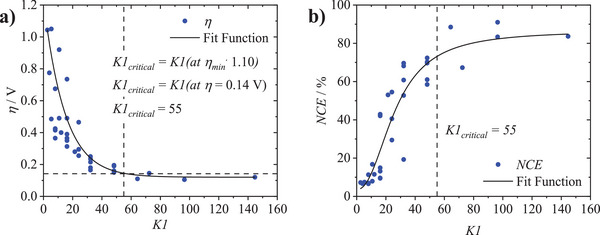 Figure 1
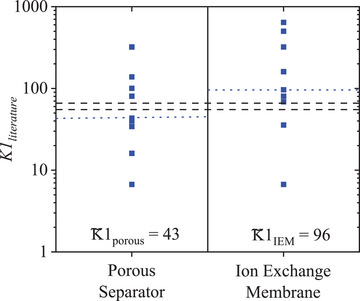 Figure 2
 Figure 3
 Figure 4
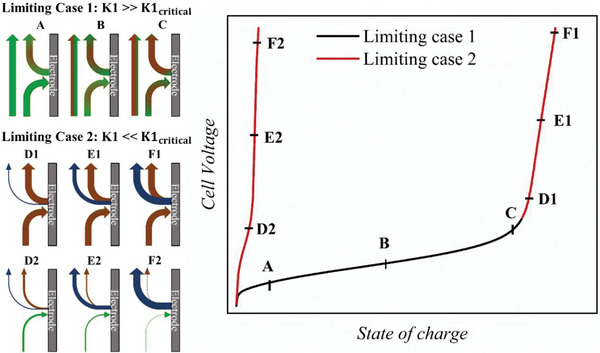 Figure 5
 Figure 6
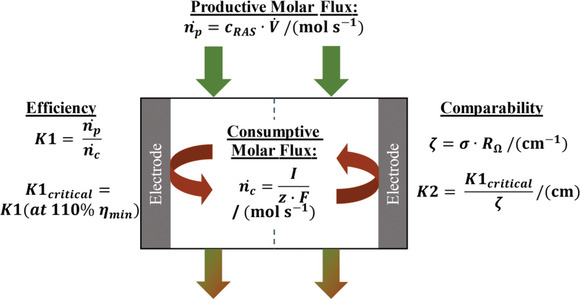 Figure 7
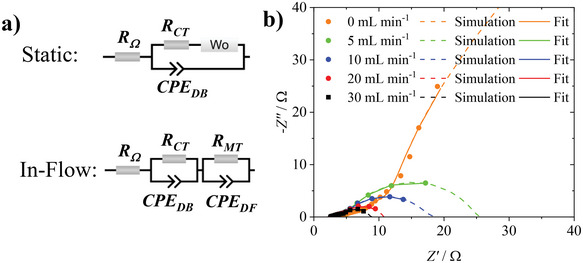 Figure 8
Peer Reviews
No public reviews on file for this paper yet. If you reviewed it on a platform where reviews are public (OpenReview, ICLR, NeurIPS, ICML), you can paste yours below so the community can read it here.
Videos
No videos yet. Explain this paper in a talk, walkthrough, or lecture? Add one.
Taxonomy
TopicsAdvanced battery technologies research · Advanced Battery Technologies Research · Supercapacitor Materials and Fabrication