Serotonin Syndrome Without Overdose: Polypharmacy-Induced Toxicity in a Medically Stable Young Adult
Andy Burk, Abbas Merchant, Haashim Rahman, Aaryan Patel, Ishan Deshmukh, Rida Merchant, Aaron Yam, Amy Yu, Chris Cai, Abbas Hassam, David Le, Constantino G Lambroussis

TL;DR
A young adult developed serotonin syndrome from prescribed medications at normal doses, highlighting the risks of polypharmacy in patients with psychiatric conditions.
Contribution
This case report demonstrates serotonin syndrome can occur without overdose, due to therapeutic polypharmacy in a medically stable patient.
Findings
Serotonin syndrome was diagnosed in a 29-year-old on stable doses of escitalopram, bupropion, and naltrexone.
Clinical improvement with cyproheptadine and benzodiazepines supported the diagnosis despite no evidence of overdose.
The case highlights the risk of cumulative serotonergic effects from multiple prescribed medications at therapeutic doses.
Abstract
Serotonin syndrome is a potentially life-threatening condition caused by excessive serotonin activity in the central and peripheral nervous systems that can lead to symptoms such as altered mental status, autonomic instability (e.g., hyperthermia and hypertensive tachycardia), and neuromuscular abnormalities (e.g., clonus and tremor). We present the case of a 29-year-old male healthcare worker with a history of major depressive disorder (MDD), temporal lobe epilepsy, and suspected obsessive-compulsive disorder (OCD) who presented with sudden-onset agitation, confusion, and abnormal limb movements after his third consecutive 12-hour overnight shift. He had been on stable outpatient doses of escitalopram 20 mg and bupropion XL 150 mg daily for over six months, with naltrexone 50 mg added three months earlier for off-label psychiatric use. In the emergency department, he was treated for…
Genes, proteins, chemicals, diseases, species, mutations and cell lines named across the full text — each resolved to its canonical identifier and authoritative record.
Click any figure to enlarge with its caption.
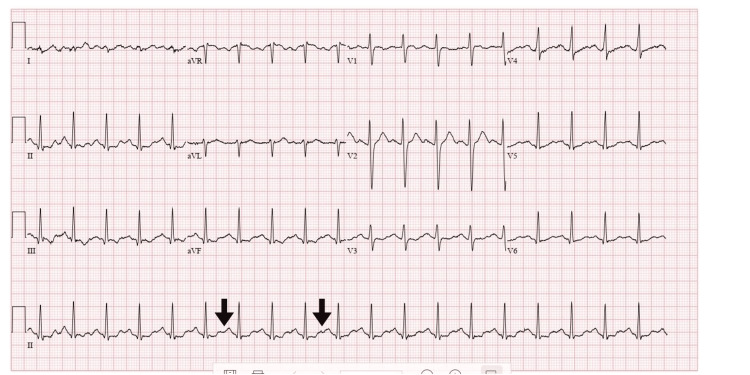 Figure 1
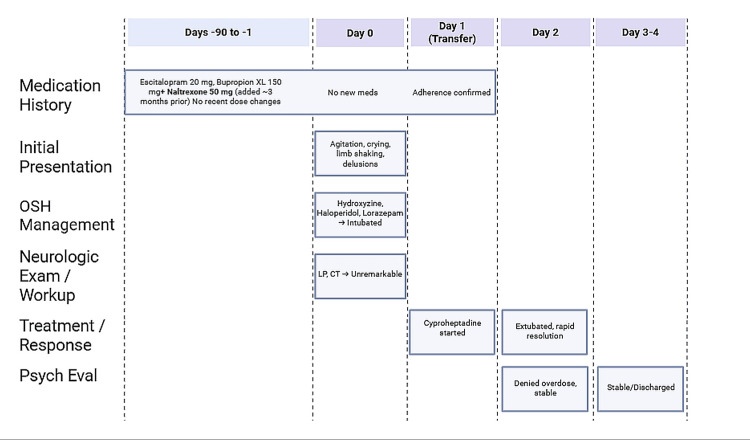 Figure 2
Peer Reviews
No public reviews on file for this paper yet. If you reviewed it on a platform where reviews are public (OpenReview, ICLR, NeurIPS, ICML), you can paste yours below so the community can read it here.
Videos
No videos yet. Explain this paper in a talk, walkthrough, or lecture? Add one.
Taxonomy
TopicsElectroconvulsive Therapy Studies · Treatment of Major Depression · Takotsubo Cardiomyopathy and Associated Phenomena