AI-enabled workforce integration: blended human resource contribution rate in Chinese companies
Kexin Zhang, Cisheng Wu, Manman Ge, Teng Liu

TL;DR
This paper explores how AI is changing employment in Chinese companies by analyzing the contribution of different types of workers to company performance.
Contribution
The paper introduces a new method for calculating blended human resource contribution rates using BP-MIV, highlighting AI's role in workforce integration.
Findings
Blended human resources contribute 73.81% to company performance, with formal employees contributing 19.55%.
Flexible workers and intelligent machine workers contribute 20.26% and 34.00%, respectively, despite being fewer in number.
The BP-MIV method outperforms traditional production function methods in capturing nonlinear workforce synergies.
Abstract
With the development of AI technology, the employment mode of companies is undergoing unprecedented changes. The paper defines the composition of blended human resources of a company as three types of formal employees, flexible workers and intelligent machine workers, constructs a blended human resource contribution rate calculation method based on BP-MIV, and analyzes the data of automobile manufacturing companies in 2022. The results show that the contribution rate of blended human resources to company performance is 73.81%. Among them, the contribution rate of formal employees is 19.55%, while flexible workers and intelligent machine workers, despite their significantly smaller proportion in number compared to formal employees, have contribution rates of 20.26% and 34.00%, respectively. In further discussions, the calculation results of the blended human resource contribution rate…
Genes, proteins, chemicals, diseases, species, mutations and cell lines named across the full text — each resolved to its canonical identifier and authoritative record.
Click any figure to enlarge with its caption.
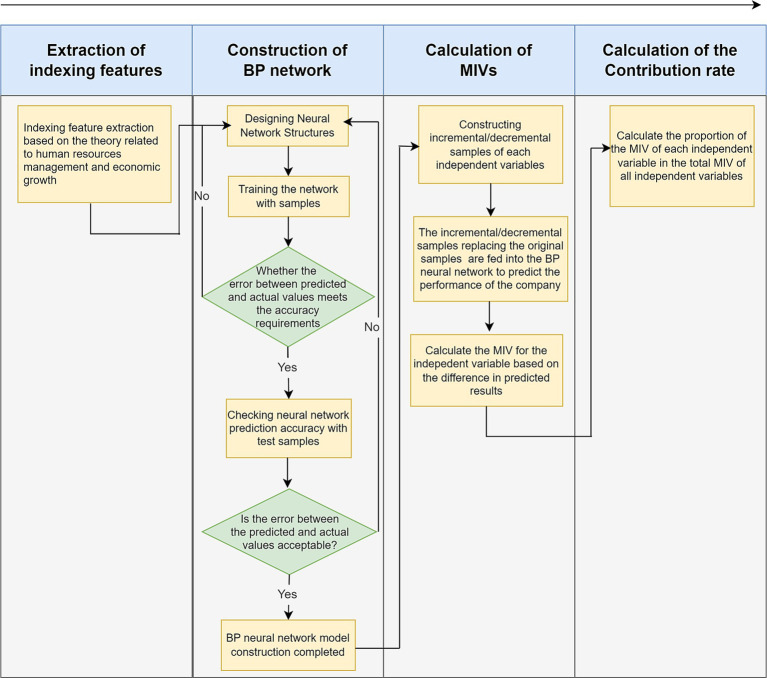 Figure 1
 Figure 2
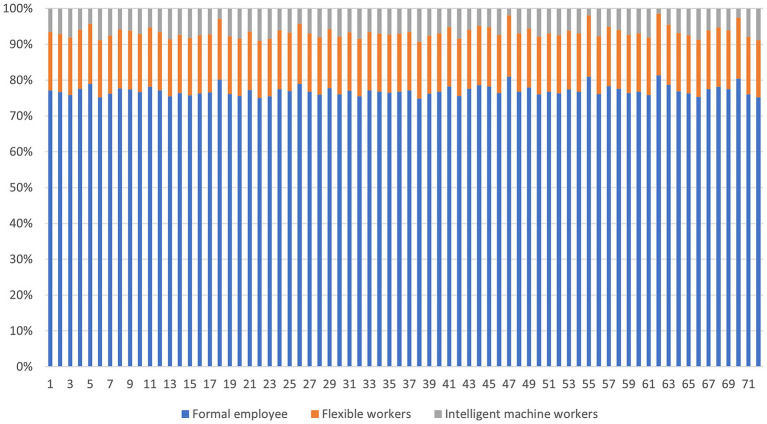 Figure 3
 Figure 4
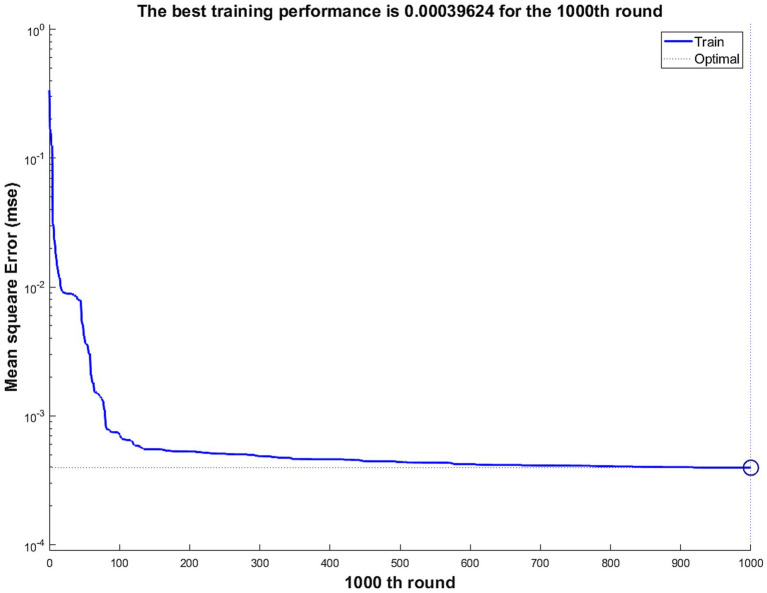 Figure 5
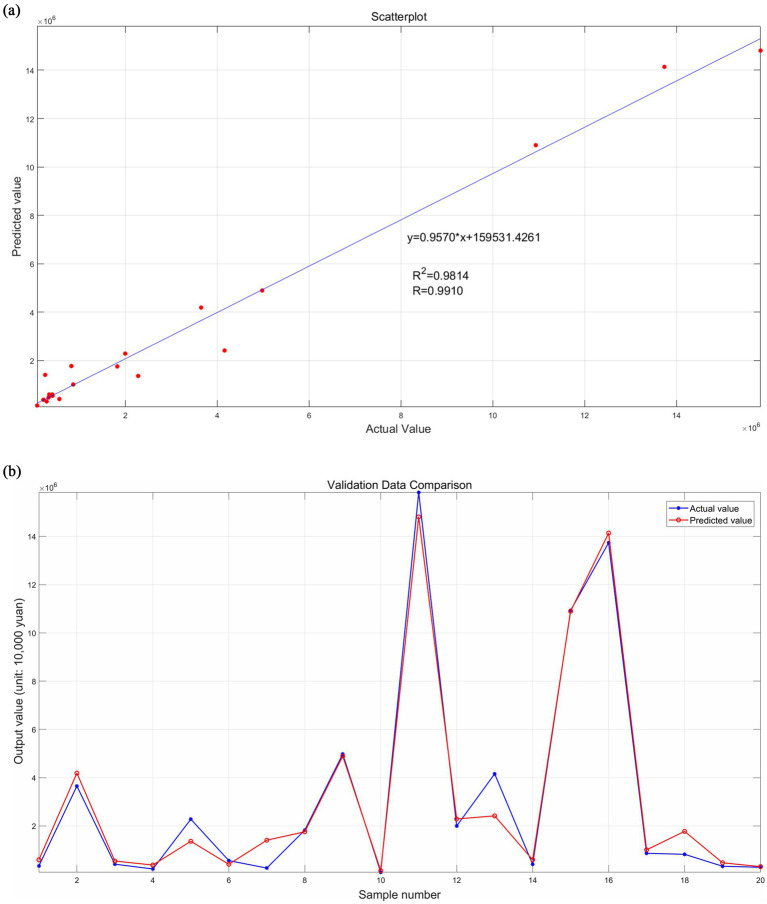 Figure 6
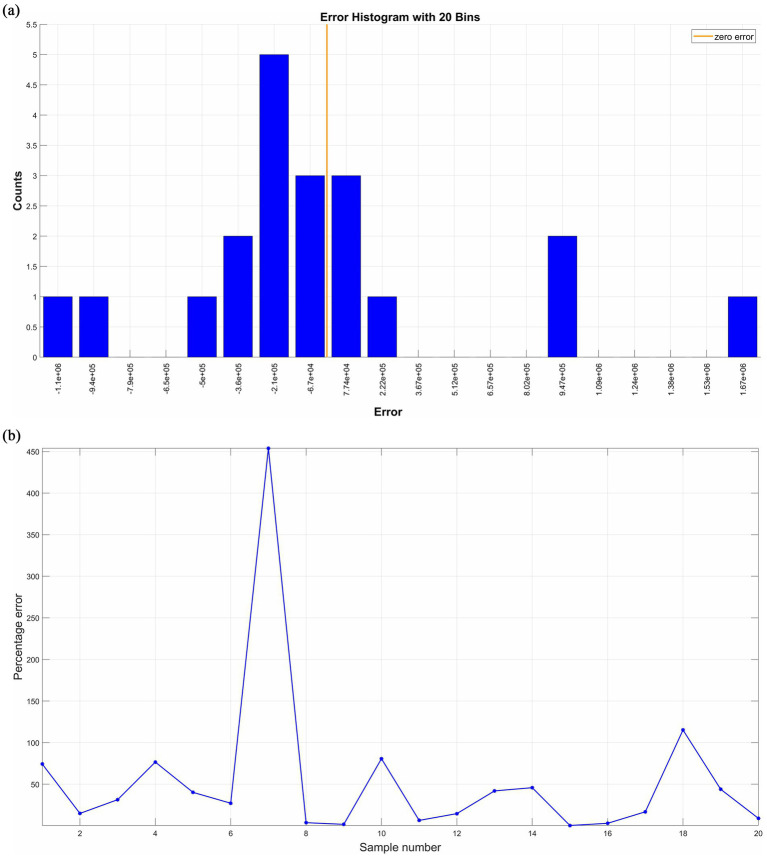 Figure 7
Peer Reviews
No public reviews on file for this paper yet. If you reviewed it on a platform where reviews are public (OpenReview, ICLR, NeurIPS, ICML), you can paste yours below so the community can read it here.
Videos
No videos yet. Explain this paper in a talk, walkthrough, or lecture? Add one.
Taxonomy
TopicsDigital Economy and Work Transformation · Retirement, Disability, and Employment · Employment and Welfare Studies