Contrasting patterns in diversity and community assembly of bacterioplankton and three size fractions of protists in the South China Sea
Xinyi Zheng, Xin Guo, Xiaoqing Lin, Lingfeng Huang

TL;DR
The study explores how different sizes of marine microbes in the South China Sea form communities and how their size and feeding habits influence these patterns.
Contribution
The study reveals how cell size and trophic mode influence microbial community assembly in the South China Sea, challenging existing hypotheses.
Findings
Protist communities show distinct trophic modes across size fractions, with parasitic pico-protists and mixotrophic nano- and micro-protists.
Bacterial and pico-protist communities exhibit stronger vertical stratification due to niche breadth and dispersal patterns.
Stochastic processes dominate microbial community assembly, with homogeneous selection more prominent in nano-protist communities.
Abstract
The microbial food web plays a critical role in marine ecosystems, composed of various cell sizes of microbial organisms. Here, high-throughput sequencing of the 16S and 18S rRNA genes was conducted to detect the community structure and distribution patterns of bacterioplankton (0.2 µm–2 µm) and three size fractions of protist communities, i.e., pico-protist (0.2 µm–2 µm), nano-protist (2 µm–20 µm), and micro-protist (20 µm–200 µm), in the euphotic zone of the South China Sea. The trophic mode compositions of protist communities varied significantly across three size fractions, characterized by a substantial prevalence of parasitic pico-protists (40% amplicon sequence variants) and a greater predominance of mixotrophic taxa within nano- and micro-protist communities. Furthermore, we detected stronger vertical stratification of bacterial and pico-protist communities, corresponding to the…
Genes, proteins, chemicals, diseases, species, mutations and cell lines named across the full text — each resolved to its canonical identifier and authoritative record.
Click any figure to enlarge with its caption.
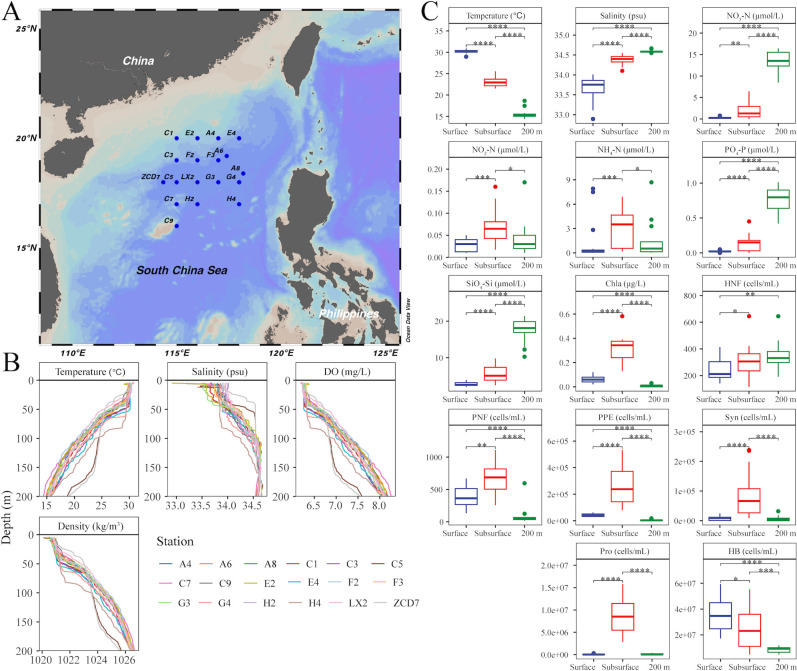 Figure 1
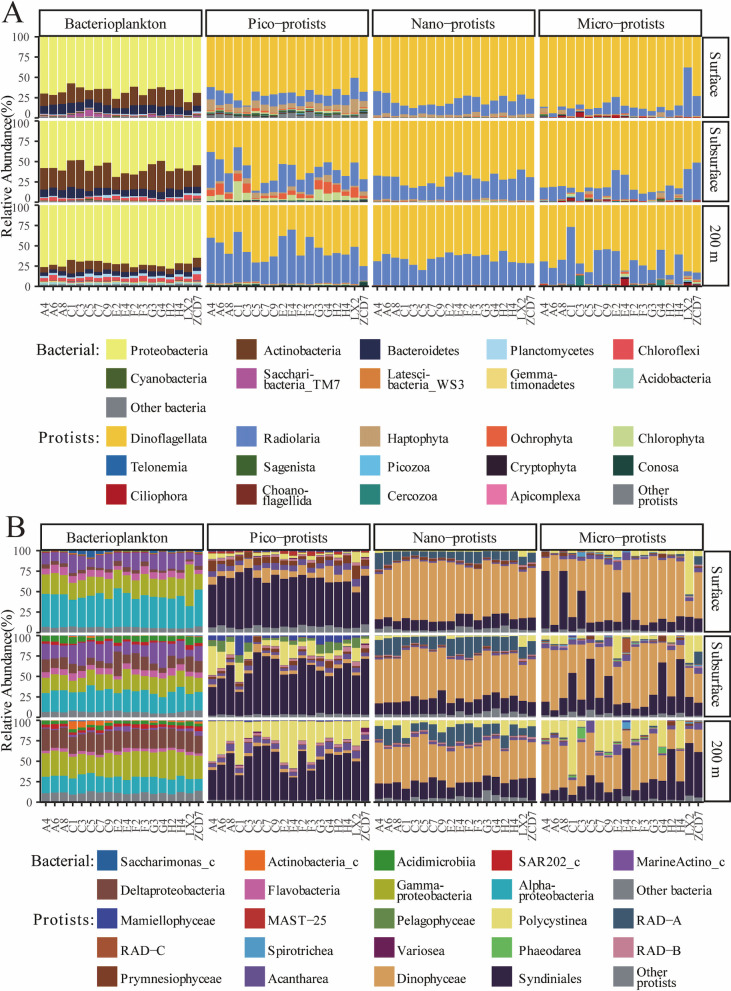 Figure 2
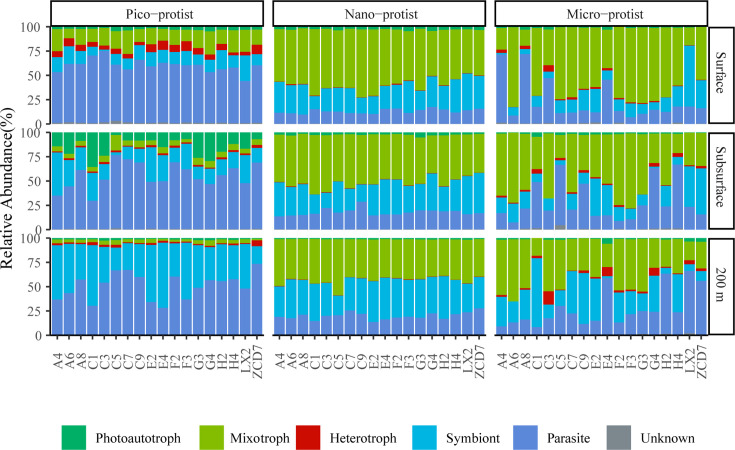 Figure 3
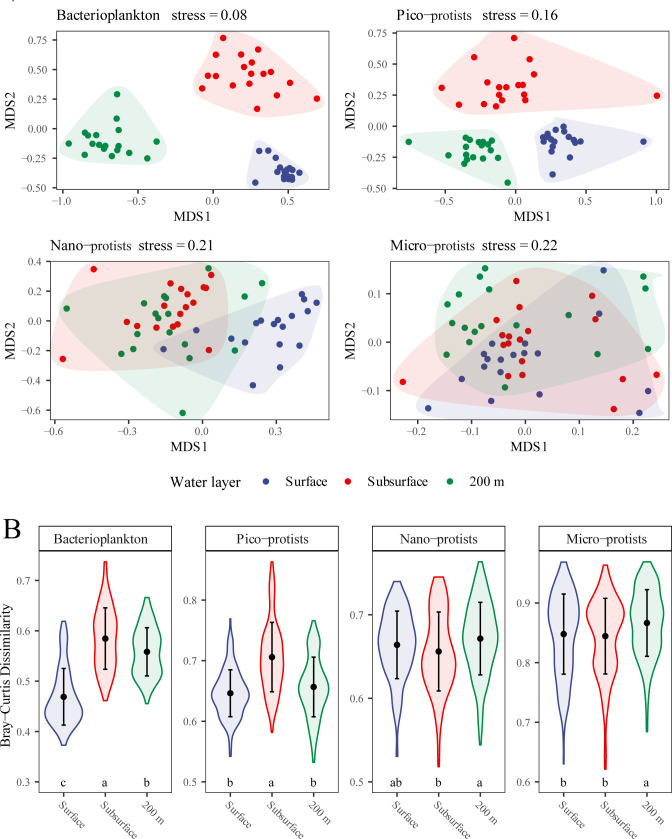 Figure 4
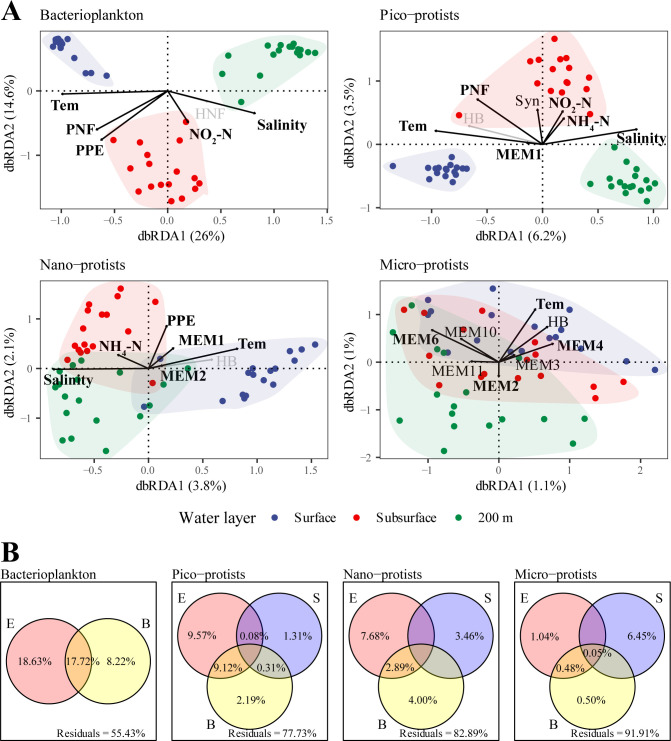 Figure 5
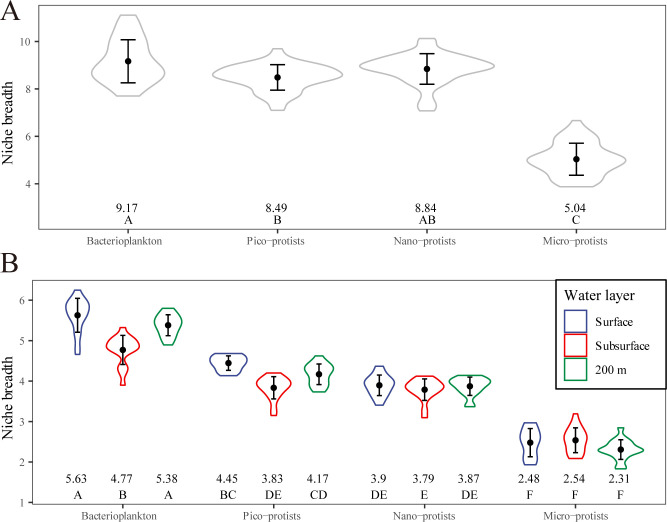 Figure 6
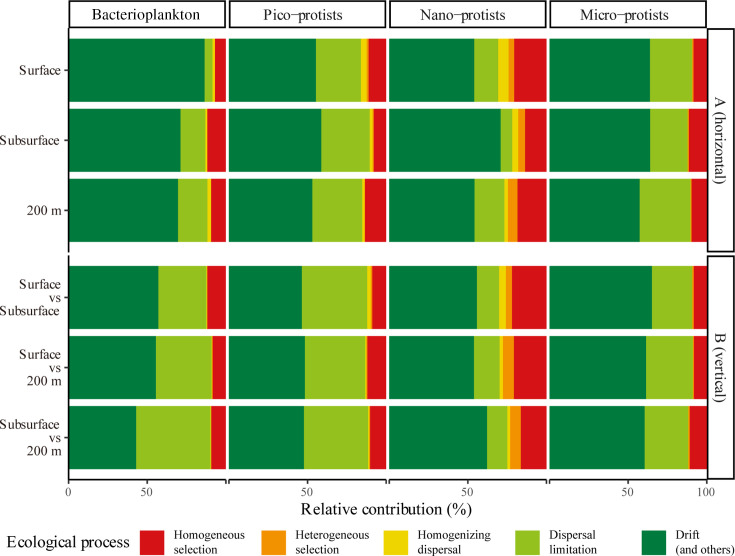 Figure 7
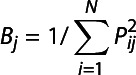 Figure 8
Peer Reviews
No public reviews on file for this paper yet. If you reviewed it on a platform where reviews are public (OpenReview, ICLR, NeurIPS, ICML), you can paste yours below so the community can read it here.
Videos
No videos yet. Explain this paper in a talk, walkthrough, or lecture? Add one.
Taxonomy
TopicsMicrobial Community Ecology and Physiology · Protist diversity and phylogeny · Genomics and Phylogenetic Studies