Cryptic cycling by electroactive bacterioplankton in Trout Bog Lake
Charles N. Olmsted, Mark Gahler, Eric Roden, Ben Peterson, James Lazarcik, Patricia Q. Tran, Maureen Berg, Donald A. Bryant, Danielle Goudeau, Rex R. Malmstrom, Mohan Qin, Katherine D. McMahon

TL;DR
This study explores how electroactive bacteria in a lake cycle organic matter using sunlight, influencing greenhouse gas emissions.
Contribution
The study provides empirical evidence for electron cycling by electroactive bacterioplankton in a lake ecosystem.
Findings
Electron cycling occurs between phototrophic oxidation by Chlorobium and electrogens like Geothrix.
Dissolved organic matter mediates redox processes in anoxic lake regions.
Seasonal and diel patterns in oxidation-reduction potential suggest electroactivity influences methane emissions.
Abstract
The potential for extracellular electron transfer (EET) is a prevailing genomic feature of humic lake bacterioplankton. However, there has been little evidence for the substantial ecological contribution predicted by genetics. We hypothesized that anoxygenic phototrophic electrotrophs and accompanying heterotrophic electrogens cycle dissolved organic matter (DOM) between oxidized and reduced states. We predicted that such bacterioplankton would exhibit diel-scale oscillations due to the light dependency of photosynthesis. Using Trout Bog Lake in Wisconsin, USA, as our model ecosystem, we profiled the water column with depth-discrete metagenomic, physiochemical, and electrochemical analyses. We observed variation in oxidation reduction potential (ORP) in response to sunlight, initiating at depths populated by anoxygenic phototrophs with EET genes. We developed an automated buoy to…
Genes, proteins, chemicals, diseases, species, mutations and cell lines named across the full text — each resolved to its canonical identifier and authoritative record.
Click any figure to enlarge with its caption.
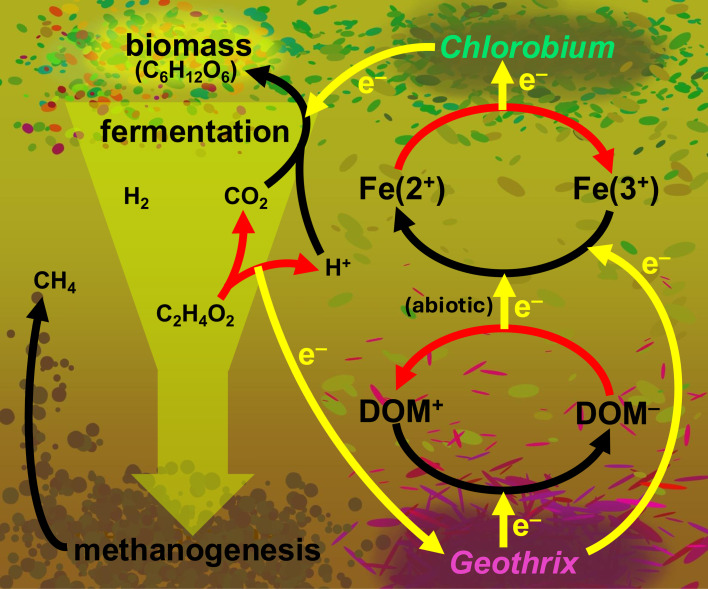 Figure 1
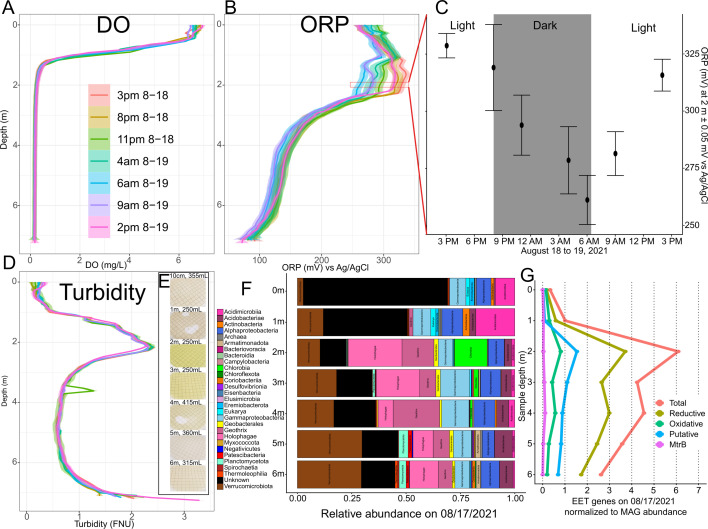 Figure 2
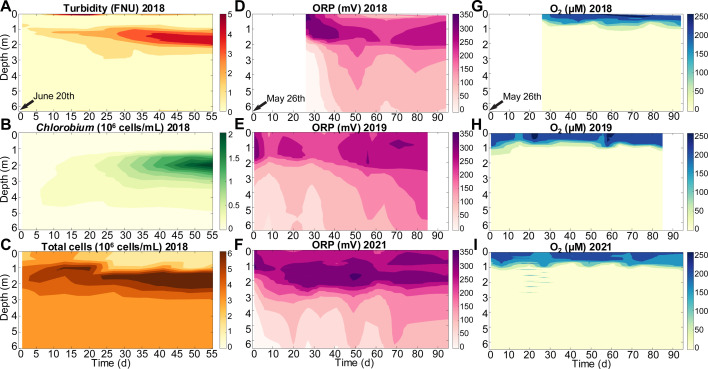 Figure 3
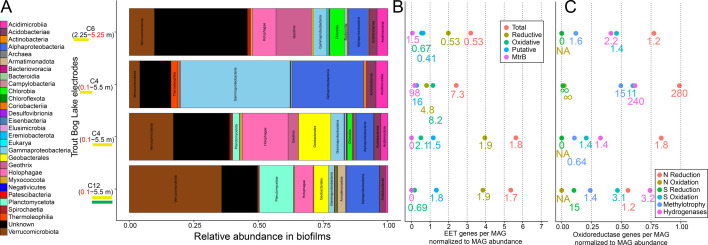 Figure 4
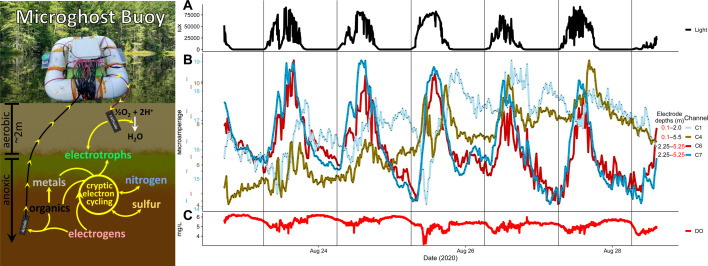 Figure 5
Peer Reviews
No public reviews on file for this paper yet. If you reviewed it on a platform where reviews are public (OpenReview, ICLR, NeurIPS, ICML), you can paste yours below so the community can read it here.
Videos
No videos yet. Explain this paper in a talk, walkthrough, or lecture? Add one.
Taxonomy
TopicsMicrobial Community Ecology and Physiology · Microbial Fuel Cells and Bioremediation · Marine and coastal ecosystems