Ecophysiological behavior of major Fusarium species in response to combinations of temperature and water activity constraints
Marie-Anne Garcia, Rémi Mahmoud, Marie-Odile Bancal, Pierre Bancal, Stéphane Bernillon, Laetitia Pinson-Gadais, Florence Richard-Forget, Marie Foulongne-Oriol

TL;DR
This study explores how different Fusarium species respond to temperature and water activity, revealing how these factors influence their growth and mycotoxin production.
Contribution
The study provides new insights into the ecophysiological behavior of major Fusarium species under combined temperature and water activity conditions.
Findings
F. graminearum and F. avenaceum thrive at high temperatures and water activity levels.
F. poae and F. tricinctum grow well at lower water activity levels.
F. langsethiae shows a unique preference for lower temperatures.
Abstract
Fusarium head blight (FHB) is a devastating fungal disease affecting cereals, caused by Fusarium species that can produce harmful mycotoxins. Fusarium species coexist within the same ecological niche during infection, with their population dynamics and associated mycotoxin patterns strongly influenced by the environment. This study provides a comprehensive investigation of the ecophysiological responses of the major Fusarium species causing FHB under varying abiotic factors. We assessed growth and mycotoxin production of different isolates of Fusarium avenaceum, Fusarium graminearum, Fusarium langsethiae, Fusarium poae, and Fusarium tricinctum under 24 combinations of temperature (θ = 15, 20, 25, 30°C) and water activity levels (aw = 0.99, 0.98, 0.97, 0.96, 0.95, 0.94). Our findings indicated that θ, aw, and their interaction have a main significant impact on species behavior. Thanks to…
Genes, proteins, chemicals, diseases, species, mutations and cell lines named across the full text — each resolved to its canonical identifier and authoritative record.
Click any figure to enlarge with its caption.
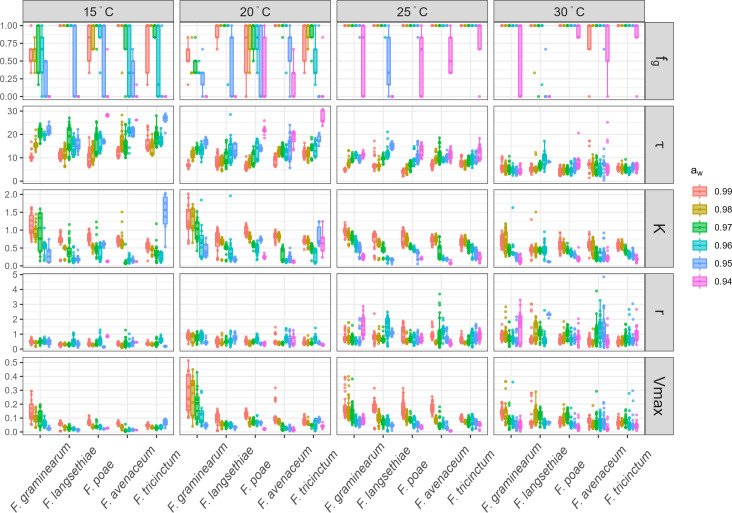 Figure 1
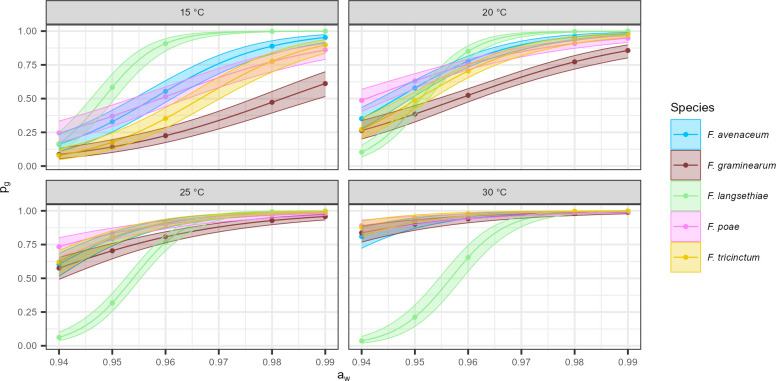 Figure 2
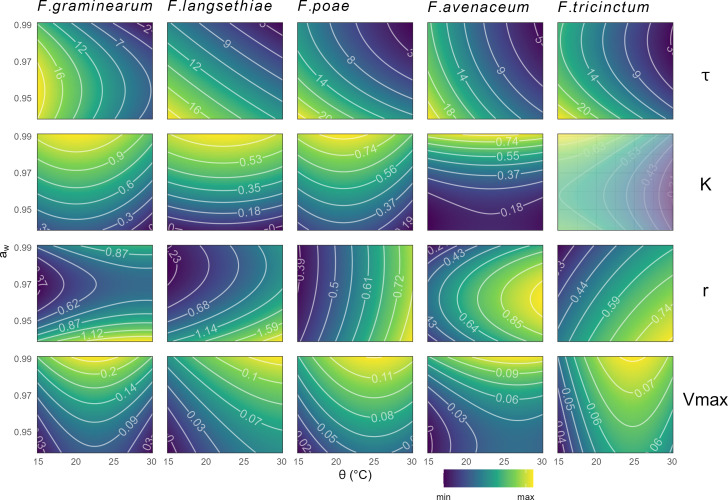 Figure 3
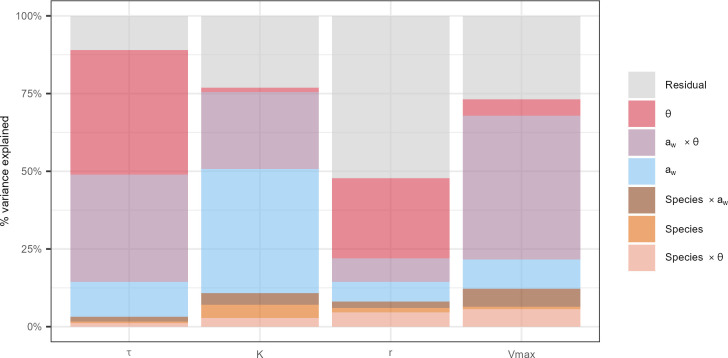 Figure 4
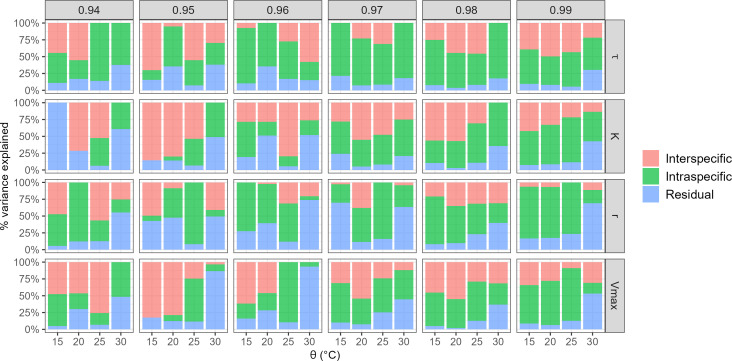 Figure 5
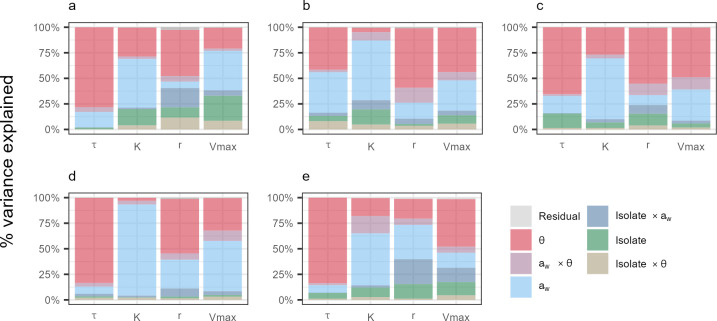 Figure 6
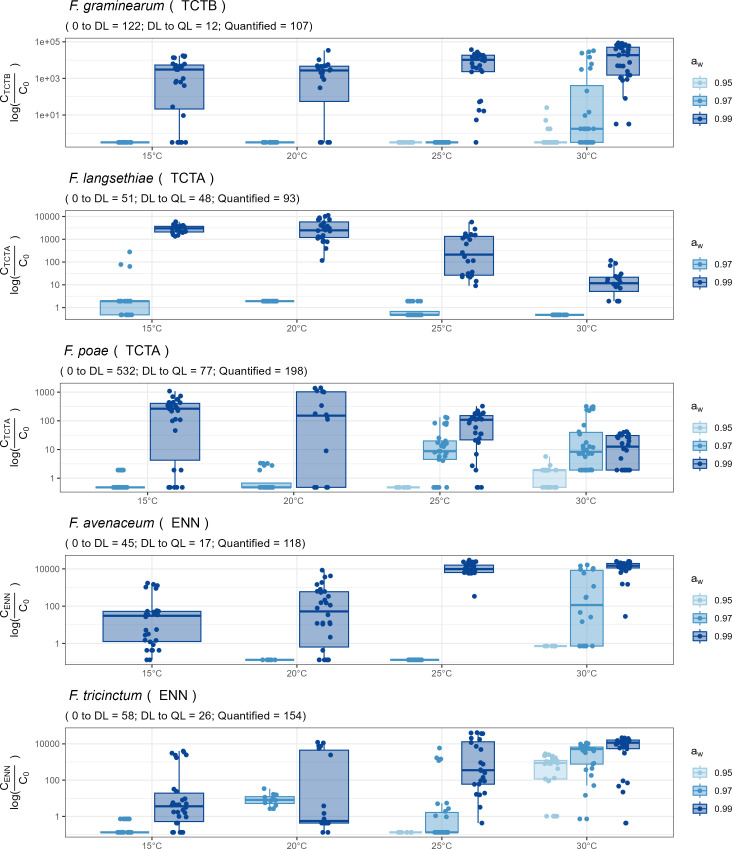 Figure 7
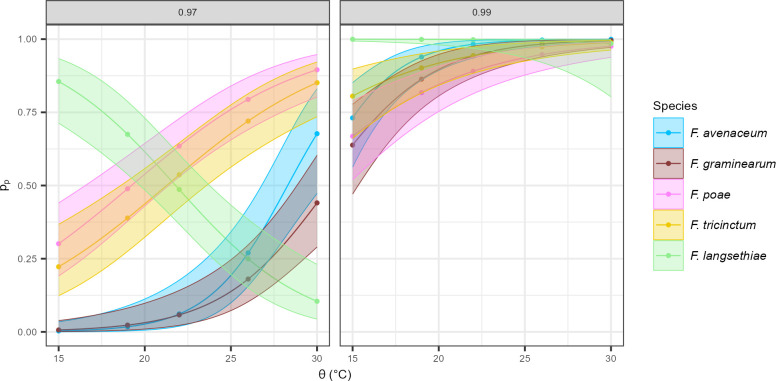 Figure 8
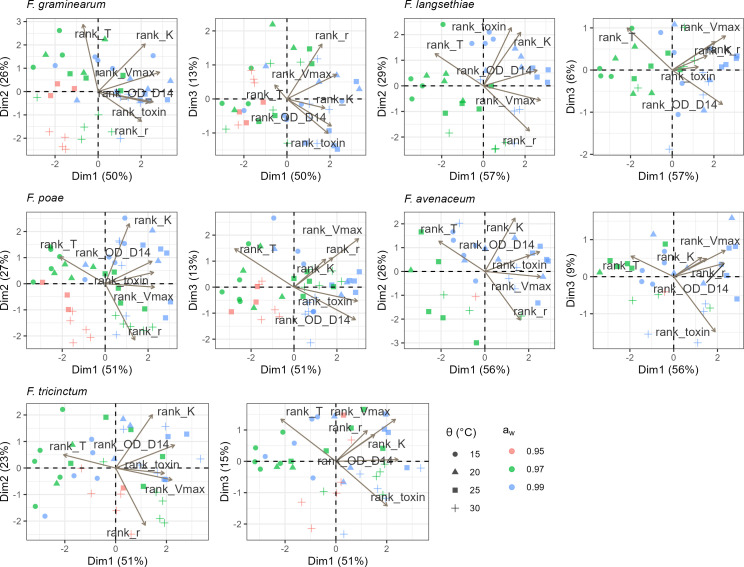 Figure 9
 Figure 10
 Figure 11
Peer Reviews
No public reviews on file for this paper yet. If you reviewed it on a platform where reviews are public (OpenReview, ICLR, NeurIPS, ICML), you can paste yours below so the community can read it here.
Videos
No videos yet. Explain this paper in a talk, walkthrough, or lecture? Add one.
Taxonomy
TopicsPlant Pathogens and Fungal Diseases · Mycotoxins in Agriculture and Food · Mycorrhizal Fungi and Plant Interactions