Xylanolytic metabolism is regulated by coordination of transcription factors XynR and XylR in extremely thermophilic Caldicellulosiruptorales
Mohamad J. H. Manesh, James R. Crosby, Tunyaboon Laemthong, Ryan G. Bing, Stefanie H. Chen, Jason Vailionis, Tania N. N. Tanwee, Ying Zhang, Dmitry A. Rodionov, Michael W. W. Adams, Robert M. Kelly

TL;DR
This study reveals how two transcription factors, XynR and XylR, work together to regulate xylan metabolism in the thermophilic bacterium Anaerocellum bescii.
Contribution
The paper experimentally validates the interdependent regulation of xylan metabolism by XynR and XylR in Caldicellulosiruptorales.
Findings
XynR and XylR regulate 20 of 26 and six of seven xylan-related genes, respectively.
XylR controls xylose isomerase, while XynR controls xylokinase in xylose catabolism.
The dual regulatory system is conserved across all Caldicellulosiruptorales species.
Abstract
Global transcription factors (TFs) control metabolic processes in bacteria to efficiently utilize available carbon. The order Caldicellulosiruptorales has drawn interest due to the ability of its members to degrade components of lignocellulosic biomass. Regulatory reconstruction of Anaerocellum (f. Caldicellulosiruptor) bescii identified two major global transcription factors for xylan utilization, XynR and XylR, and the corresponding putative transcription factor binding sites. Recombinant versions of XynR (LacI family) and XylR (ROK family) were subjected to fluorescence polarization (FP) and biolayer interferometry (BLI) analysis to confirm the predicted binding sites. Four XynR sites and two XylR sites were validated, accounting for 20 of 26 genes regulated by XynR and six of seven genes regulated by XylR. Bioinformatic analysis of the individual genes controlled by the two…
Genes, proteins, chemicals, diseases, species, mutations and cell lines named across the full text — each resolved to its canonical identifier and authoritative record.
Click any figure to enlarge with its caption.
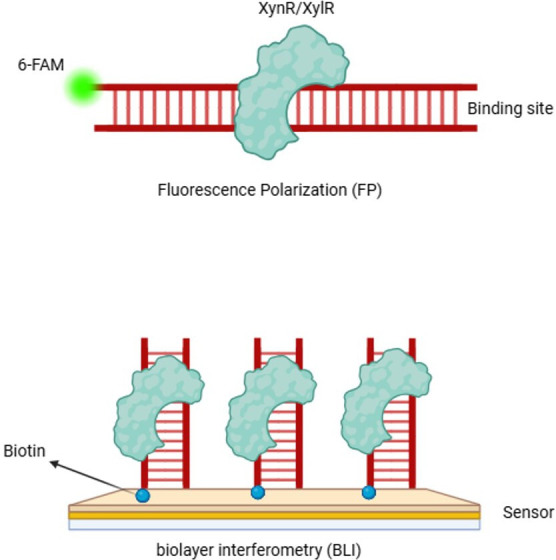 Figure 1
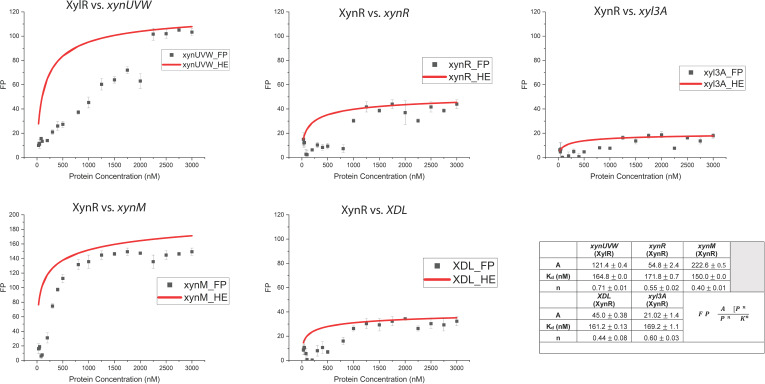 Figure 2
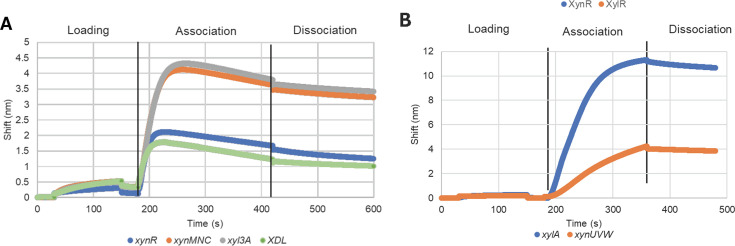 Figure 3
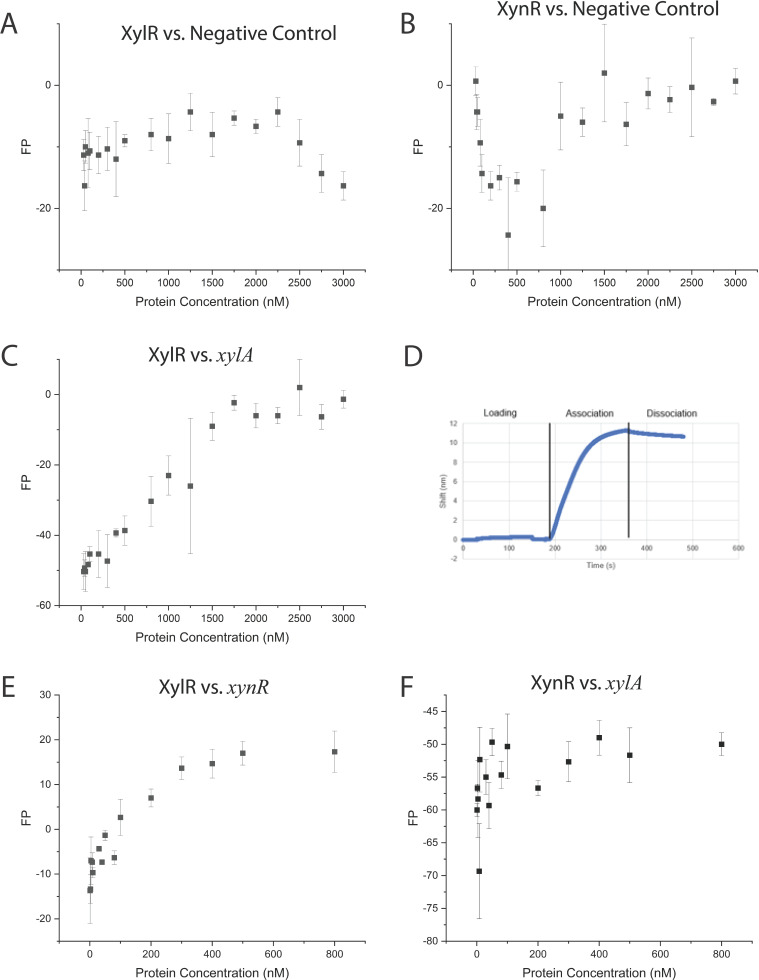 Figure 4
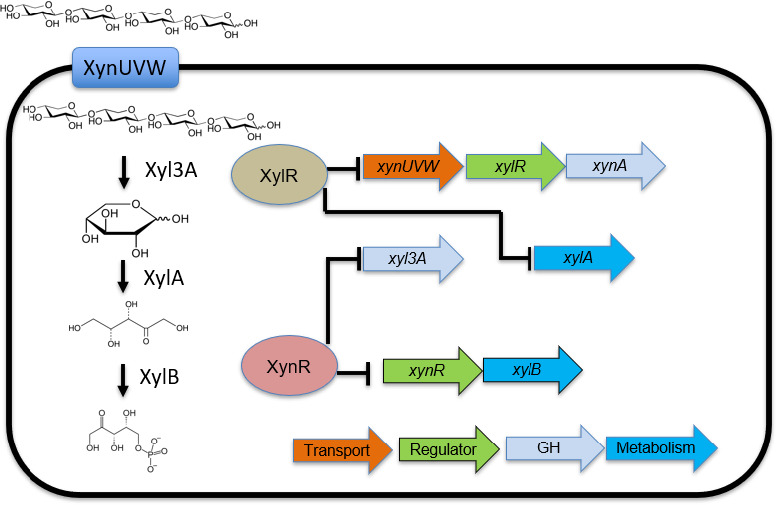 Figure 5
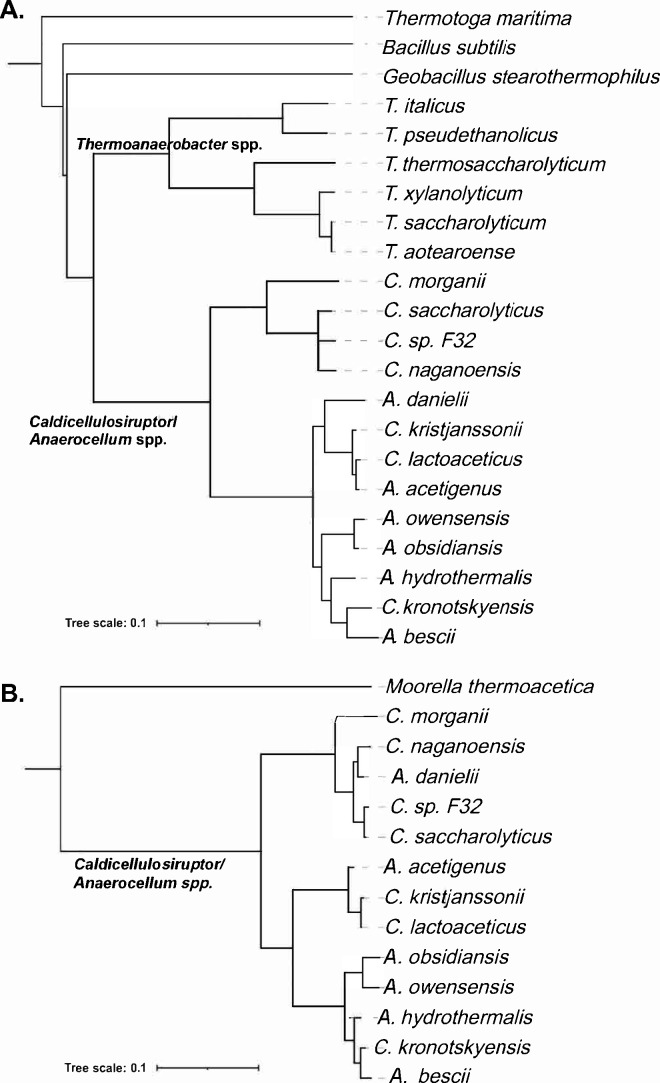 Figure 6
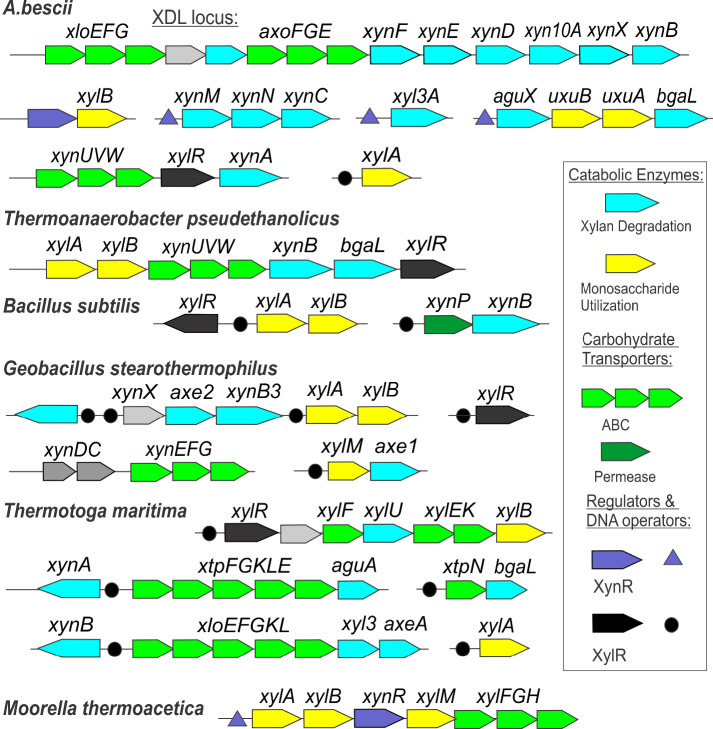 Figure 7
 Figure 8
Peer Reviews
No public reviews on file for this paper yet. If you reviewed it on a platform where reviews are public (OpenReview, ICLR, NeurIPS, ICML), you can paste yours below so the community can read it here.
Videos
No videos yet. Explain this paper in a talk, walkthrough, or lecture? Add one.
Taxonomy
TopicsBiofuel production and bioconversion · Microbial Metabolic Engineering and Bioproduction · Enzyme Production and Characterization