Beyond antimicrobial resistance: MATE-type efflux pump FepA contributes to flagellum formation and virulence in Listeria monocytogenes
Jing Xia, Guo Jiang, Yaru Luo, Zhe Wang, Jingjing Li, Zhanhong Fu, Qian Qin, Jiali Xu, Simin Deng, Mianmian Chen, Yue Han, Lingli Jiang, Houhui Song, Changyong Cheng

TL;DR
This study shows that the FepA efflux pump in Listeria monocytogenes helps the bacteria form flagella and become more virulent, beyond its role in antibiotic resistance.
Contribution
The study reveals FepA's novel role in flagellum formation and virulence in L. monocytogenes.
Findings
FepA deletion reduces flagellum formation and expression of key flagellar proteins like FlhF and FlgG.
Loss of FepA diminishes bacterial invasiveness and intracellular proliferation due to reduced secretion of virulence proteins.
FepA contributes to environmental adaptability and pathogenicity in L. monocytogenes.
Abstract
Listeria monocytogenes is commonly found in nature and can readily contaminate various food products. Efflux pump proteins represent an essential group of proteins in bacteria, playing key roles in numerous biological processes. This study investigates the contribution of FepA to motility and virulence apart from antimicrobial resistance in L. monocytogenes. The minimum inhibitory concentrations of various antimicrobials and the survival of L. monocytogenes in medium containing these agents were assessed. Loss of FepA increased sensitivity to a range of antimicrobial agents and significantly impaired growth under antimicrobial pressure. We examined bacterial flagellum formation, flagellar gene transcription, and protein expression. Results indicated a marked decrease in flagellum formation in ΔfepA mutants, owing to reduced expression of key flagellar proteins such as FlhF and FlgG. In…
Genes, proteins, chemicals, diseases, species, mutations and cell lines named across the full text — each resolved to its canonical identifier and authoritative record.
Click any figure to enlarge with its caption.
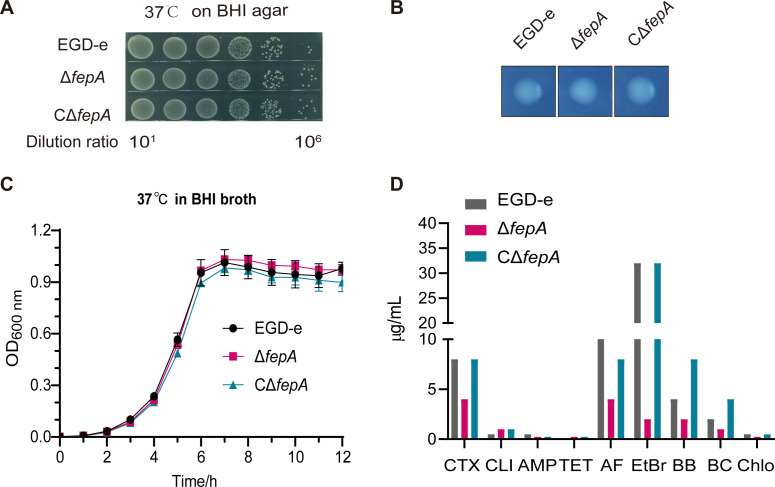 Figure 1
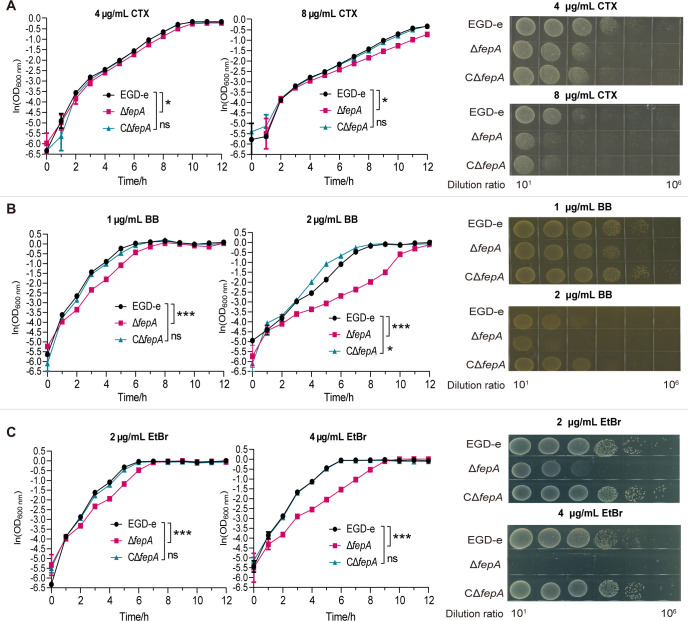 Figure 2
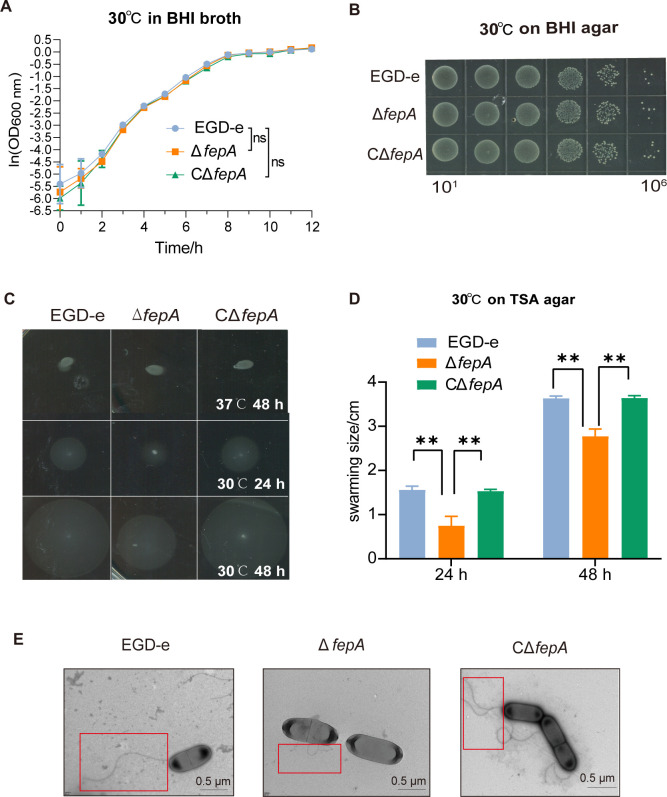 Figure 3
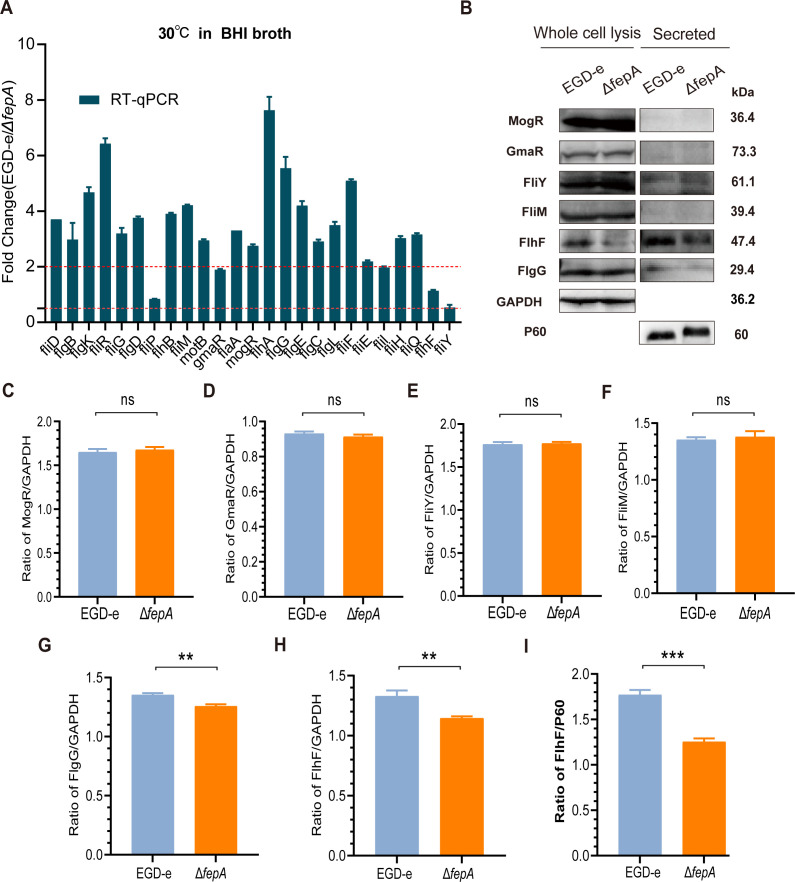 Figure 4
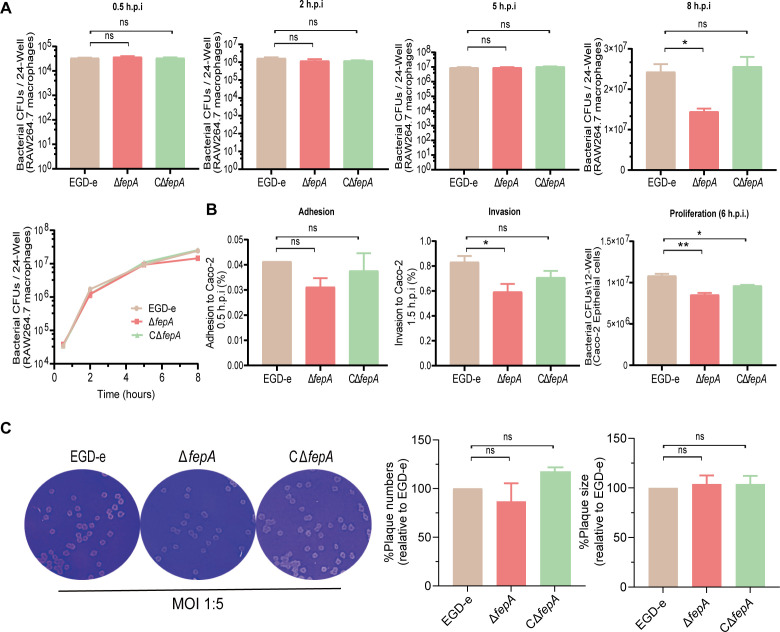 Figure 5
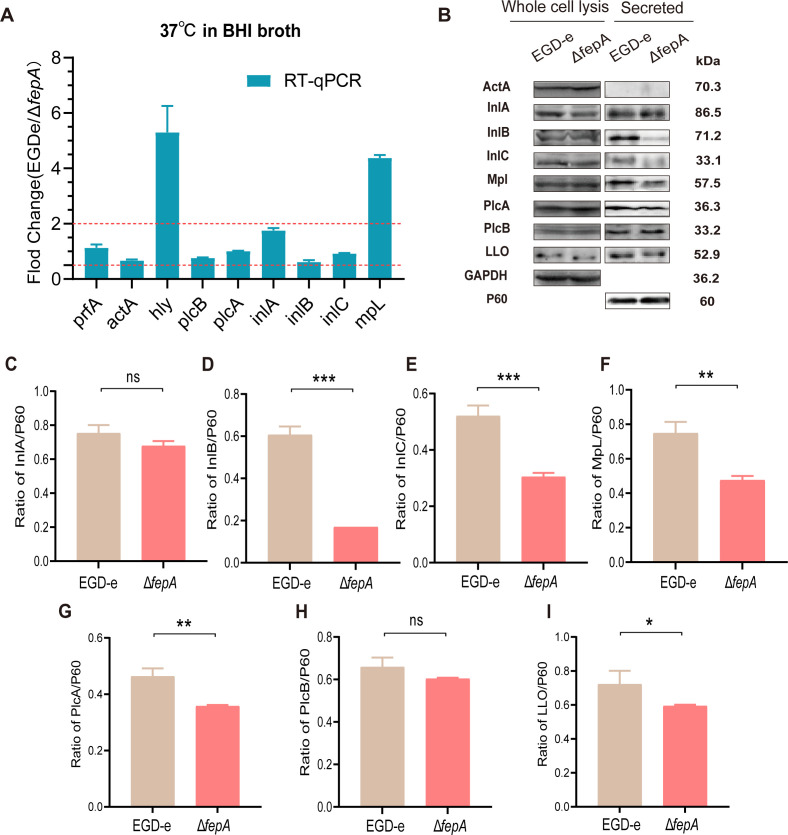 Figure 6
Peer Reviews
No public reviews on file for this paper yet. If you reviewed it on a platform where reviews are public (OpenReview, ICLR, NeurIPS, ICML), you can paste yours below so the community can read it here.
Videos
No videos yet. Explain this paper in a talk, walkthrough, or lecture? Add one.
Taxonomy
TopicsListeria monocytogenes in Food Safety · Vibrio bacteria research studies · Biosensors and Analytical Detection