Resident perception of Obstetrics and Gynecology(OBGYN) residency pelvic anatomy curriculum: a national study
Sharonne Holtzman, Lily McCarthy, Isabel S. Chess, Yara Sifri, Farida Nentin, Frederick Friedman

TL;DR
This study surveyed OBGYN residents nationwide to assess how well their residency programs teach pelvic anatomy, finding that most programs lack effective hands-on training.
Contribution
The study provides national insights into OBGYN residents' perceptions of pelvic anatomy education and highlights the need for improved formal training.
Findings
Only 58.1% of residents experienced formal pelvic anatomy education in their residency.
88.83% of residents had protected lecture time on pelvic anatomy, but only 62.9% found it helpful.
Residents rated formal anatomy lab training as highly beneficial for becoming better surgeons (average rating of 9.0).
Abstract
Pelvic Anatomy is an integral part of the educational objectives in Obstetrics and Gynecology (OBGYN) residency. As a surgical subspecialty, mastering pelvic anatomy is imperative in performing successful surgical procedures, reducing surgical complications, and improving surgical outcomes. The objective of this study was to conduct a national survey to examine the OBGYN resident perspective on their residency’s pelvic anatomy curriculum. After Institutional Review Board at the Mount Sinai Hospital approval, an 18-question survey was distributed to all 241 ACGME program coordinators to distribute to their residents. The survey was circulated electronically using SurveyMonkey tool and on four different dates including: 11/18/2021, 2/24/2022, 4/11/22, and 5/2/22. All demographic information, training environment and perspective on pelvic anatomy was collected anonymous through the…
Genes, proteins, chemicals, diseases, species, mutations and cell lines named across the full text — each resolved to its canonical identifier and authoritative record.
Click any figure to enlarge with its caption.
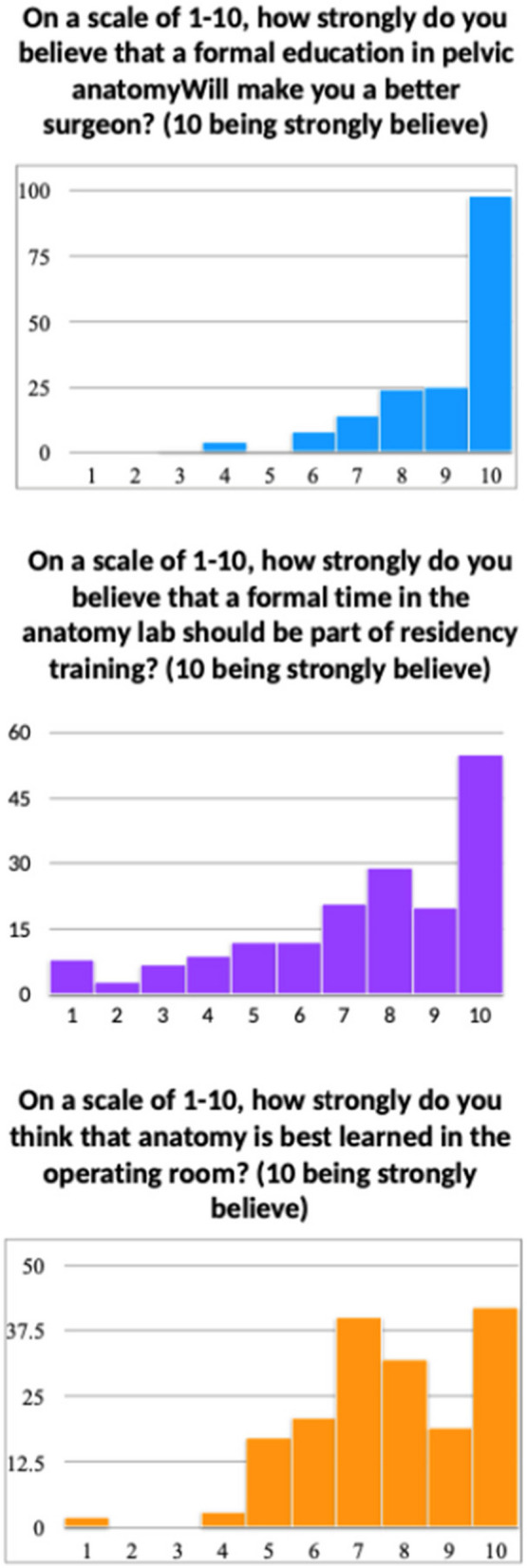 Figure 1
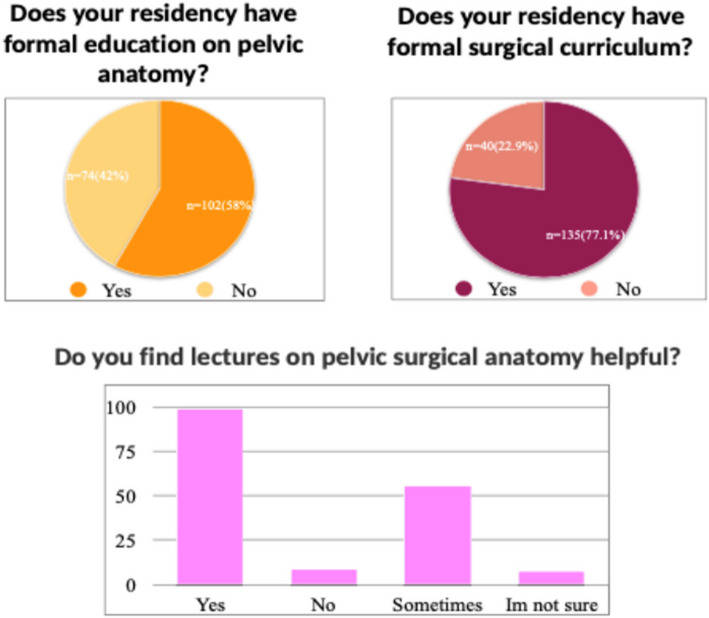 Figure 2
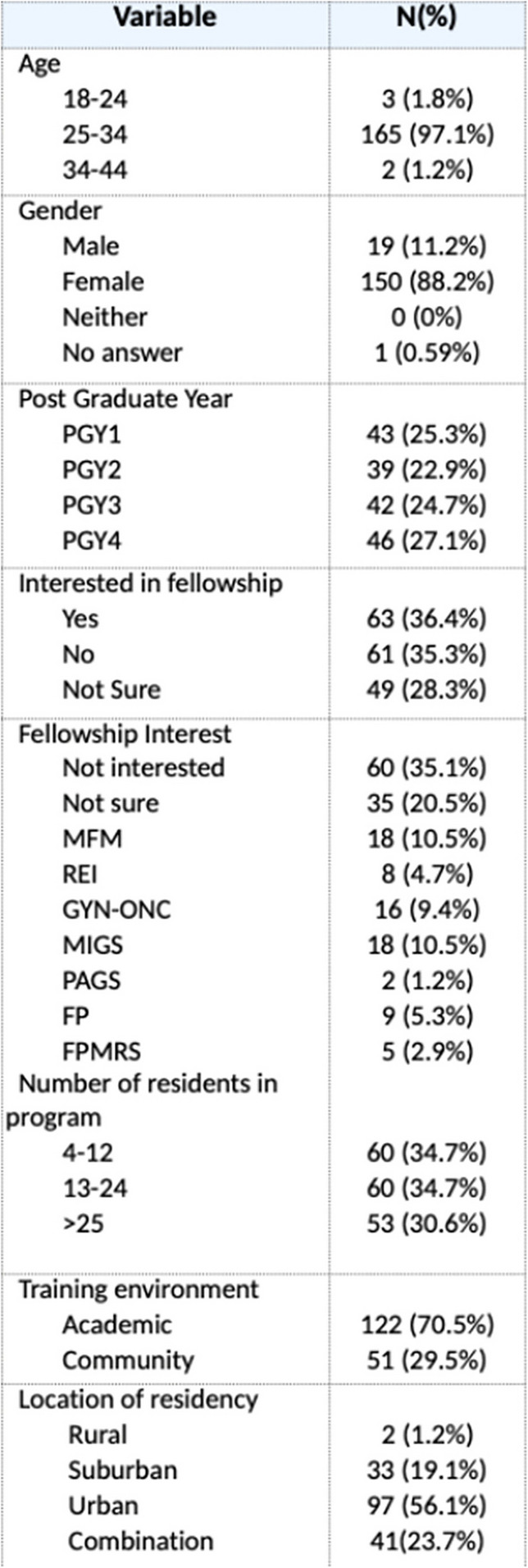 Figure 3
Peer Reviews
No public reviews on file for this paper yet. If you reviewed it on a platform where reviews are public (OpenReview, ICLR, NeurIPS, ICML), you can paste yours below so the community can read it here.
Videos
No videos yet. Explain this paper in a talk, walkthrough, or lecture? Add one.
Taxonomy
TopicsSurgical Simulation and Training · Anatomy and Medical Technology · Pelvic and Acetabular Injuries