Reciprocal Host–Wolbachia Interactions Shape Infection Persistence Upon Loss of Cytoplasmic Incompatibility in Haplodiploids
Felipe Kauai, Nicky Wybouw

TL;DR
This study explores how Wolbachia infections persist in haplodiploid hosts when reproductive interference declines, using simulations and experiments to understand pest control implications.
Contribution
The study introduces a validated computational model to analyze Wolbachia infection dynamics in haplodiploids, revealing how sex ratio distortion supports infection persistence.
Findings
Deterministic models overestimate Wolbachia infection spread compared to simulations by ~8.1%.
FM-CI significantly extends Wolbachia persistence when suppressors are present in the population.
Low-level sex ratio distortion (Sd) can maintain stable Wolbachia infections even after CI is lost.
Abstract
Maternally transmitted symbionts such as Wolbachia spread within host populations by mediating reproductive phenotypes. Cytoplasmic incompatibility (CI) is a reproductive phenotype that interferes with embryonal development when infected males fertilize uninfected females. Wolbachia‐based pest control relies on strong CI to suppress or replace pest populations. Host genetic background determines CI strength, and host suppressors that cause weak CI threaten the efficacy of Wolbachia‐based pest control programs. In haplodiploids, CI embryos either die (Female Mortality, FM‐CI) or develop into uninfected males (Male Development, MD‐CI). The reciprocal spread of host suppressors and infection, as well as the interaction with the two CI outcomes in haplodiploids, remains poorly understood. The contribution of sex allocation distortion (Sd), an independent Wolbachia‐mediated reproductive…
Genes, proteins, chemicals, diseases, species, mutations and cell lines named across the full text — each resolved to its canonical identifier and authoritative record.
Click any figure to enlarge with its caption.
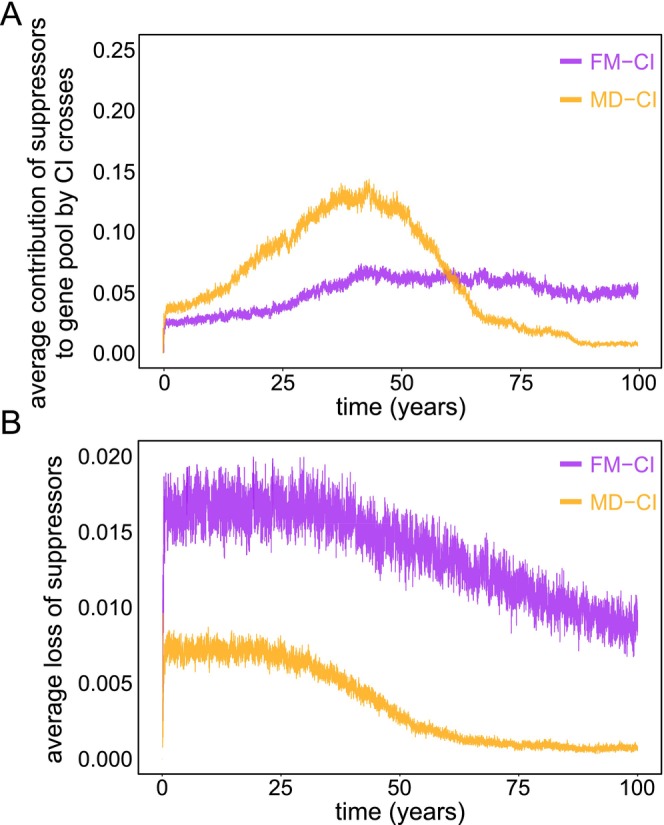 Figure 1
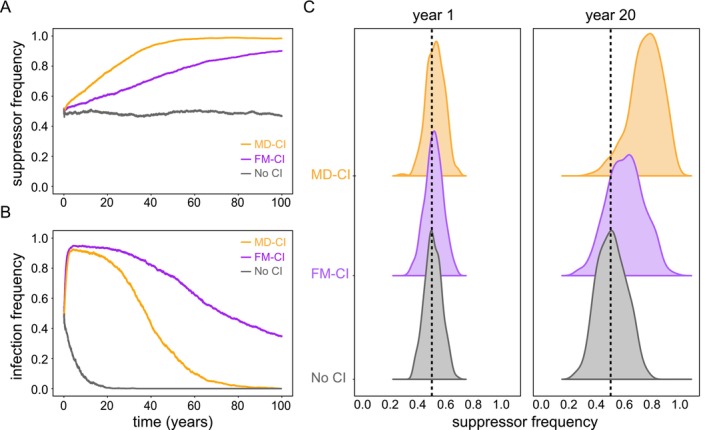 Figure 2
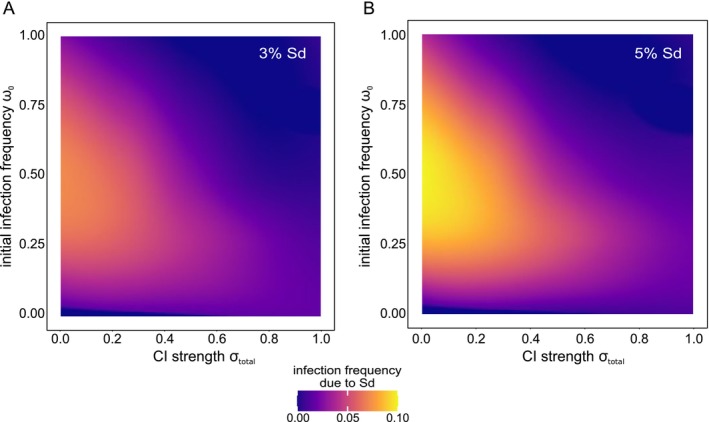 Figure 3
 Figure 4
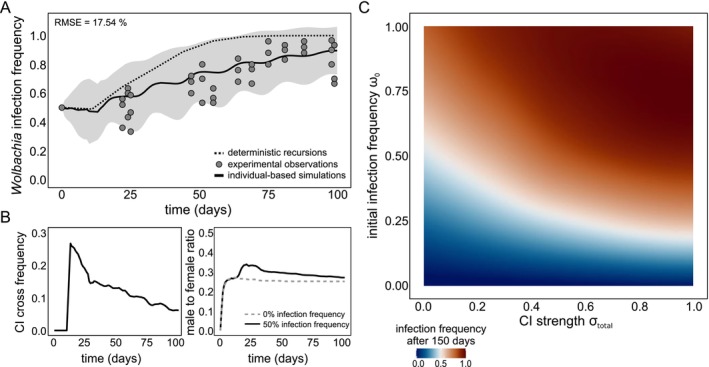 Figure 5
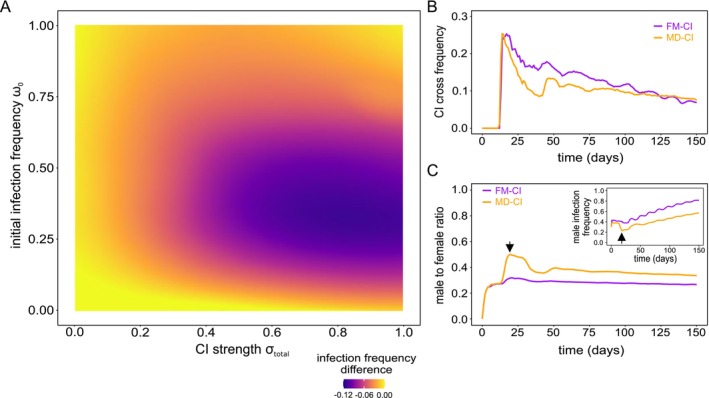 Figure 6
 Figure 7
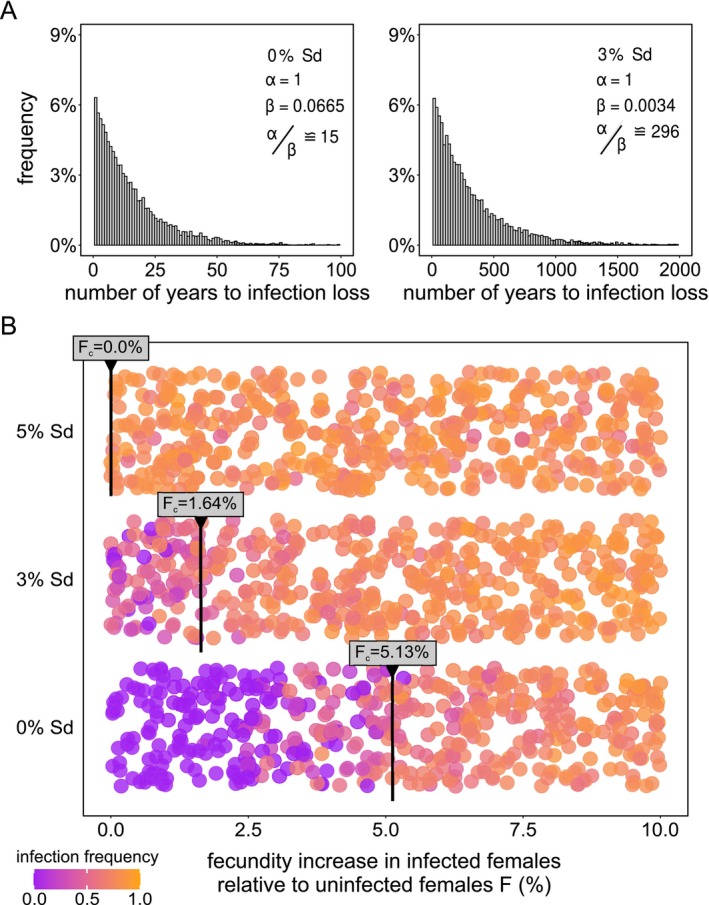 Figure 8
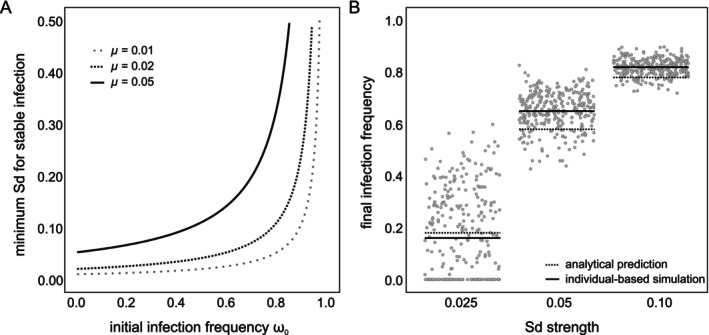 Figure 9
Peer Reviews
No public reviews on file for this paper yet. If you reviewed it on a platform where reviews are public (OpenReview, ICLR, NeurIPS, ICML), you can paste yours below so the community can read it here.
Videos
No videos yet. Explain this paper in a talk, walkthrough, or lecture? Add one.
Taxonomy
TopicsInsect symbiosis and bacterial influences