Understanding Empathy Toward Dissimilar Others in Challenging Everyday Interactions
Rui Watanabe, Hironobu Kuruma

TL;DR
The study explores how people empathize with those who have physical disabilities, revealing distinct brain mechanisms involved in this process.
Contribution
The paper introduces new insights into how empathy for individuals with disabilities involves both affective and cognitive brain systems.
Findings
Observing hemiplegic hand movements elicits stronger negative empathic feelings than nonhemiplegic hand movements.
The dorsal medial prefrontal cortex is more accurate in classifying empathic responses to hemiplegic grasping movements.
Affective empathy regions are attuned to feelings of relief during observed grasping movements.
Abstract
Empathy is essential for human social interaction; however, extending empathy toward individuals with dissimilar characteristics facing daily challenges may be difficult. This study investigated how people without disabilities empathize with individuals with disabilities, specifically those with stroke‐induced hemiplegia, during manual interactions with objects or other people. Using functional magnetic resonance imaging and multivoxel pattern analysis (MVPA), we examined the neural and behavioral mechanisms underlying empathy in these contexts. Participants observed video stimuli featuring individuals with hemiplegia performing hand movements, such as grasping a human hand or an object (a plastic bottle), using either their hemiplegic or nonhemiplegic hands. Behavioral results showed that observing grasping movements performed by the hemiplegic hand elicited stronger negative empathic…
Genes, proteins, chemicals, diseases, species, mutations and cell lines named across the full text — each resolved to its canonical identifier and authoritative record.
Click any figure to enlarge with its caption.
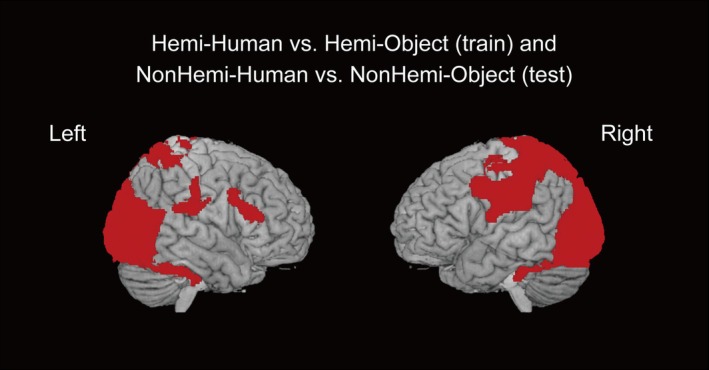 Figure 1
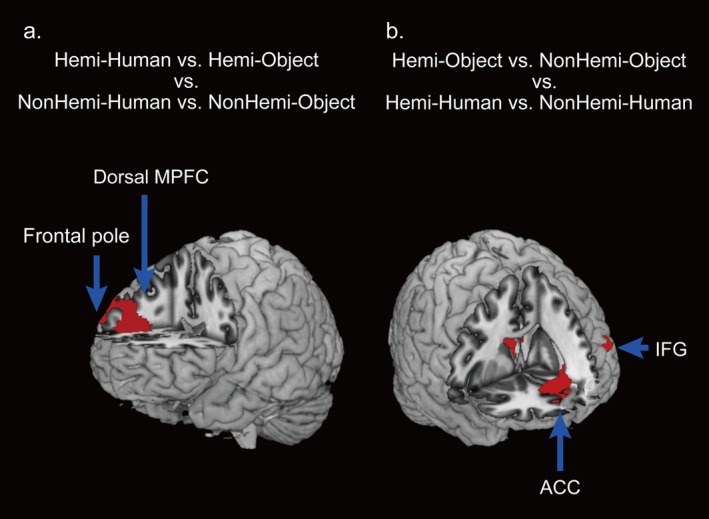 Figure 2
 Figure 3
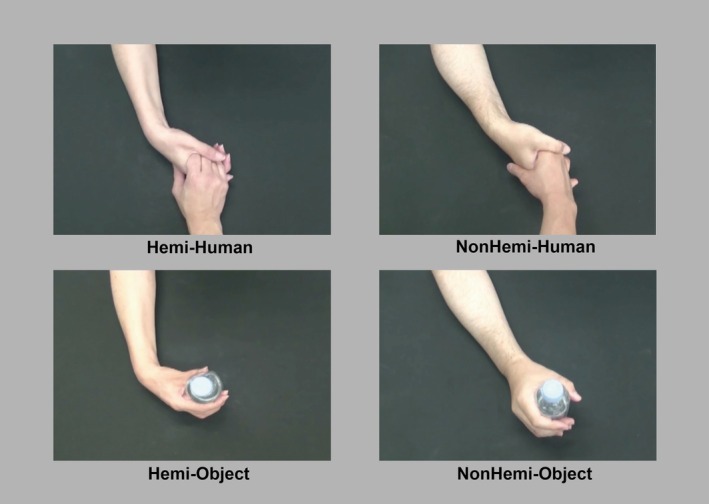 Figure 4
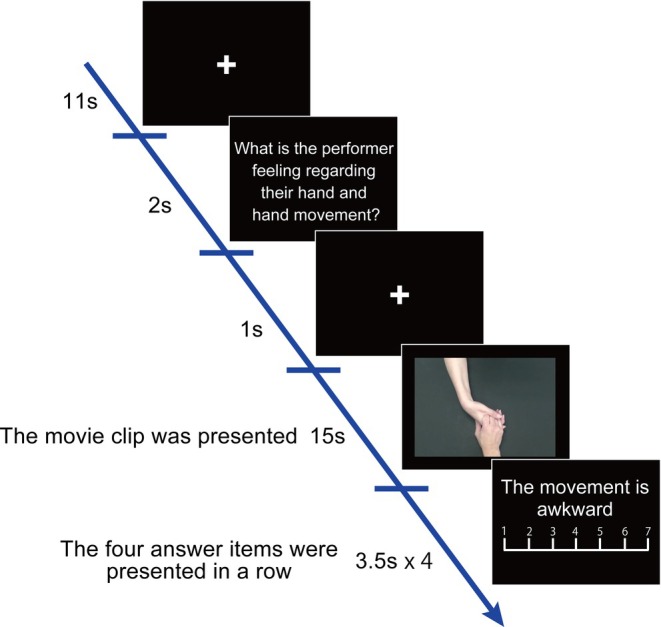 Figure 5
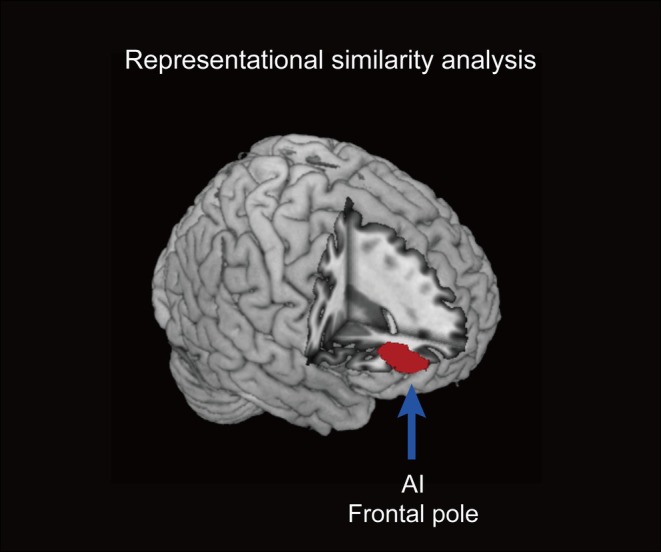 Figure 6
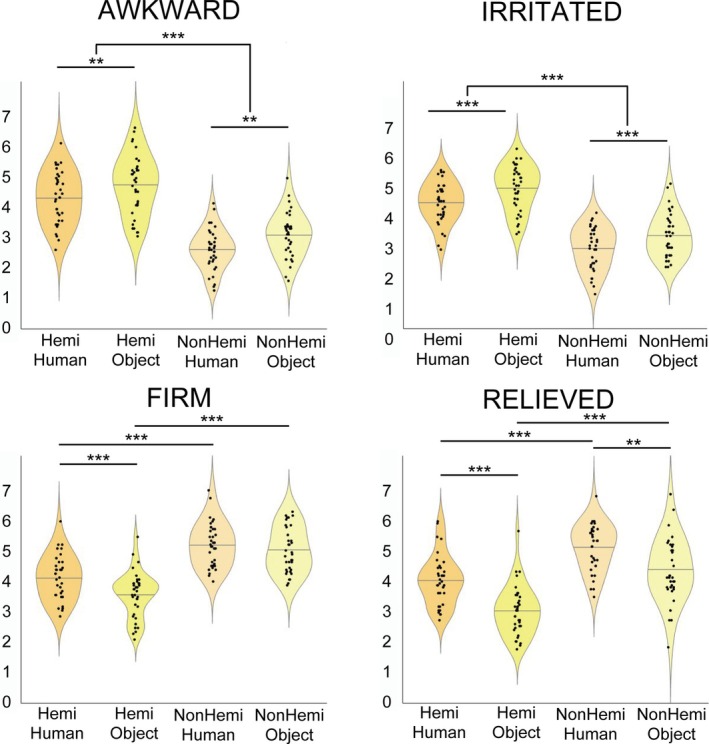 Figure 7
Peer Reviews
No public reviews on file for this paper yet. If you reviewed it on a platform where reviews are public (OpenReview, ICLR, NeurIPS, ICML), you can paste yours below so the community can read it here.
Videos
No videos yet. Explain this paper in a talk, walkthrough, or lecture? Add one.
Taxonomy
TopicsAction Observation and Synchronization · Face Recognition and Perception · Psychosomatic Disorders and Their Treatments