Delayed Self‐Pollination as the Primary Reproductive Strategy in Cypripedium shanxiense S. C. Chen: Observations From Beijing Songshan National Nature Reserve
Qun Wang, Jing An, Meihong Zhu, Xing Zhang, Nan Wang, Baoqiang Zheng

TL;DR
This study finds that the rare orchid Cypripedium shanxiense mainly reproduces through delayed self-pollination, not insect pollination, in a nature reserve in Beijing.
Contribution
The paper identifies delayed self-pollination as the primary reproductive strategy for Cypripedium shanxiense, offering insights for its conservation.
Findings
Cypripedium shanxiense has a 12–16 day flowering period with a 24 day population flowering duration.
Pollen transitions to a liquid state four days after flowering and self-pollinates via gravity.
The species has a 70% natural seed setting rate through self-pollination despite insect visits.
Abstract
Studying the pollination biological characteristics of the rare and endangered plant Cypripedium shanxiense S. C. Chen will provide a scientific basis for formulating conservation strategies for the species. This study investigates the flowering phenology, pollination insects, and the process of pollination and fruiting of C. shanxiense at the Beijing Songshan National Nature Reserve. The results indicate that the flowering period of C. shanxiense is 12–16 days. The full bloom period extends from early June to late June, with the population flowering duration lasting about 24 days. Four days after flowering, the pollen changes from a mucilaginous to a liquid state and flows to the stigma under the force of gravity. C. shanxiense exhibits high self‐compatibility and can produce seeds through self‐pollination, with a natural seed setting rate of 70%. Lasioglossum zonulum was observed…
Genes, proteins, chemicals, diseases, species, mutations and cell lines named across the full text — each resolved to its canonical identifier and authoritative record.
Click any figure to enlarge with its caption.
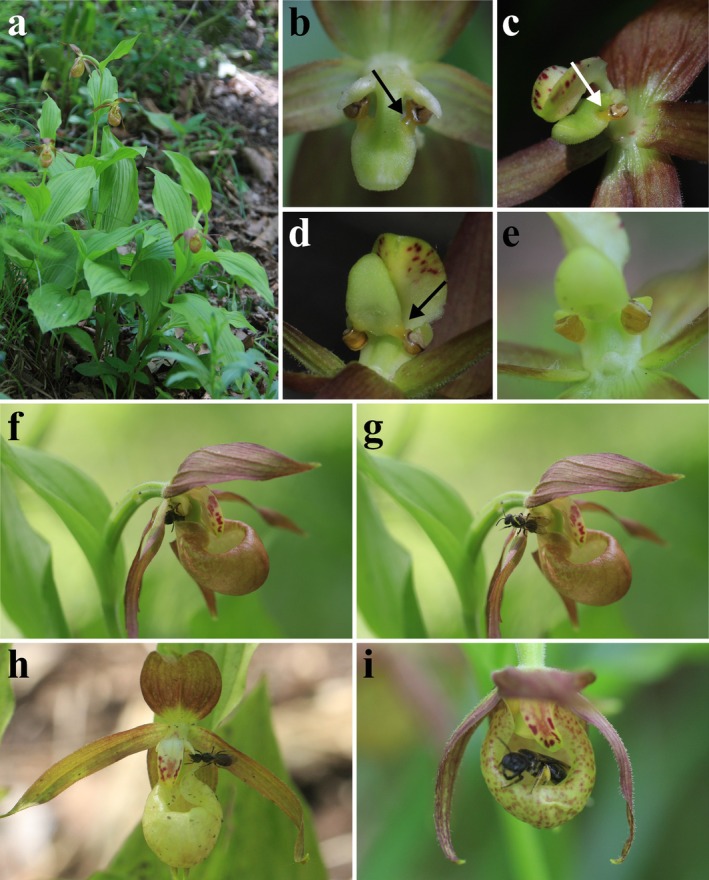 Figure 1
Peer Reviews
No public reviews on file for this paper yet. If you reviewed it on a platform where reviews are public (OpenReview, ICLR, NeurIPS, ICML), you can paste yours below so the community can read it here.
Videos
No videos yet. Explain this paper in a talk, walkthrough, or lecture? Add one.
Taxonomy
TopicsPlant and animal studies · Plant Parasitism and Resistance · Ecology and Vegetation Dynamics Studies