Novel reactions of a profluorescent nitroxide probe with ozone showcase a cascade of solvent-dependent redox reactions
Zachary E. Brown, Carl P. Soltau, David L. Marshall, Steven E. Bottle, Branka Miljevic

TL;DR
This study shows how a chemical probe reacts with ozone, producing detectable fluorescence that could help monitor air pollution.
Contribution
The study reveals a cascade of solvent-dependent redox reactions between a profluorescent nitroxide and ozone.
Findings
BPEAnit shows a dose-dependent fluorescence increase when exposed to low ozone concentrations.
Solvent and moisture significantly influence the reaction products and their distribution.
Alternative solvents like ethanol and cyclohexane produce simpler reaction profiles.
Abstract
The accurate detection of airborne pollutants remains critical for safeguarding both environmental integrity and public health. Equally important is the consideration of method stability and susceptibility to degradation by common reactive atmospheric species, such as ozone. This study examines the reactivity of ozone towards the profluorescent nitroxide (PFN) BPEAnit, a molecular probe that is used in an acellular assay for detecting reactive oxygen species (ROS) from particulate pollution. Online fluorescence measurements revealed a dose-dependent increase in fluorescence when a BPEAnit/DMSO solution was exposed to low-level ozone concentrations (0–544 ppb). Exposure to excess ozone (ca. 9.5 ppm) produced sufficient fluorescent products for LC-MS analysis, which, when combined with isotope labelling, enabled structural characterization of several products, accounting for 43.5% of the…
Genes, proteins, chemicals, diseases, species, mutations and cell lines named across the full text — each resolved to its canonical identifier and authoritative record.
Click any figure to enlarge with its caption.
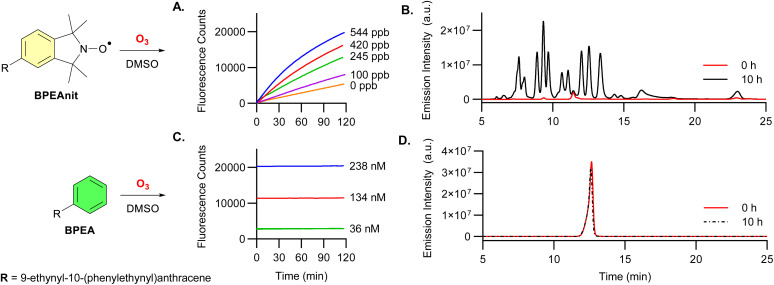 Figure 1
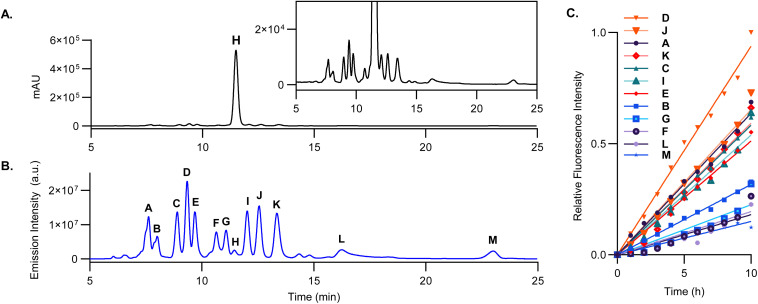 Figure 2
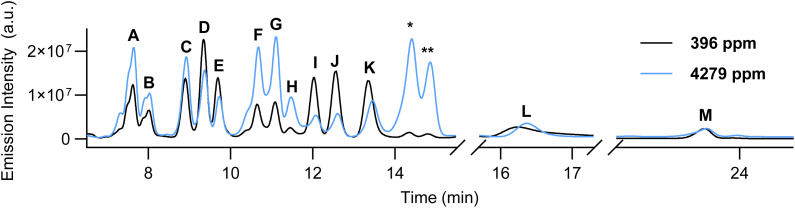 Figure 3
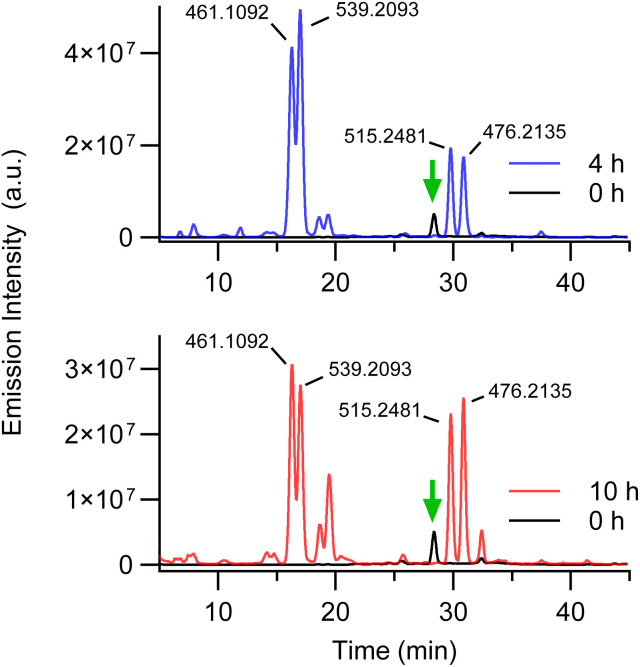 Figure 4
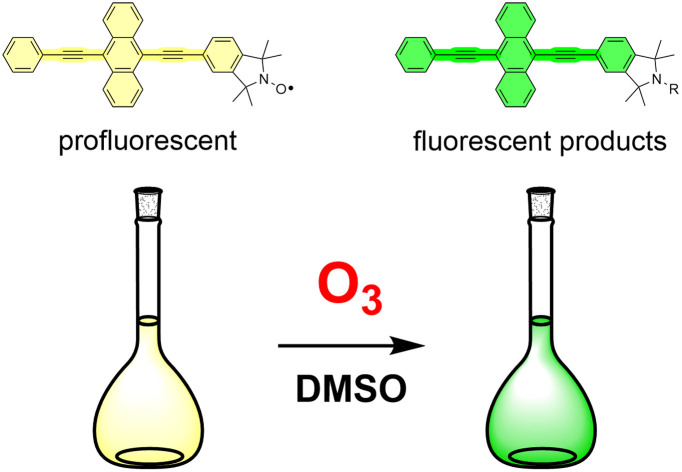 Figure 5
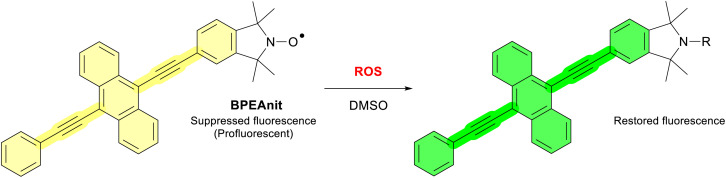 Figure 6
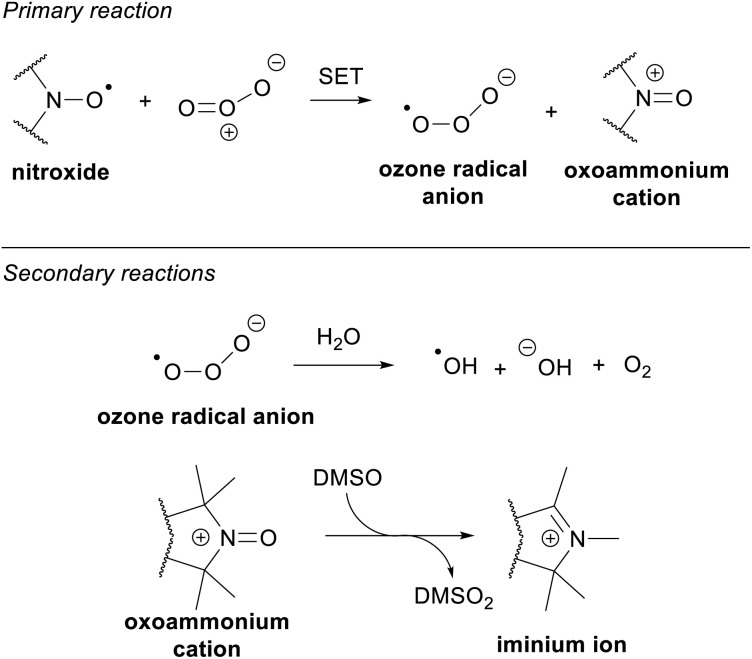 Figure 7
 Figure 8
Peer Reviews
No public reviews on file for this paper yet. If you reviewed it on a platform where reviews are public (OpenReview, ICLR, NeurIPS, ICML), you can paste yours below so the community can read it here.
Videos
No videos yet. Explain this paper in a talk, walkthrough, or lecture? Add one.
Taxonomy
TopicsElectron Spin Resonance Studies · Analytical Chemistry and Sensors · Nitric Oxide and Endothelin Effects