PDLIM3 expression is implicated in the invasive behavior of glioblastoma stem cells and their ability to form neurospheres
Yvan Nicaise, Caroline Delmas, Elisabeth Cohen-Jonathan-Moyal, Catherine Seva

TL;DR
This study shows that PDLIM3 helps glioblastoma stem cells become more invasive and form spheres, which may explain why the cancer recurs.
Contribution
The study is the first to show that PDLIM3 contributes to glioblastoma aggressiveness by promoting stem cell invasion and neurosphere formation.
Findings
PDLIM3 suppression reduces glioblastoma stem cell invasion.
PDLIM3 is essential for neurosphere formation by glioblastoma stem cells.
Abstract
The recurrence of glioblastoma can be attributed to the high invasiveness and resistance of glioblastoma stem cells (GSCs). Therefore, it is crucial to investigate the molecular mechanisms that drive the agressiveness of these cells. This research focuses on the actin-associated protein PDLIM3 that we found overexpressed in GBM and in highly invasive GSCs. Suppressing PDLIM3 expression with targeted siRNAs significantly decreases cell invasion. Additionally, our findings highlight that PDLIM3 is essential for GSCs in forming neurospheres. This research provides the first evidence that PDLIM3 may contribute to the aggressiveness of glioblastoma by facilitating GSCs sphere formation and enhancing their invasiveness.
Genes, proteins, chemicals, diseases, species, mutations and cell lines named across the full text — each resolved to its canonical identifier and authoritative record.
Click any figure to enlarge with its caption.
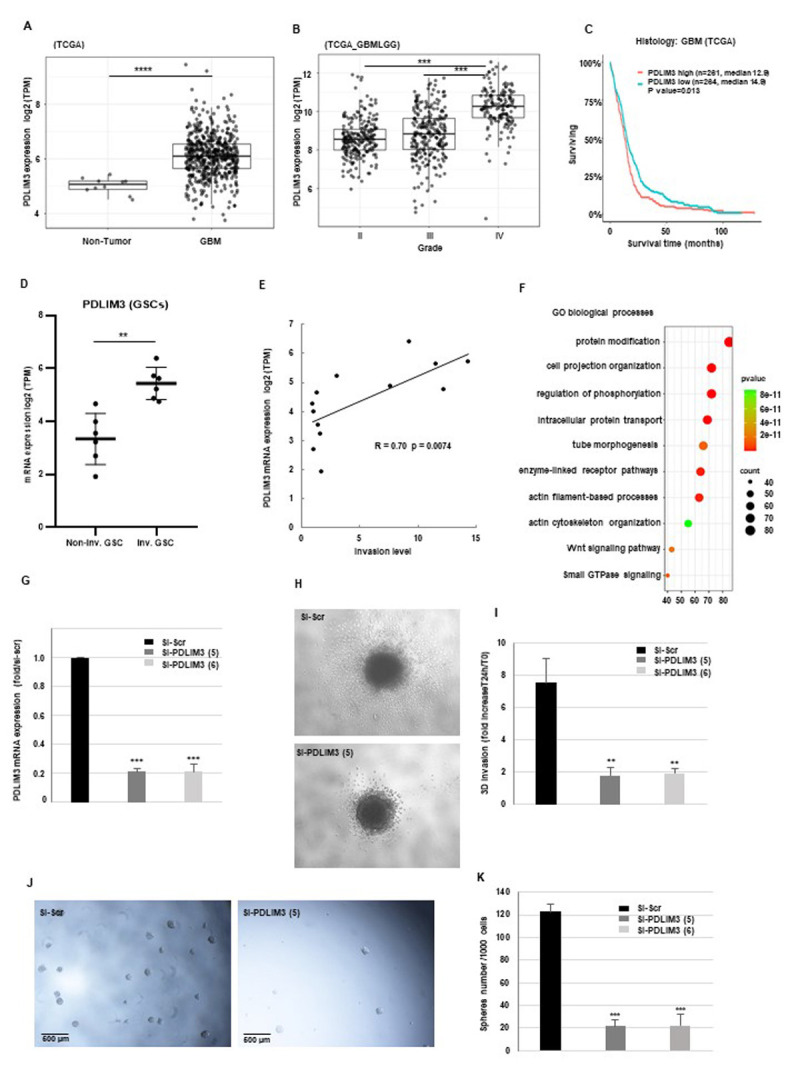 Figure 1
Peer Reviews
No public reviews on file for this paper yet. If you reviewed it on a platform where reviews are public (OpenReview, ICLR, NeurIPS, ICML), you can paste yours below so the community can read it here.
Videos
No videos yet. Explain this paper in a talk, walkthrough, or lecture? Add one.
Taxonomy
TopicsChemokine receptors and signaling · Glioma Diagnosis and Treatment · Neuroblastoma Research and Treatments