Catheter Ablation of Right Ventricular Endocavitary Arrhythmias
Ikram U. Haq, Fatima M. Ezzeddine, Nader Al-Shakarchi, Samuel J. Asirvatham, Freddy Del-Carpio Munoz, Abhishek J. Deshmukh, Christopher V. DeSimone, Paul A. Friedman, Gurukripa N. Kowlgi, Malini Madhavan, Peter A. Noseworthy, Suraj Kapa, Konstantinos C. Siontis, Nicholas Y. Tan

TL;DR
This study examines the characteristics and outcomes of catheter ablation for arrhythmias in the right ventricle, showing it is effective in most patients.
Contribution
The study provides new insights into the clinical features and ablation outcomes of right ventricular endocavitary arrhythmias.
Findings
Most patients had structurally normal hearts and ablation was effective in 89% with reduced medication use.
PVCs triggering ventricular fibrillation had shorter coupling intervals and originated from the lateral moderator band.
Ablation did not lead to right ventricular dysfunction or worsened tricuspid valve function.
Abstract
Right ventricular (RV) endocavitary arrhythmias remain poorly characterized. The purpose of this study was to define the clinical presentation, ablation outcomes, and long-term prognosis of RV endocavitary arrhythmias. Among 3,873 patients undergoing ventricular arrhythmia ablation between 2013 and 2025, 53 (1.4%) were included (mean age 45.4 ± 16.9 years, 64% male, mean left ventricular ejection fraction 54 ± 11%). Forty-three (81%) had structurally normal hearts and 10 (19%) had nonischemic cardiomyopathy, including 7 with premature ventricular contraction (PVC)-mediated cardiomyopathy and 3 with idiopathic nonischemic cardiomyopathy. Ablation indications included PVCs (n = 25), PVC-triggered ventricular fibrillation (VF) (n = 20), and ventricular tachycardia (n = 8). PVC QRS duration independently predicted developing PVC-mediated cardiomyopathy (P = 0.02). PVCs-triggering VF had…
Genes, proteins, chemicals, diseases, species, mutations and cell lines named across the full text — each resolved to its canonical identifier and authoritative record.
Click any figure to enlarge with its caption.
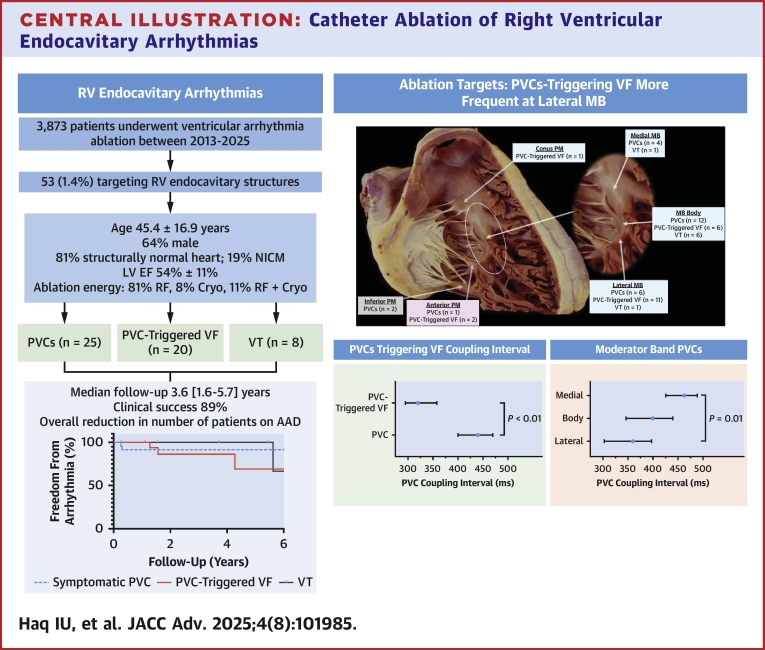 Figure 1
 Figure 2
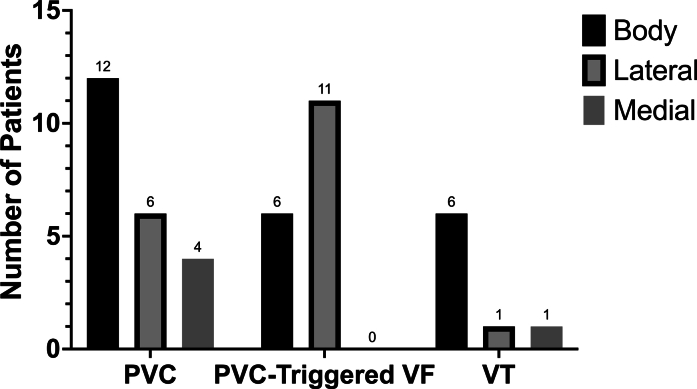 Figure 3
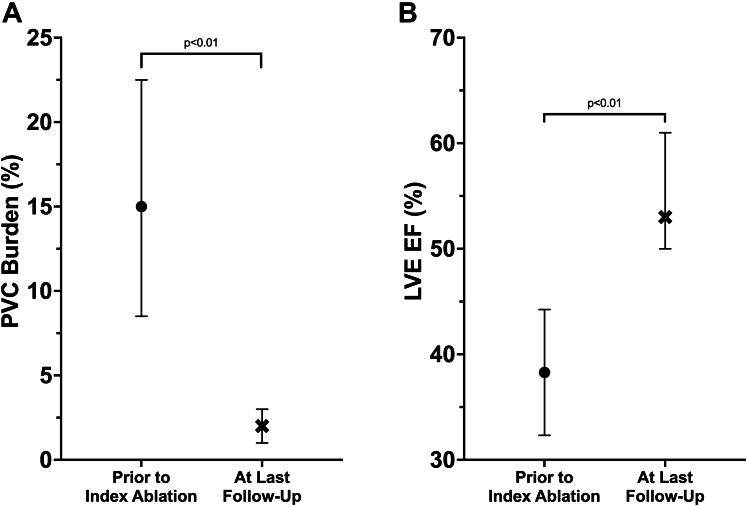 Figure 4
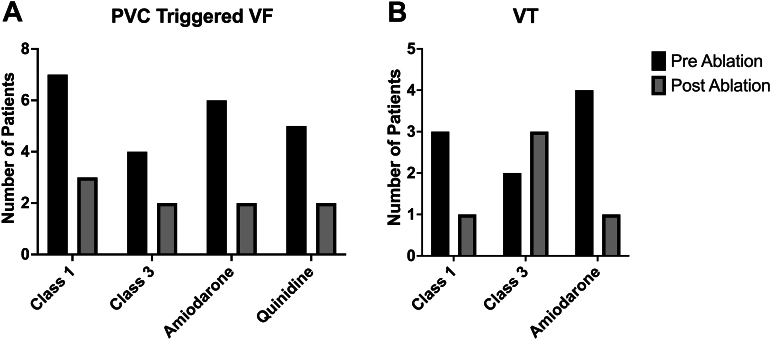 Figure 5
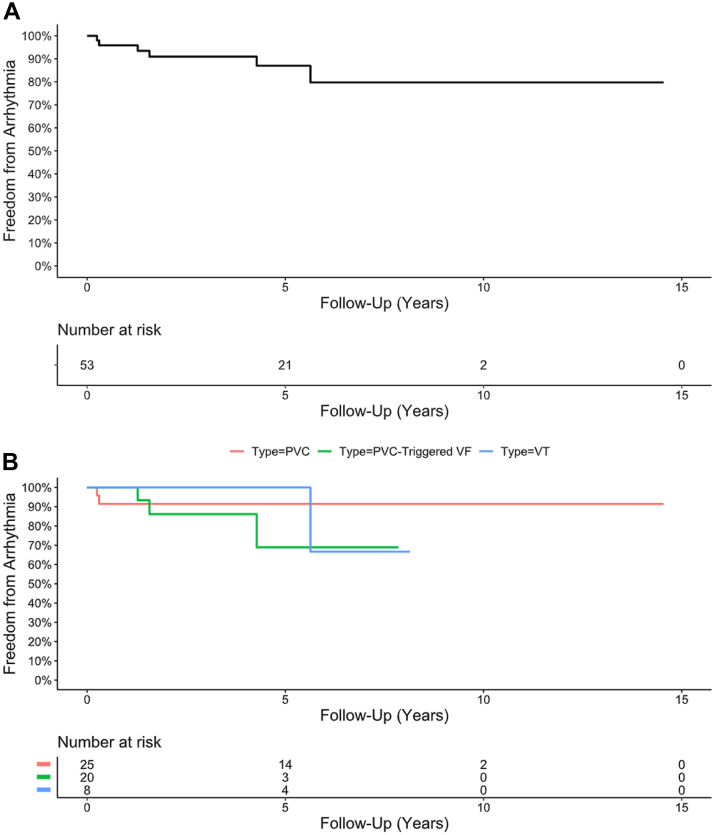 Figure 6
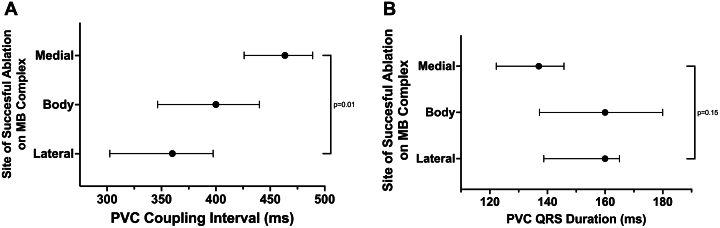 Figure 7
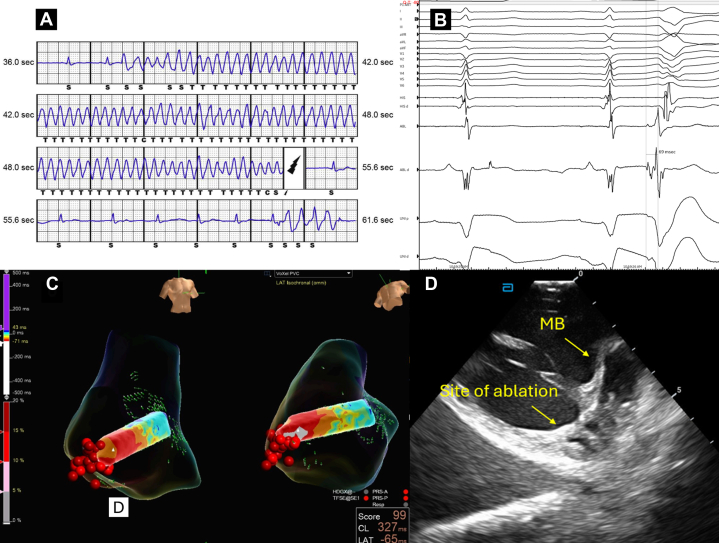 Figure 8
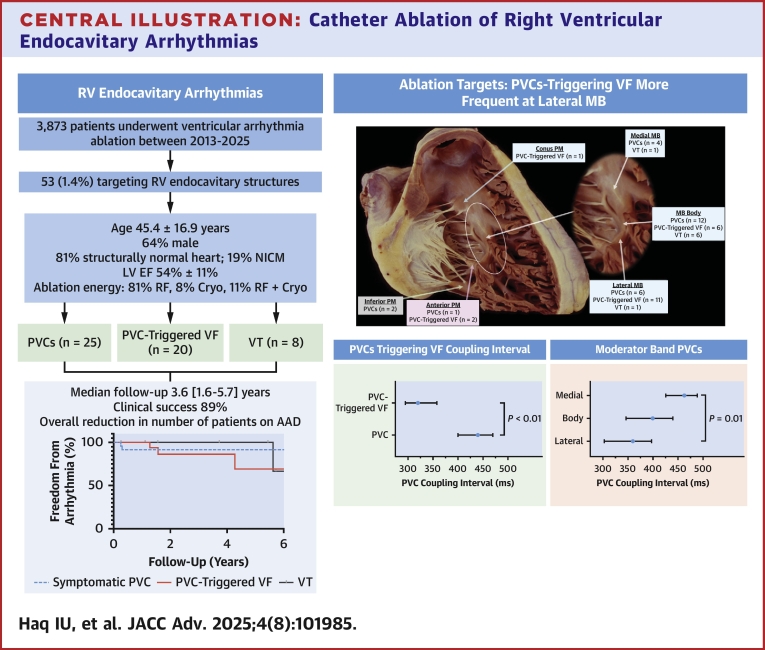 Figure 9
Peer Reviews
No public reviews on file for this paper yet. If you reviewed it on a platform where reviews are public (OpenReview, ICLR, NeurIPS, ICML), you can paste yours below so the community can read it here.
Videos
No videos yet. Explain this paper in a talk, walkthrough, or lecture? Add one.
Taxonomy
TopicsCardiac Arrhythmias and Treatments · Cardiac pacing and defibrillation studies · Atrial Fibrillation Management and Outcomes