Design of Potent Mannose‐6‐Phosphate Derivatives as Ligands for CI‐M6P/IGF2R Using Fluorescence Polarization Assay
Lucie Mrázková, Klaudia Hladoníková, Barbora Toncarová, Michal Fischer, Jakub Zýka, Jaroslav Kozák, Michal Kráľ, Milan Kožíšek, Jiří Jiráček, Jakub Kaminský, Kamil Parkan, Lenka Žáková

TL;DR
Researchers designed new M6P derivatives to better bind a key receptor involved in lysosomal enzyme transport, using a fluorescence test to evaluate their effectiveness.
Contribution
The study introduces multivalent M6P derivatives and phosphonate-based analogs as more stable and potent ligands for the CI-M6P/IGF2R receptor.
Findings
Multivalent M6P ligands show significantly higher receptor affinity compared to monomeric compounds.
Phosphonate groups are a more stable and potent alternative to native M6P for receptor binding.
Computational modeling helps explain the binding mechanisms of the ligands with the receptor.
Abstract
The cation‐independent mannose‐6‐phosphate/IGF2 receptor (CI‐M6P/IGF2R) plays a crucial role in transporting lysosomal enzymes and other ligands. In this study, we designed and synthesized novel stable mannose‐6‐phosphate (M6P) derivatives to enhance their affinity for CI‐M6P/IGF2R. To evaluate the binding potency, we employed a sensitive and cost‐effective fluorescence polarization assay, enabling rapid quantification of receptor–ligand interactions in solution. The tested compounds included di‐, tri‐, and penta‐M6P peptides along with various M6P‐derived small molecules featuring phosphate isosteres or other functional modifications. Our findings indicate that ligands bearing multiple M6P moieties exhibit significantly higher receptor affinities than monomeric compounds and that phosphonate groups may serve as a more stable and potent alternative to native M6P. Computational modeling…
Genes, proteins, chemicals, diseases, species, mutations and cell lines named across the full text — each resolved to its canonical identifier and authoritative record.
Click any figure to enlarge with its caption.
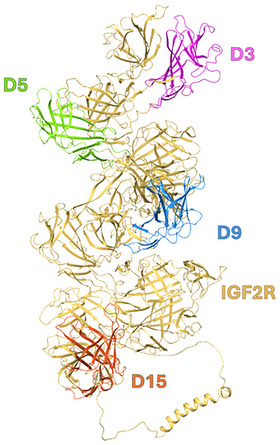 Figure 1
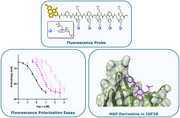 Figure 2
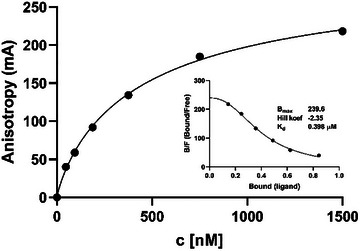 Figure 3
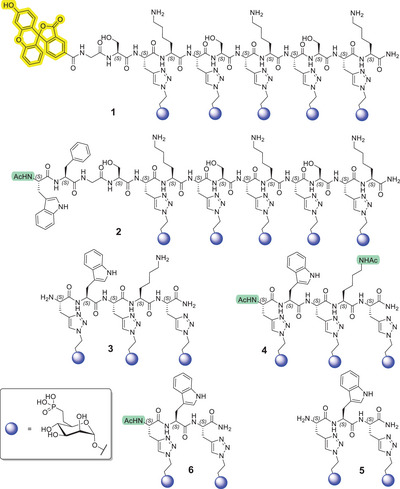 Figure 4
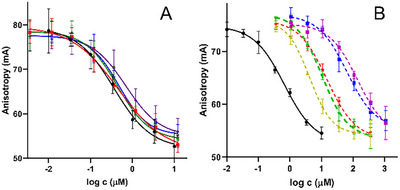 Figure 5
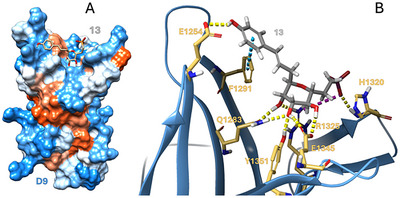 Figure 6
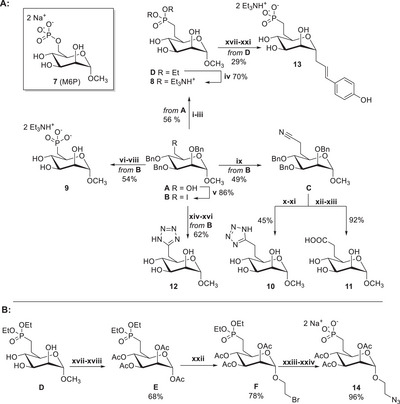 Figure 7
Peer Reviews
No public reviews on file for this paper yet. If you reviewed it on a platform where reviews are public (OpenReview, ICLR, NeurIPS, ICML), you can paste yours below so the community can read it here.
Videos
No videos yet. Explain this paper in a talk, walkthrough, or lecture? Add one.
Taxonomy
TopicsCytomegalovirus and herpesvirus research · HIV Research and Treatment · Calcium signaling and nucleotide metabolism