Optogenetic modulation of peripheral nociceptive neurons with biocompatible optoelectronic implants
Paul Chu Sin Chung, Valentina Paggi, Marie Pertin, Guylène Kirschmann, Elena A. Konnova, Frédéric Michoud, Ivan Furfaro, Bernard L. Schneider, Stéphanie P. Lacour, Isabelle Decosterd

TL;DR
A biocompatible optoelectronic implant was developed to modulate pain-related nerve activity in mice using yellow light, offering a promising alternative to traditional pain medications.
Contribution
A microfabricated optoelectronic implant was developed and tested for optogenetic modulation of sciatic nerve nociceptive neurons in vivo.
Findings
Yellow light delivered via the implant significantly reduced nociceptive neuron responses and pain-related behaviors in mice.
The implant caused no significant temperature increase or alteration in non-painful sensory behaviors, indicating safety and specificity.
The device's performance was reliable and reproducible under in vivo stimulation conditions.
Abstract
Hyperexcitability of peripheral sensory neurons plays a critical role in the development and maintenance of chronic pain. Pharmacological analgesics used in clinics reduce neuronal activity. They often come with non‐negligible side effects. Optogenetic approaches can modulate neuronal activity and are attracting growing interest for therapeutic uses, but the delivery of light in different parts of the body requires the development of specific optoelectronic interfaces. We designed and produced a microfabricated optoelectronic implant to deliver yellow light (559 nm) onto the sciatic nerve. We have surgically implanted the device in transgenic mice expressing the yellow light‐sensitive inhibitory archaerhodopsin (ArchT) in nociceptive neurons. Yellow light induced a significant reduction in the responses of the nociceptive neurons and curbed the behavioral responses to noxious mechanical…
Genes, proteins, chemicals, diseases, species, mutations and cell lines named across the full text — each resolved to its canonical identifier and authoritative record.
Click any figure to enlarge with its caption.
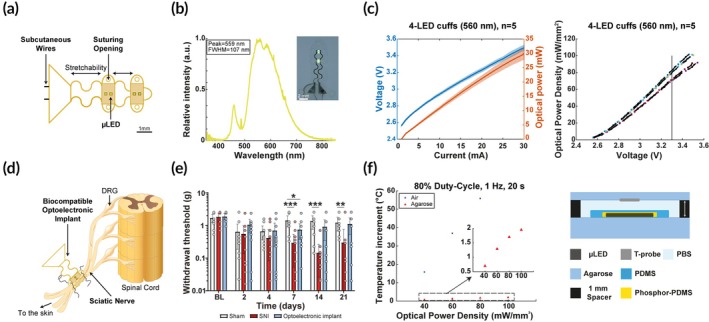 Figure 1
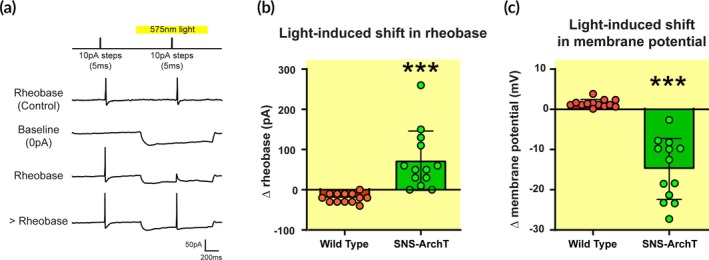 Figure 2
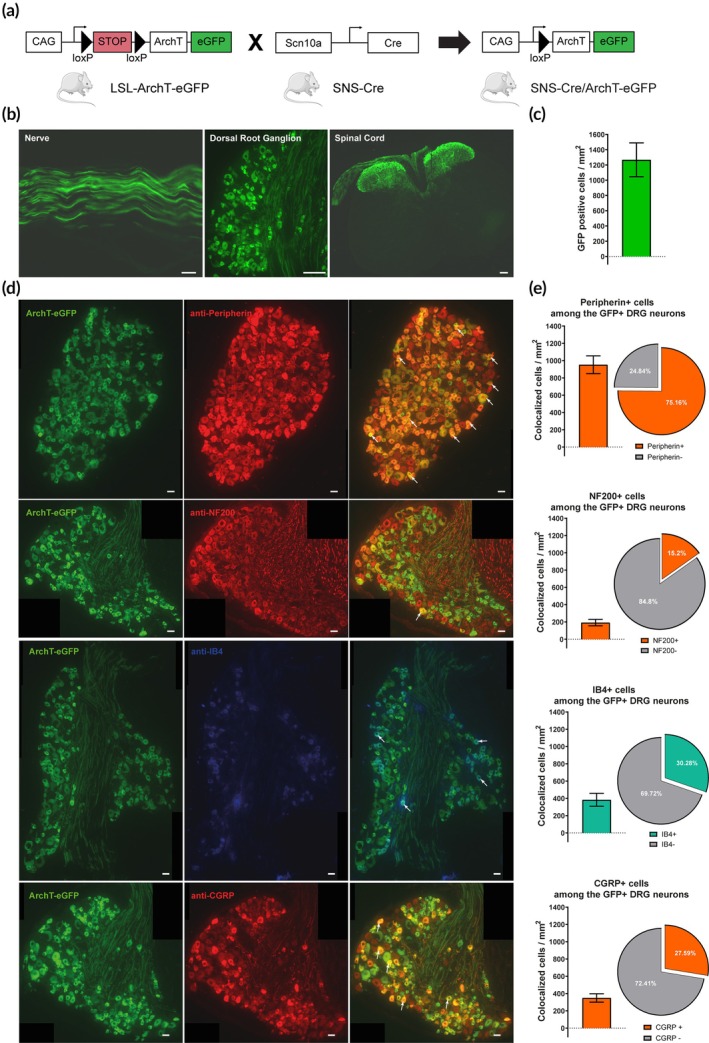 Figure 3
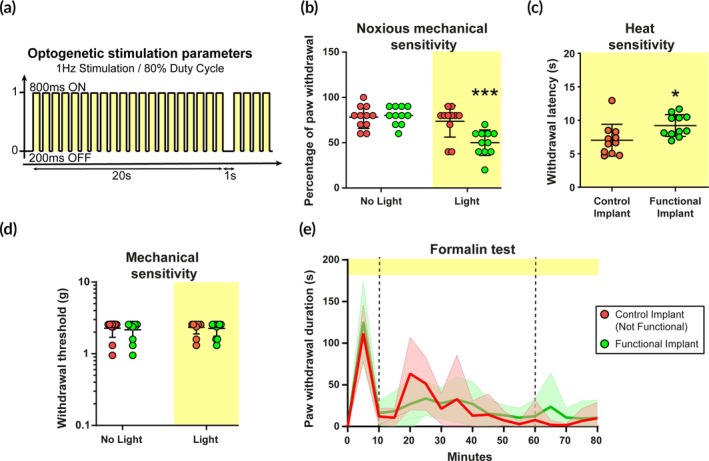 Figure 4
Peer Reviews
No public reviews on file for this paper yet. If you reviewed it on a platform where reviews are public (OpenReview, ICLR, NeurIPS, ICML), you can paste yours below so the community can read it here.
Videos
No videos yet. Explain this paper in a talk, walkthrough, or lecture? Add one.
Taxonomy
TopicsPhotoreceptor and optogenetics research · Neuroscience and Neural Engineering · Circadian rhythm and melatonin