Distribution and prevalence of Sarcina troglodytae in chimpanzees and the environment throughout Africa
Emily Dunay, Ismail Hirji, Leah A. Owens, Konkofa Marah, Naomi Anderson, Maria Ruiz, Rebeca Atencia, Joshua Rukundo, Alexandra G. Rosati, Megan F. Cole, Melissa Emery Thompson, Jacob D. Negrey, Samuel Angedakin, Johanna R. Elfenbein, Tony L. Goldberg

TL;DR
This study investigates the spread of a deadly bacterium in chimpanzees and their environments across Africa, finding it most common in one sanctuary linked to a fatal disease.
Contribution
The study provides the first comprehensive analysis of Sarcina troglodytae's distribution and environmental prevalence in chimpanzee populations across Africa.
Findings
S. troglodytae was most prevalent in chimpanzees and soil at the Sierra Leone sanctuary during the dry season.
The bacterium was absent in Congolese sanctuary and Sierra Leonean wild chimpanzee populations.
The Sarcina genus was widespread in all chimpanzee populations but more common in sanctuary animals.
Abstract
Introduction. Since 2005, the leading cause of death for western chimpanzees (Pan troglodytes verus) at Tacugama Chimpanzee Sanctuary (TCS) in Sierra Leone has been epizootic neurologic and gastroenteric syndrome (ENGS), associated with the bacterium Sarcina troglodytae (family Clostridiaceae). Gap Statement. The prevalence of S. troglodytae at TCS in clinically normal chimpanzees and the environment remains unknown, as does its distribution in other captive and wild chimpanzee populations and their environments across Africa. Aim. The aim of this study was to determine the distribution and prevalence of Sarcina bacteria in sanctuary and wild chimpanzee populations across Africa and to identify demographic and ecological risk factors for S. troglodytae in chimpanzees and the environment. Methodology. We conducted a prospective, multi-season epidemiological investigation of S.…
Genes, proteins, chemicals, diseases, species, mutations and cell lines named across the full text — each resolved to its canonical identifier and authoritative record.
Click any figure to enlarge with its caption.
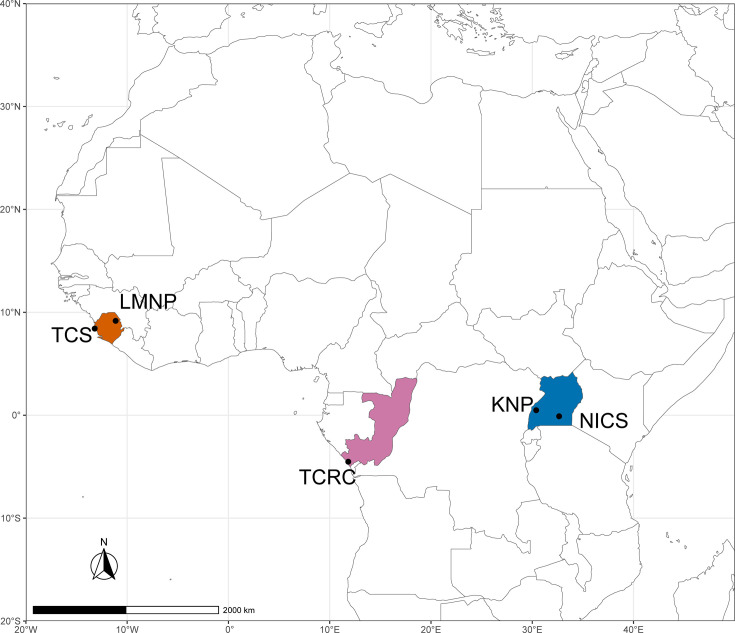 Figure 1
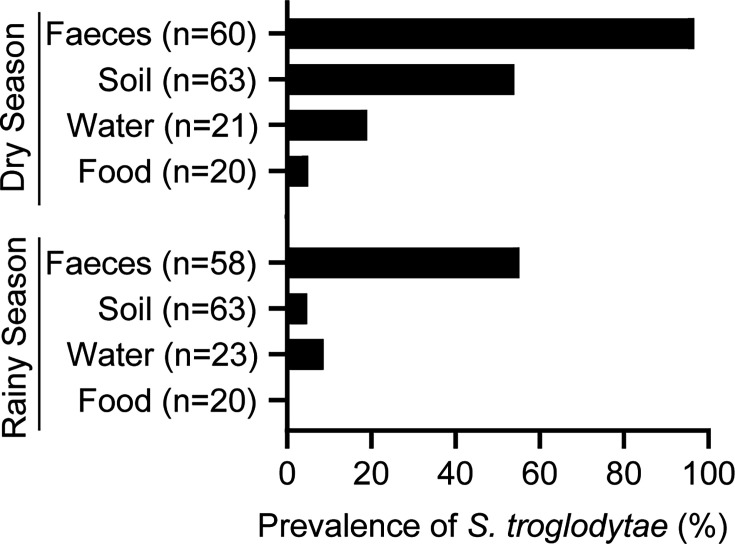 Figure 2
 Figure 3
Peer Reviews
No public reviews on file for this paper yet. If you reviewed it on a platform where reviews are public (OpenReview, ICLR, NeurIPS, ICML), you can paste yours below so the community can read it here.
Videos
No videos yet. Explain this paper in a talk, walkthrough, or lecture? Add one.
Taxonomy
TopicsPrimate Behavior and Ecology · Viral gastroenteritis research and epidemiology · Human-Animal Interaction Studies