Neurofilament, but not Alzheimer disease biomarkers in the acute phase correlate with cognitive performance after cardiac arrest
Johannes Lorentzson, Gisela Lilja, Erik Blennow Nordström, Kaj Blennow, Henrik Zetterberg, Christian Hassager, Matt P. Wise, Andrea L. Benedet, Tommaso Pellis, Hans Friberg, Nicholas Ashton, Marion Moseby Knappe

TL;DR
This study found that the biomarker neurofilament light, but not Alzheimer disease markers, correlates with cognitive outcomes after cardiac arrest.
Contribution
The study demonstrates that neurofilament light is a better predictor of cognitive function than Alzheimer disease biomarkers in cardiac arrest survivors.
Findings
Neurofilament light (NfL) showed stronger correlations with cognitive outcomes than Alzheimer disease biomarkers.
Alzheimer disease biomarkers had weak correlations (rho = -0.22 to 0.18) and lower predictive accuracy for cognitive impairment.
NfL had a higher discriminatory ability (AUC 0.66–0.86) compared to Alzheimer disease biomarkers (AUC 0.44–0.68).
Abstract
Biomarkers serve as a quantitative measure of brain injury and may predict cognitive outcome after cardiac arrest. This study investigates the association and predictive accuracy of acute changes in Alzheimer disease-associated biomarkers to cognitive outcome in cardiac arrest survivors. Retrospective study of the Target Temperature Management after Out-of-Hospital cardiac arrest trial. Serum from adult cardiac arrest survivors was sampled prospectively at 24, 48, and 72 h post-arrest and analyzed for peak-levels of Alzheimer disease markers (p-tau181, total tau, amyloid β [Aβ40 and Aβ42]), and the neurodegenerative biomarker neurofilament light (NfL). Cognitive outcome was evaluated blinded from biomarker results using four performance-based assessments at 6 months post-arrest. Spearman correlations were calculated. Area Under the Receiver Operating Characteristics curves (AUC) were…
Genes, proteins, chemicals, diseases, species, mutations and cell lines named across the full text — each resolved to its canonical identifier and authoritative record.
Click any figure to enlarge with its caption.
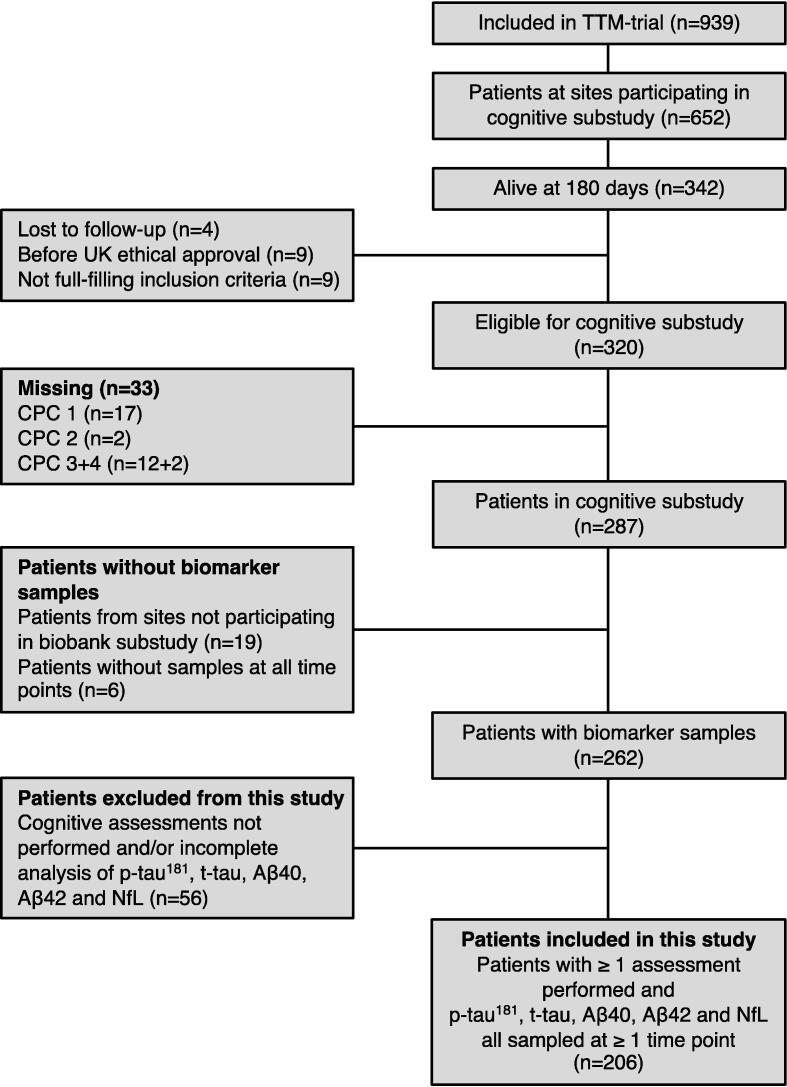 Figure 1
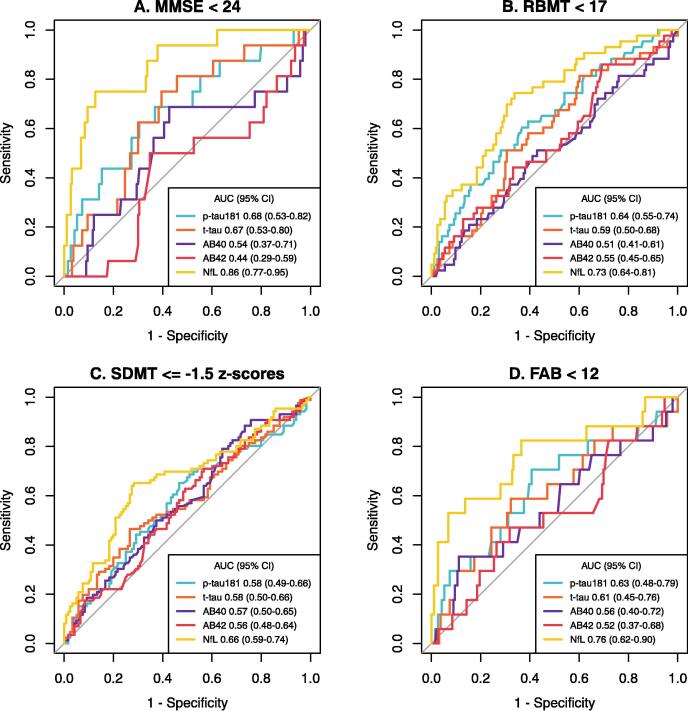 Figure 2
Peer Reviews
No public reviews on file for this paper yet. If you reviewed it on a platform where reviews are public (OpenReview, ICLR, NeurIPS, ICML), you can paste yours below so the community can read it here.
Videos
No videos yet. Explain this paper in a talk, walkthrough, or lecture? Add one.
Taxonomy
TopicsCardiac Arrest and Resuscitation · Traumatic Brain Injury Research · Heart Rate Variability and Autonomic Control