Prediction of drug concentrations in humans for long-acting injectable suspensions by a semi-mechanical muscle compartment model: a case study of paliperidone palmitate
Panpan Yu, Mengjun Zhang, Xiong Jin, Keheng Wu, Sihui Long, Shishi Cheng, Long Fu, Xiao Xu, Jie Liu, Dan Liu, Xue Li, Bo Liu, Jian Xu

TL;DR
This paper introduces a new model to predict how long-acting injectable drugs like paliperidone release medicine in the body over time.
Contribution
A semi-mechanical muscle compartment model is proposed to simulate drug release from long-acting injectable suspensions.
Findings
The model segments drug particles by size to predict absorption delays.
The model predicts paliperidone palmitate can release medicine over 90–100 days in humans.
The model integrates physicochemical and pharmacokinetic parameters for accurate predictions.
Abstract
Long-acting injectable formulations, such as paliperidone palmitate extended-release injectable suspension, have been designed to release medicines slowly and sustainably. Developing models that simulate drug release from long-acting injectable formulations in vivo is challenging. A novel approach to modeling and simulating complex and multiphasic drug pharmacokinetics (PK) is provided in this article to facilitate development of long-acting formulations. By segmenting nanocrystalline particles according to their different sizes, the absorption delays of each segment were obtained from the results of the PK study in dogs. In addition to the lag time for each segment, all other parameters, including physicochemical parameters such as drug solubility, density and diffusion coefficient, as well as pharmacokinetic parameters related to clearance, elimination and distribution, were…
Genes, proteins, chemicals, diseases, species, mutations and cell lines named across the full text — each resolved to its canonical identifier and authoritative record.
Click any figure to enlarge with its caption.
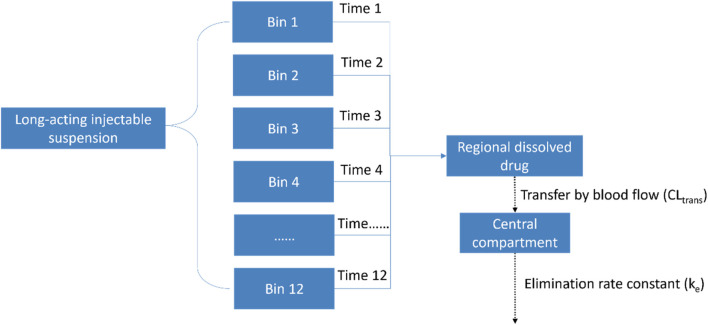 Figure 1
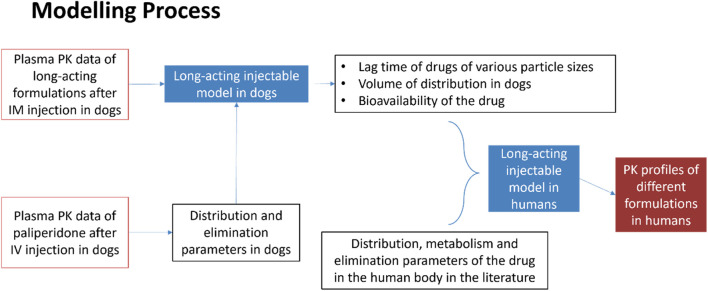 Figure 2
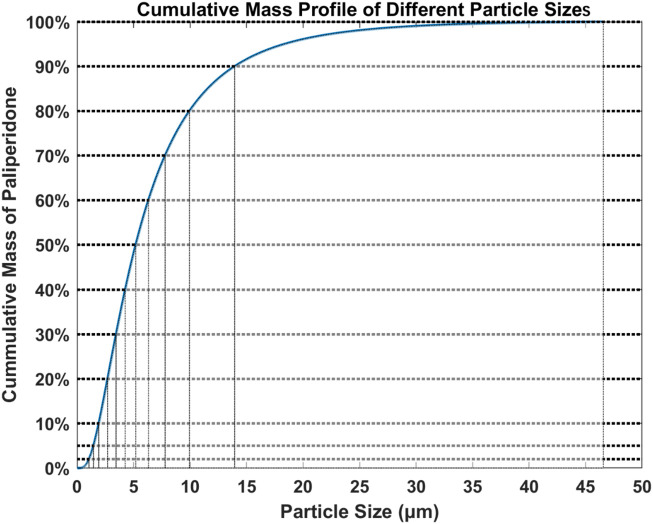 Figure 3
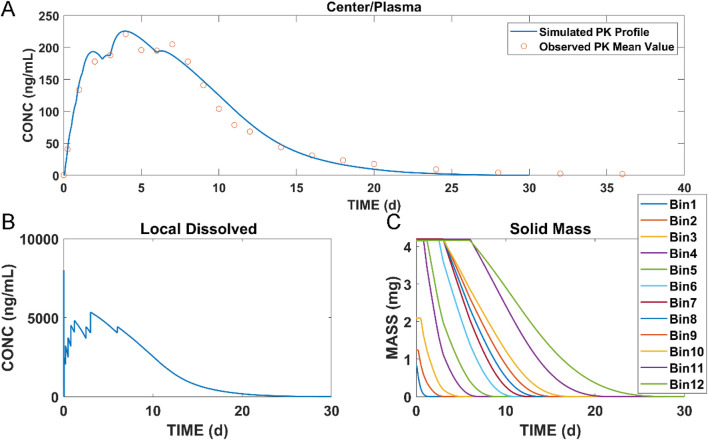 Figure 4
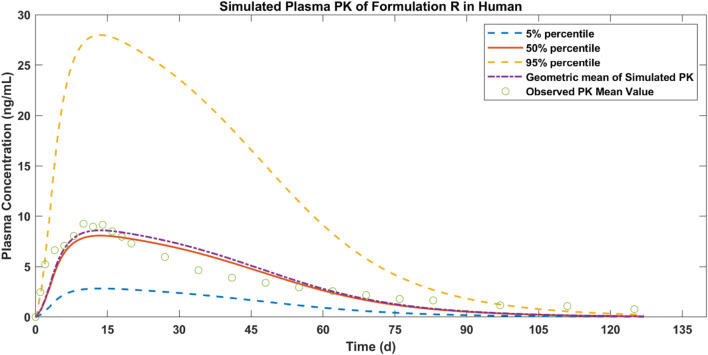 Figure 5
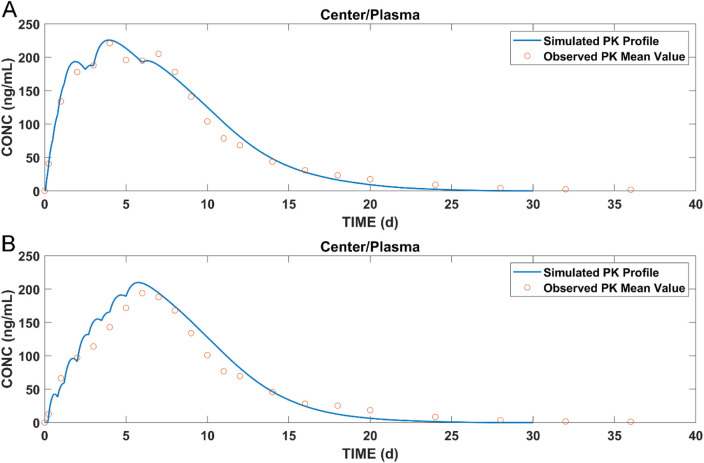 Figure 6
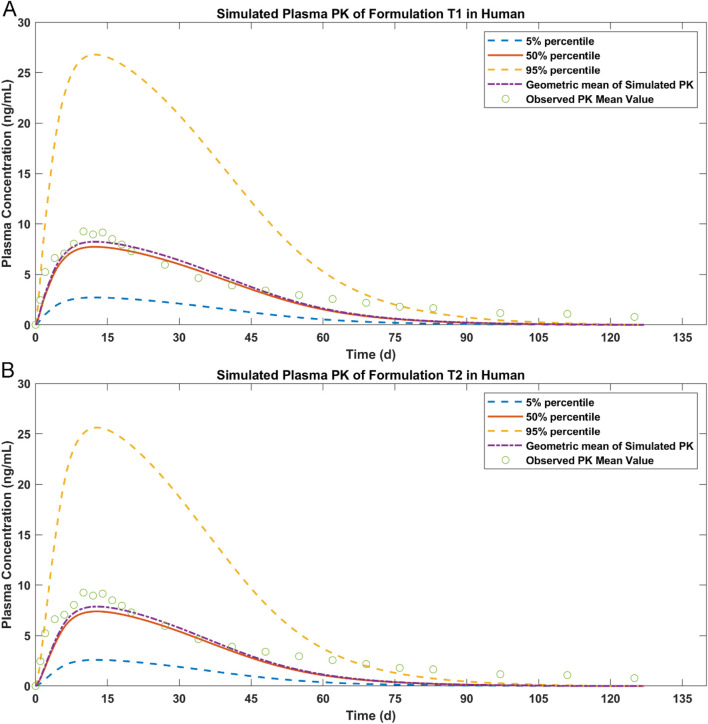 Figure 7
Peer Reviews
No public reviews on file for this paper yet. If you reviewed it on a platform where reviews are public (OpenReview, ICLR, NeurIPS, ICML), you can paste yours below so the community can read it here.
Videos
No videos yet. Explain this paper in a talk, walkthrough, or lecture? Add one.
Taxonomy
TopicsBotulinum Toxin and Related Neurological Disorders · Advancements in Transdermal Drug Delivery · Pain Mechanisms and Treatments