Variation and disparity within the inner ear and trigeminus of the tenrecomorpha
R. Benjamin Sulser, Ross D. E. MacPhee

TL;DR
This study examines the inner ear and trigeminal nerve of tenrecomorph mammals to understand how their sensory systems evolved in response to different ecological niches.
Contribution
The study reveals conflicting evolutionary signals in the inner ear and trigeminal nerve of tenrecomorphs, challenging expectations of convergent sensory adaptation.
Findings
Tenrecomorphs show cross-taxon differences in sensory structures, but no single factor explains most of the variation.
Inner ear and trigeminal nerve structures do not share convergent evolutionary patterns.
The results contrast with prior findings on the tenrec cranial endocast, where habitat and ecotype strongly influence shape.
Abstract
Evolutionary theory predicts that sensory systems should adaptively respond to environmental selection. Different ecological niches should, in theory, then correlate with changes in sensory anatomy in lineages that have undergone extensive radiation. The afrotherian clade Tenrecomorpha, comprising of African potamogalines and Malagasy tenrecines, is of particular interest because of its variety: the clade reportedly includes fossorial, arboreal, semiaquatic, and even echolocating taxa. To investigate their sensory ecology, we provide geometric morphometric analyses of inner ear endocasts of 24 tenrec species. We expand this dataset with 9 iodine-stained specimens to study trigeminal organization. Although tenrecomorphs display cross-taxon differences in sensory structures, our analyses distinguish signals of conflicting strength and direction within the tenrec ear, with no single factor…
Genes, proteins, chemicals, diseases, species, mutations and cell lines named across the full text — each resolved to its canonical identifier and authoritative record.
Click any figure to enlarge with its caption.
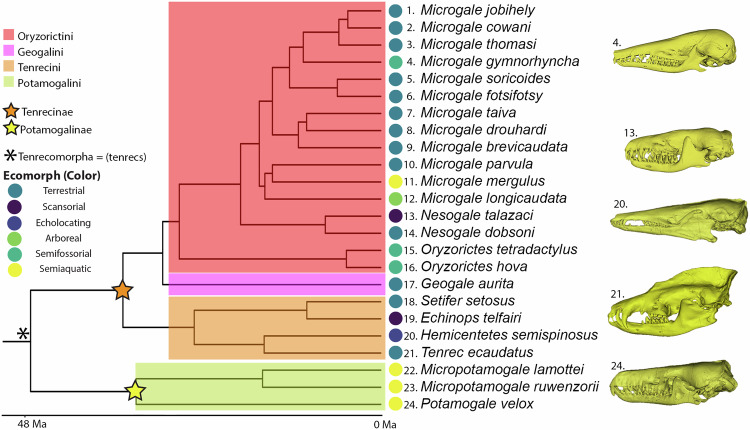 Figure 1
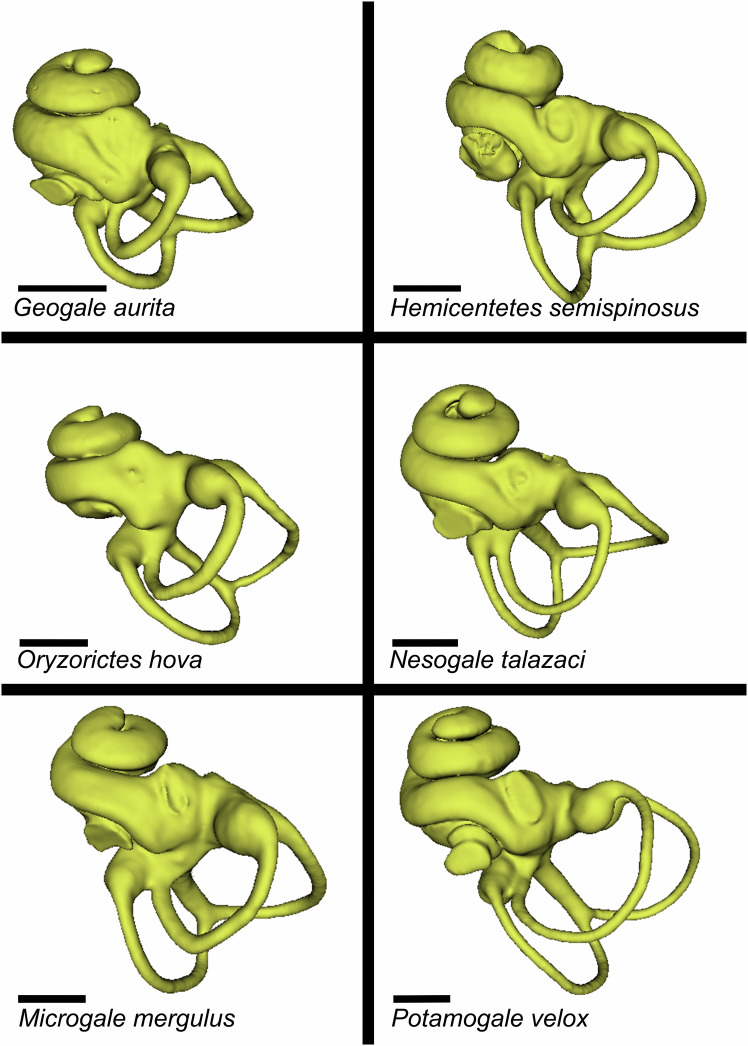 Figure 2
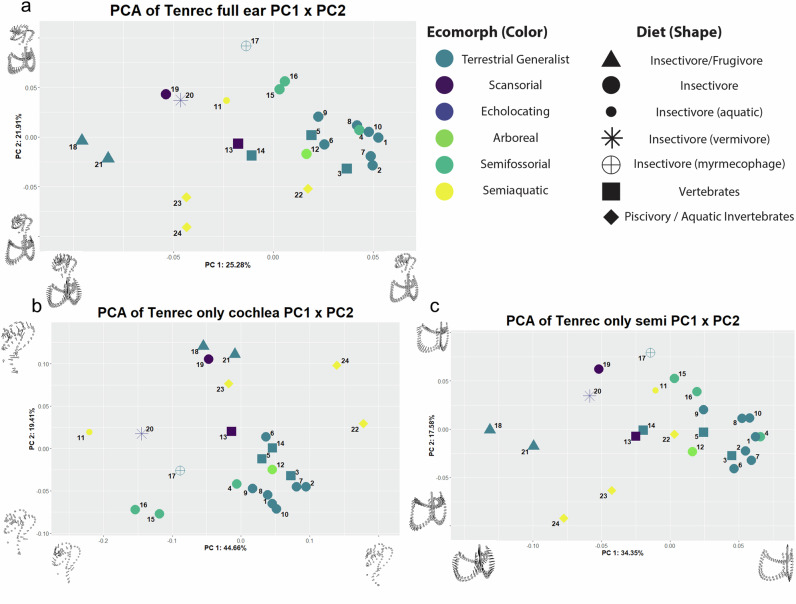 Figure 3
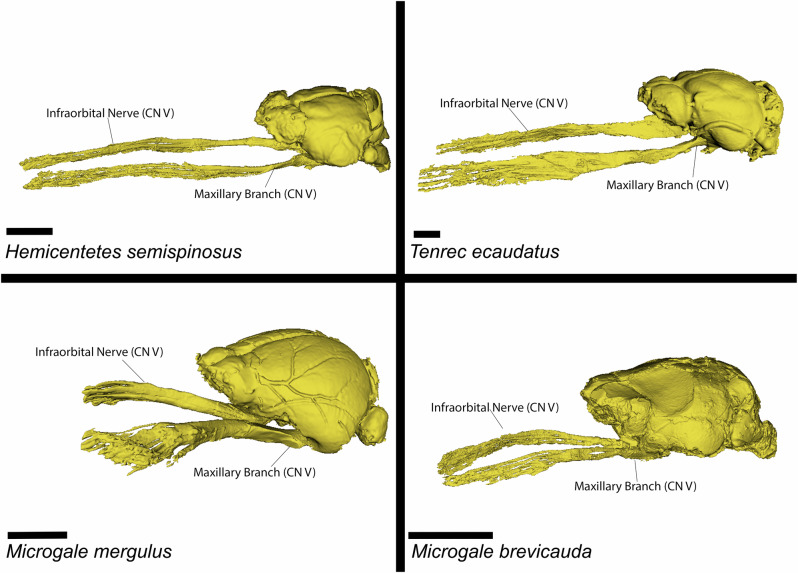 Figure 4
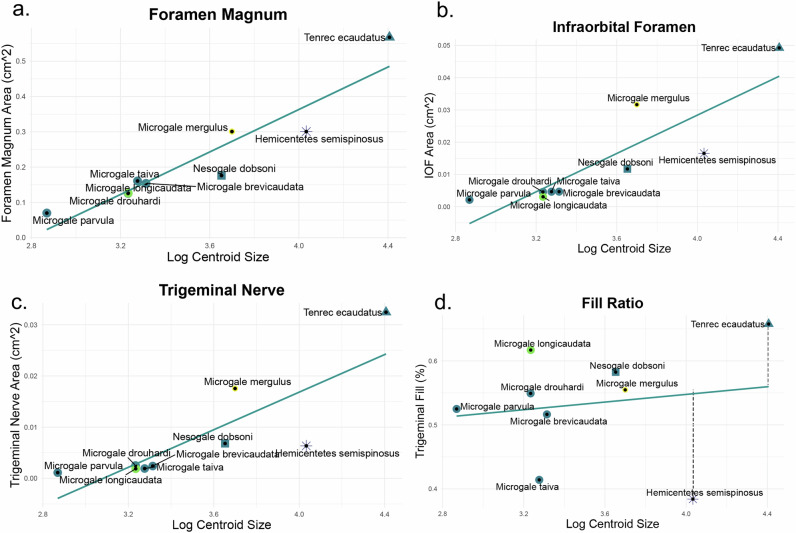 Figure 5
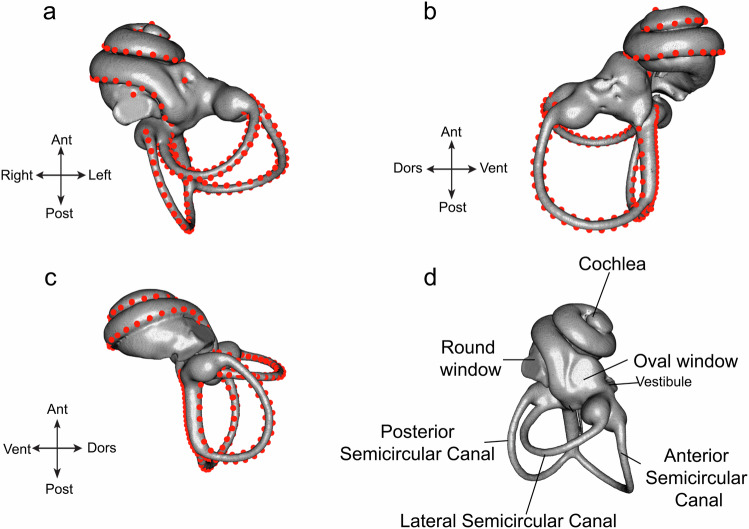 Figure 6
Peer Reviews
No public reviews on file for this paper yet. If you reviewed it on a platform where reviews are public (OpenReview, ICLR, NeurIPS, ICML), you can paste yours below so the community can read it here.
Videos
No videos yet. Explain this paper in a talk, walkthrough, or lecture? Add one.
Taxonomy
TopicsEvolution and Paleontology Studies · Morphological variations and asymmetry · Paleontology and Evolutionary Biology