The MEC-2E isoform with a large C-terminal completely rescues the touch sensation defect of C. elegans
Tália Magdolna Keszthelyi, Regina Légrádi, Dóra Pálya, Tímea Köles, Ágnes Regős, Dóra Karancsiné Menyhárd, Kálmán Tory

TL;DR
A specific isoform of MEC-2 with a long C-terminal region is needed to restore touch sensation in C. elegans, showing that human podocin cannot replace it.
Contribution
The study identifies the MEC-2E isoform with a large C-terminal region as essential for rescuing mechanosensation in C. elegans.
Findings
The MEC-2E isoform with a large C-terminal region rescues mechanosensation defects in mec-2 mutants.
Truncating the large C-terminal region of MEC-2E abolishes its rescue effect.
Human podocin cannot rescue the mechanosensation defects of mec-2 mutants.
Abstract
Human podocin and C. elegans MEC-2 belong to the stomatin protein superfamily. They share 49% identity and 91% similarity both in the evolutionary conserved PHB domain (123-284 aa) and in the oligomerization region (273-351 aa). Amino acid substitutions in these conserved regions can modify the podocin oligomerization and thus the pathogenicity of trans-associated NPHS2 variants, known as interallelic interactions. The MEC-2A isoform was formerly considered to be the functional isoform and used to evaluate the effect of pathogenic podocin variants. The mec-2 mutant worms are mechanosensation deficient, and, as recently described, also chemosensation deficient. To study the interallelic interactions of podocin in vivo, we aimed to rescue the phenotype of the mec-2 mutant worm by reexpressing podocin (383 aa). However, we did not detect any chemotaxis defects in mec-2(u37) null mutants…
Genes, proteins, chemicals, diseases, species, mutations and cell lines named across the full text — each resolved to its canonical identifier and authoritative record.
Click any figure to enlarge with its caption.
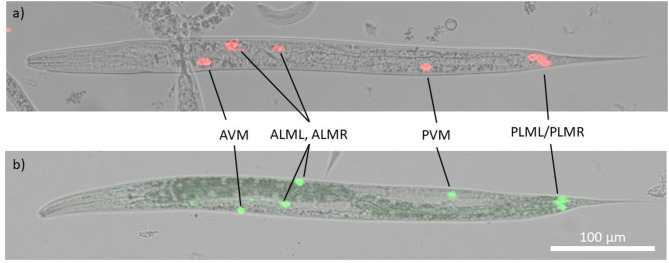 Figure 1
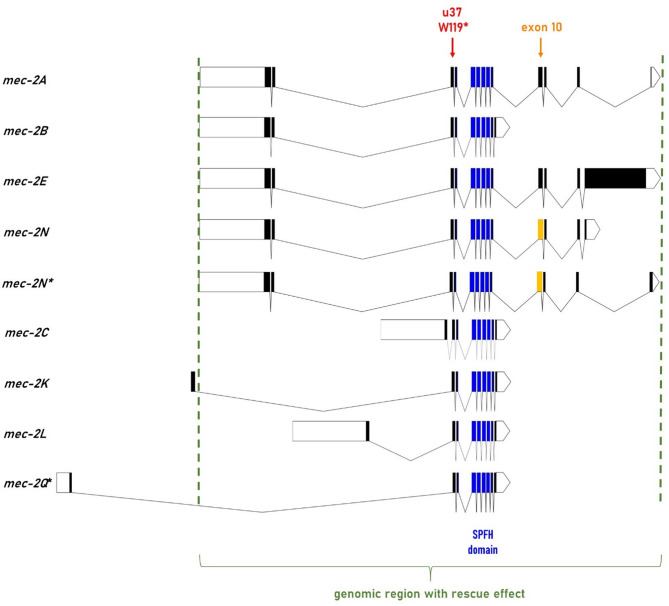 Figure 2
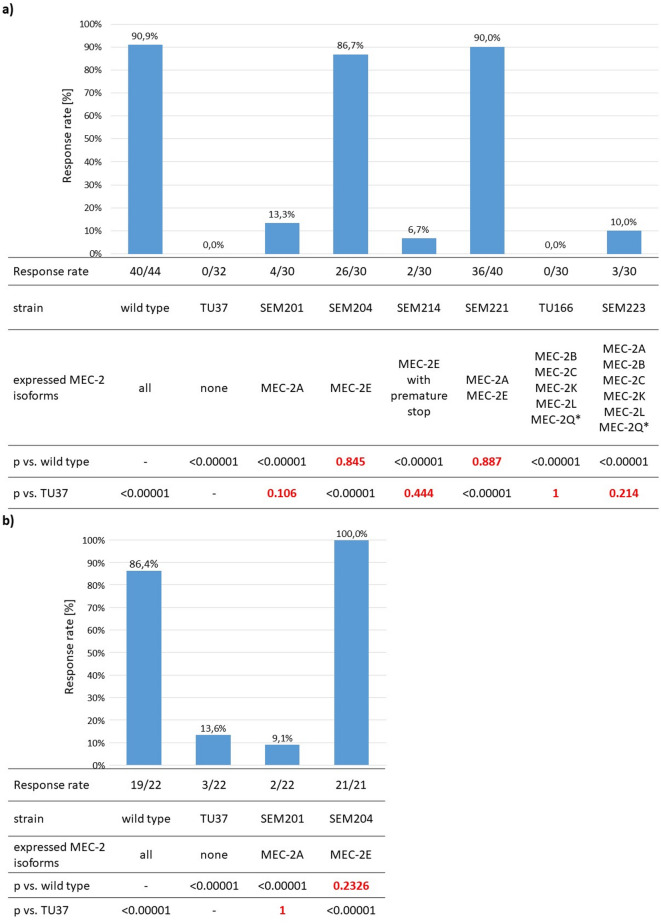 Figure 3
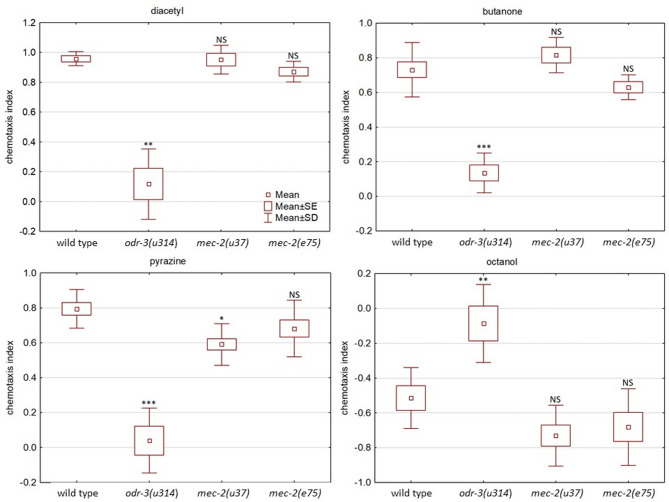 Figure 4
Peer Reviews
No public reviews on file for this paper yet. If you reviewed it on a platform where reviews are public (OpenReview, ICLR, NeurIPS, ICML), you can paste yours below so the community can read it here.
Videos
No videos yet. Explain this paper in a talk, walkthrough, or lecture? Add one.
Taxonomy
TopicsGenetics, Aging, and Longevity in Model Organisms · Photosynthetic Processes and Mechanisms · Fungal and yeast genetics research