Phosphorylation of USP33 by CDK1 stabilizes the mTORC2 component SIN1
Yalei Wen, Caishi Zhang, Mingchao Liang, Xiao Yang, Hu Zeng, Rui Wan, Xiuqing Ma, Lei Huang, Mei Li, Qiushi Zhang, Liheng Li, Shengying Qin, Tongzheng Liu

TL;DR
This study identifies a new mechanism involving USP33 and CDK1 that stabilizes SIN1, promoting chemoresistance in pancreatic cancer, suggesting a potential new treatment target.
Contribution
The novel contribution is identifying USP33 as a deubiquitinase for SIN1 and showing that CDK1 phosphorylation enhances its activity, leading to chemoresistance in PDAC.
Findings
Elevated SIN1 expression in pancreatic cancer correlates with poor patient survival.
CDK1 phosphorylates USP33, enhancing its stabilization of SIN1 and promoting chemoresistance.
Targeting the CDK1–USP33 axis destabilizes SIN1 and reduces tumor growth and chemoresistance in PDAC.
Abstract
Understanding the mechanisms underlying chemoresistance is critical for improving cancer therapies. SIN1 plays a pivotal role in maintaining mTORC2 integrity and activation, which regulates key cellular processes. In this study, we demonstrate that elevated SIN1 expression in pancreatic ductal adenocarcinoma (PDAC) correlates with poor patient survival outcomes. Conversely, SIN1 deletion reduces tumor growth and enhances PDAC sensitivity to chemotherapy. We identify USP33 as a bona fide deubiquitanase of SIN1, essential for its stabilization in PDAC. This stabilization promotes chemoresistance by activating the mTORC2-AKT pathway. Additionally, we show that CDK1 directly phosphorylates USP33, enhancing its deubiquitinase activity toward SIN1 and driving PDAC progression. Inhibition or genetic ablation of CDK1 significantly diminishes these malignant phenotypes. Furthermore, we observe a…
Genes, proteins, chemicals, diseases, species, mutations and cell lines named across the full text — each resolved to its canonical identifier and authoritative record.
Click any figure to enlarge with its caption.
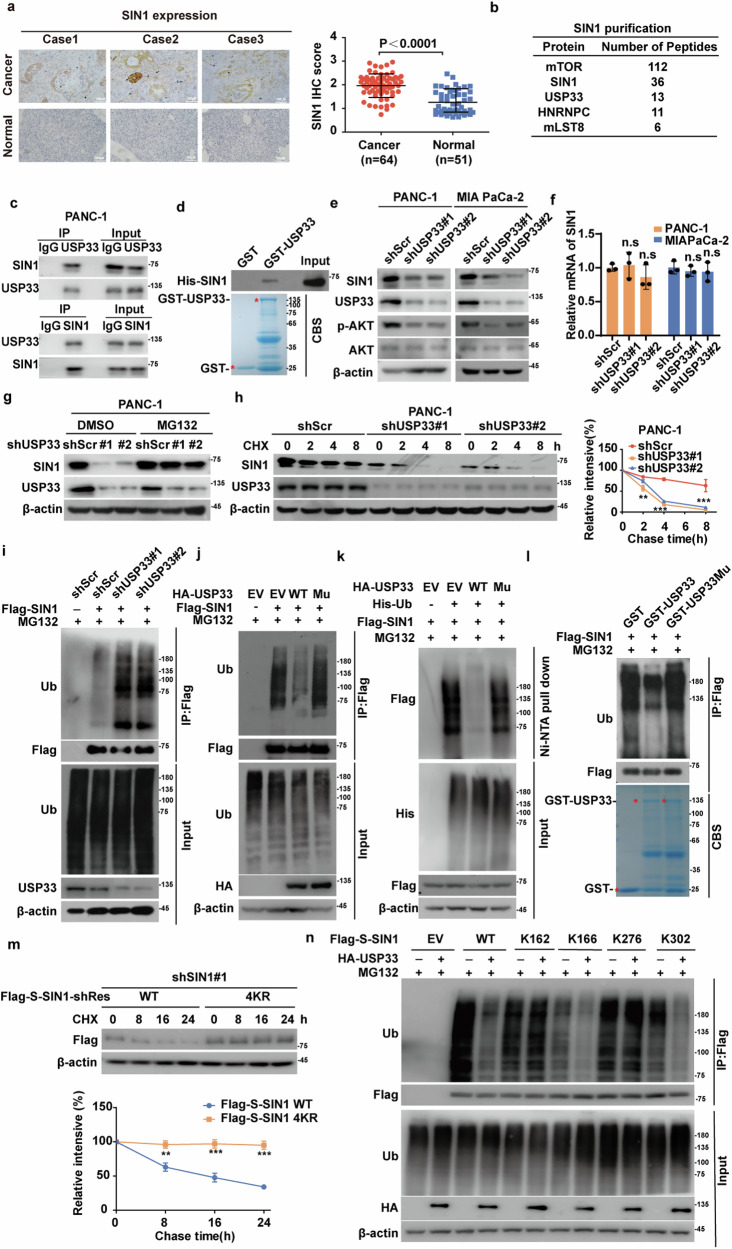 Figure 1
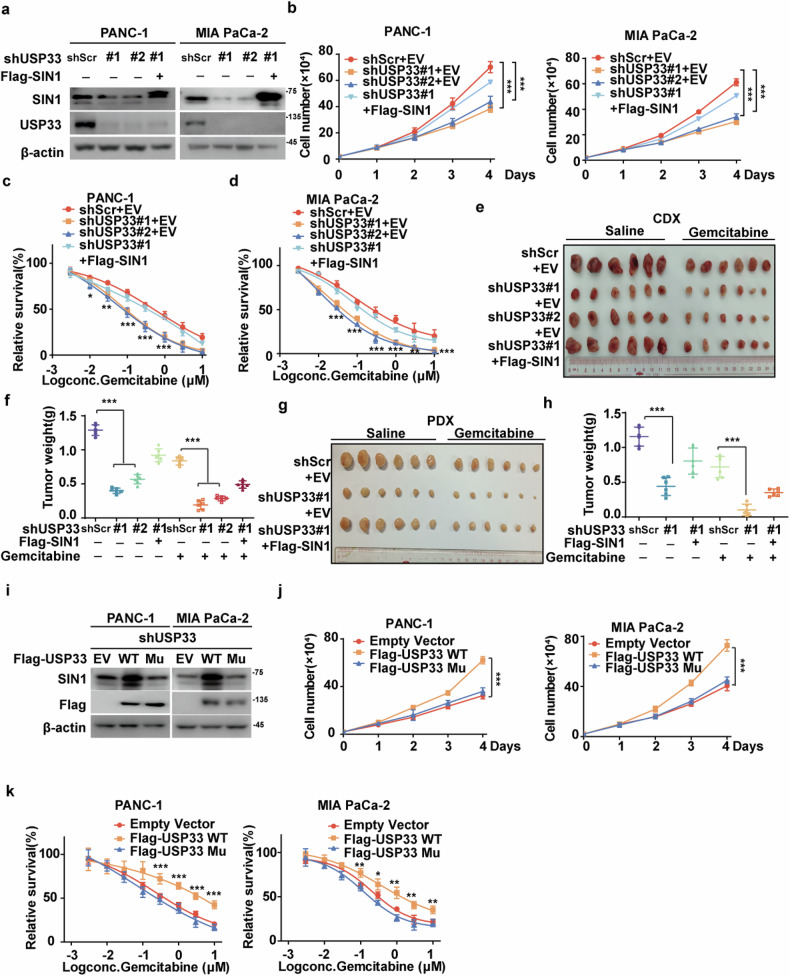 Figure 2
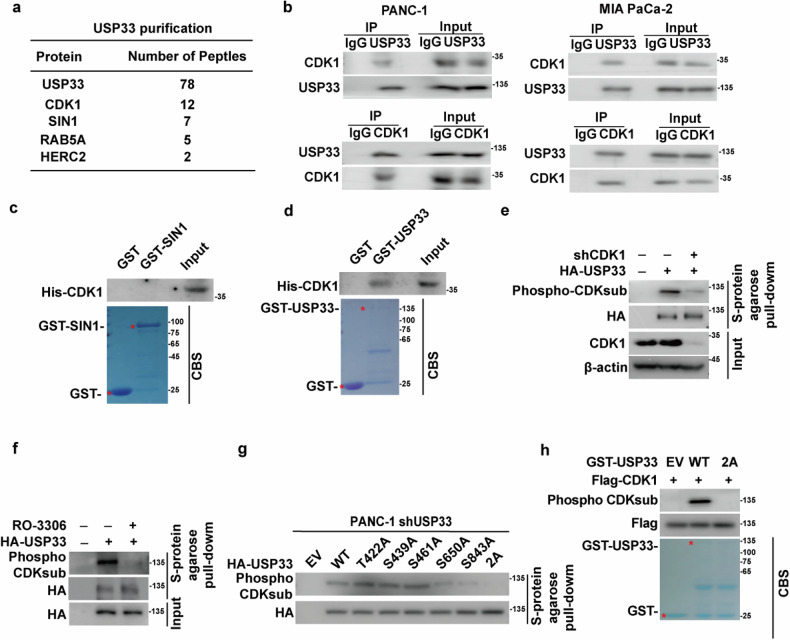 Figure 3
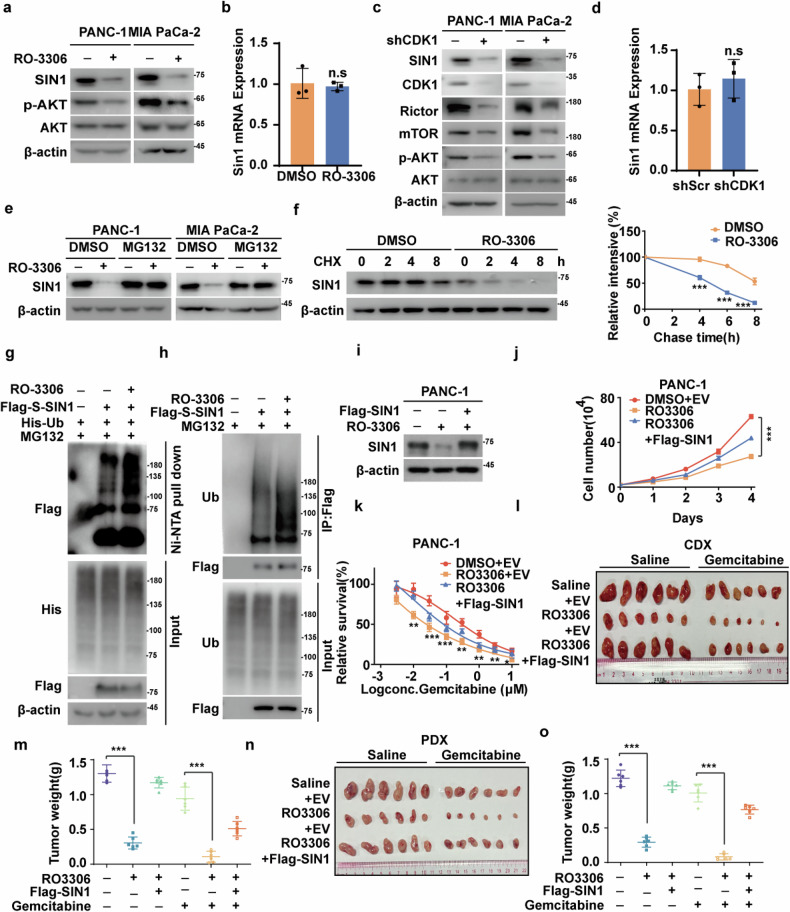 Figure 4
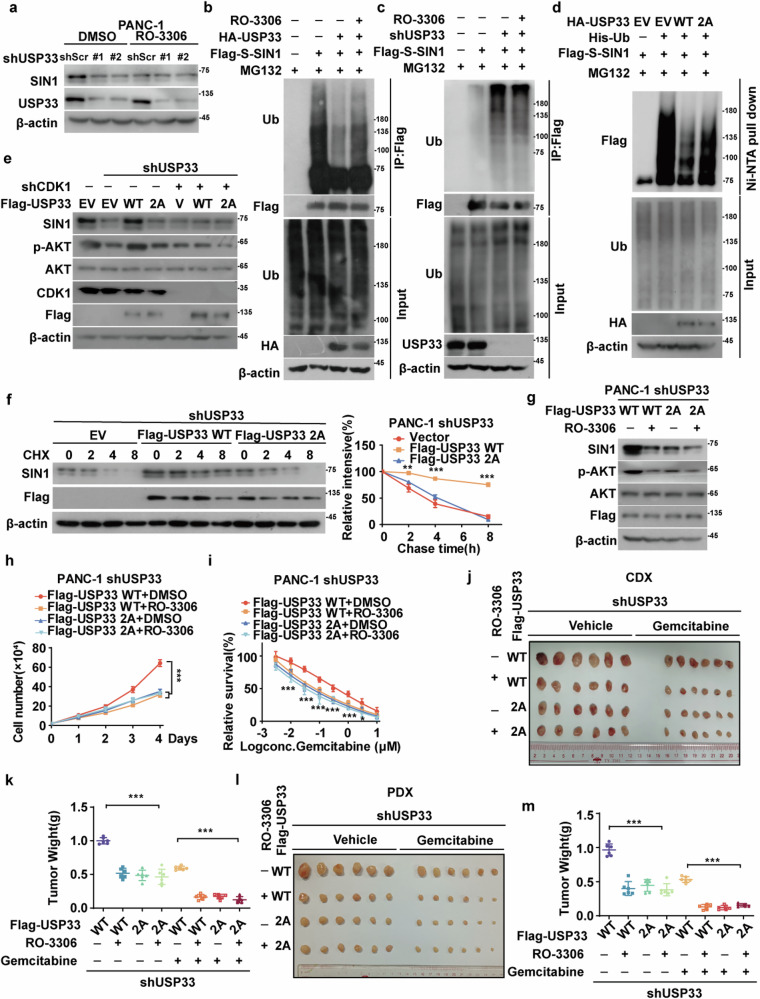 Figure 5
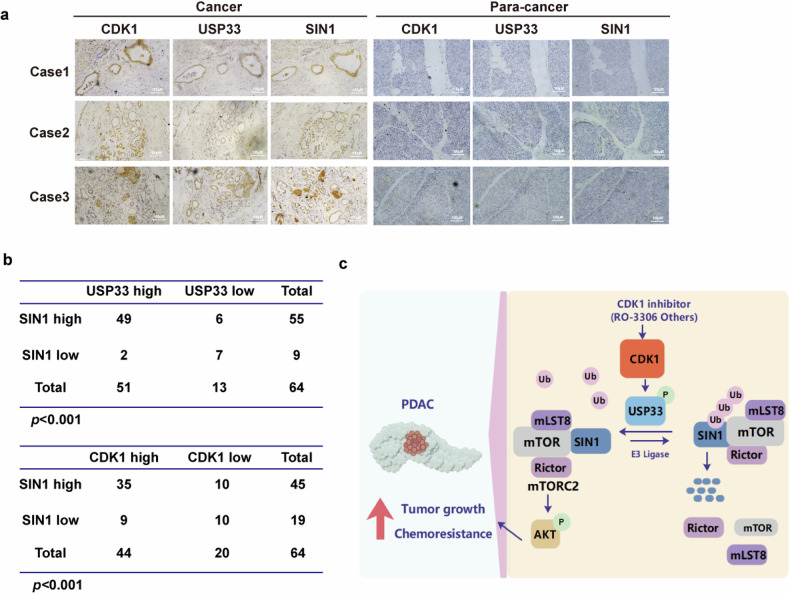 Figure 6
Peer Reviews
No public reviews on file for this paper yet. If you reviewed it on a platform where reviews are public (OpenReview, ICLR, NeurIPS, ICML), you can paste yours below so the community can read it here.
Videos
No videos yet. Explain this paper in a talk, walkthrough, or lecture? Add one.
Taxonomy
TopicsUbiquitin and proteasome pathways · Cancer-related Molecular Pathways · Microtubule and mitosis dynamics