Design, characterization, and evaluation of eco-friendly etofenprox-loaded ethosomes to control Ceratitis capitata (Diptera: Tephritidae)
Francesco Corrias, Ines Castangia, Salvatore Marceddu, Roberto Mannu, Arturo Cocco, Maria Letizia Manca, Gabriele Ibba, Maria Manconi, Ignazio Floris, Alberto Angioni

TL;DR
This study develops a safer, eco-friendly pesticide formulation using ethosomes to control fruit flies, showing improved performance and reduced environmental impact.
Contribution
The paper introduces an innovative etofenprox-loaded ethosome formulation for agricultural pest control with enhanced safety and efficacy.
Findings
Etofenprox-loaded ethosomes showed slower release and higher residue retention on lemon leaves compared to commercial formulations.
Geraniol-ethosomes exhibited prolonged toxicity against fruit flies and were non-toxic to human cells.
The formulation remained stable for 90 days and could reduce pesticide application doses in pre-fruiting stages.
Abstract
Ceratitis capitata, is one of the most considerable invasive pests affecting fruit production worldwide. Conventional pesticides are generally formulated using organic solvents and emulsifiers that, in turn, are flammable and toxic. Thanks to their small size and biocompatibility, liposome-like formulations may significantly improve the efficacy and safety of conventional pesticides. This study aims to develop an alternative and innovative etofenprox formulation based on phospholipid vesicles (ethosomes) and evaluate its possible application for agricultural pest control. Ethosomes and geraniol-ethosomes were prepared by the one-step sonication method, achieving vesicles with small sizes (around 267 nm) and low polydispersity index (around 0.04). These vesicles were stable over 90 days of storage at room temperature and could slow the release of etofenprox (57 ± 4% released), in…
Genes, proteins, chemicals, diseases, species, mutations and cell lines named across the full text — each resolved to its canonical identifier and authoritative record.
Click any figure to enlarge with its caption.
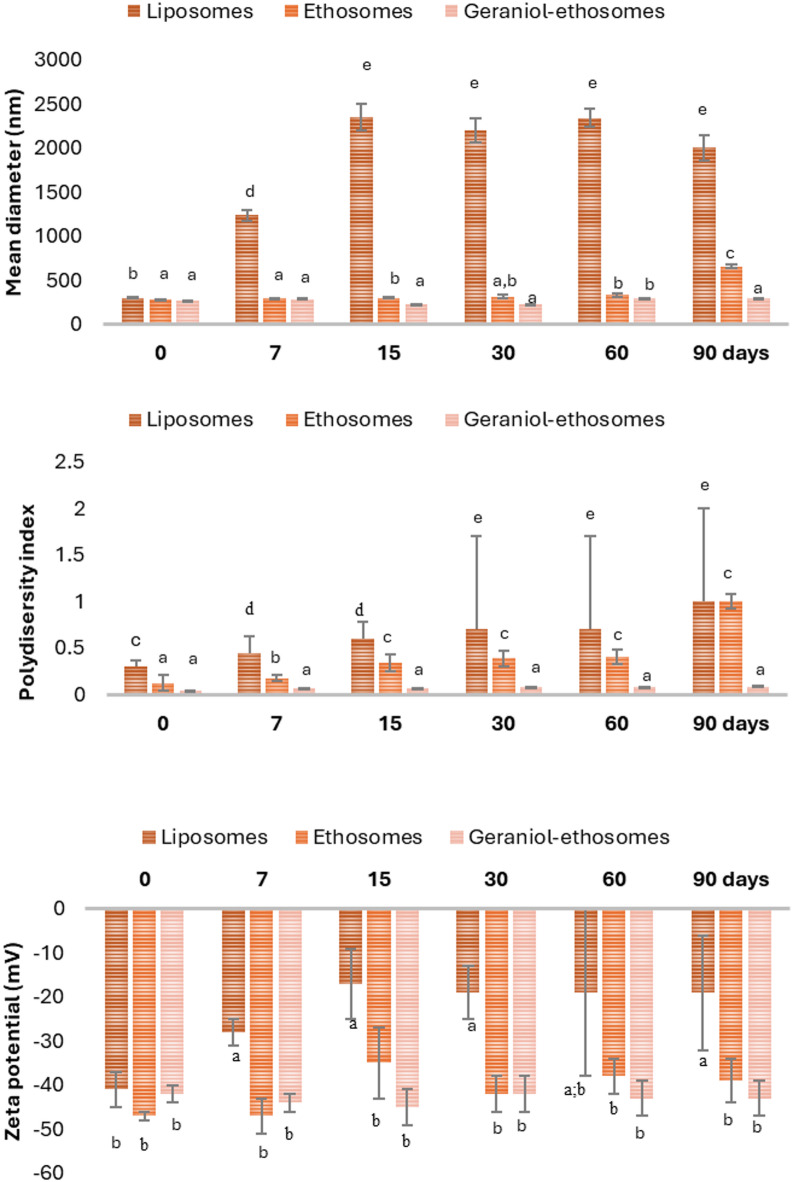 Figure 1
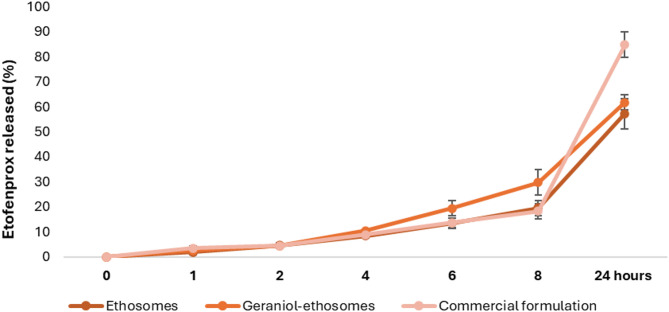 Figure 2
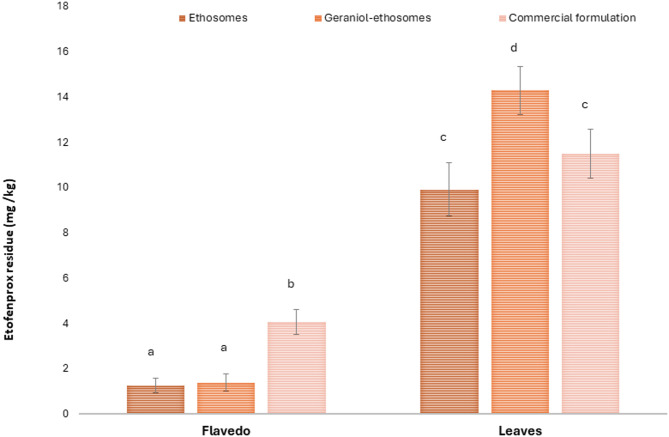 Figure 3
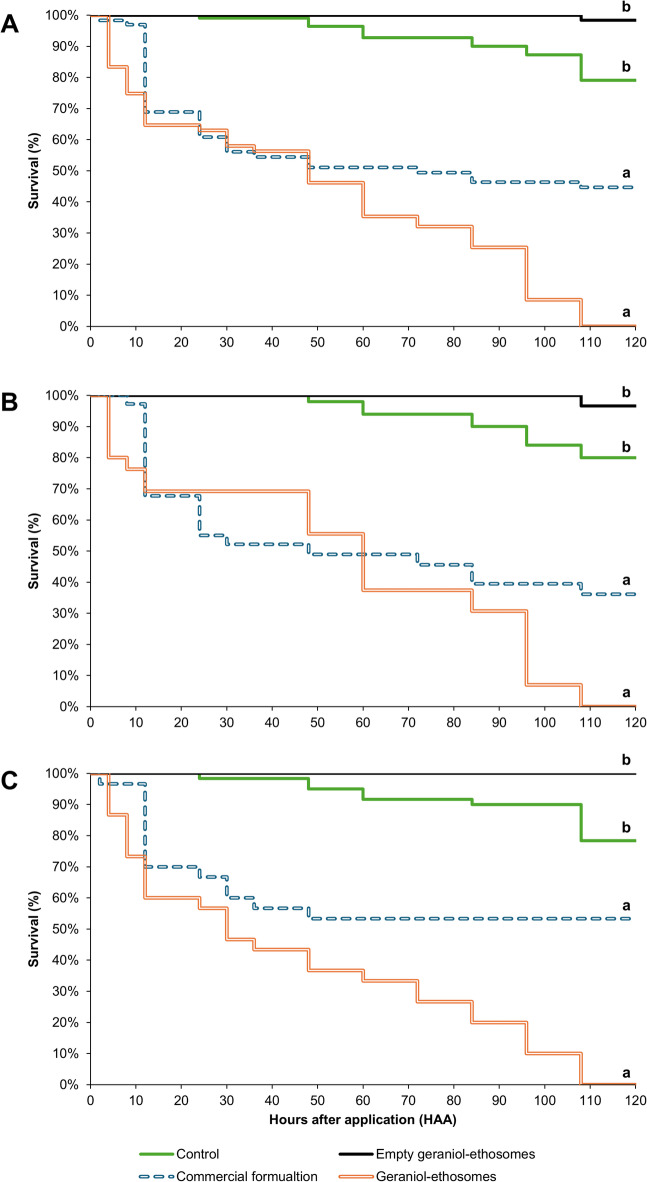 Figure 4
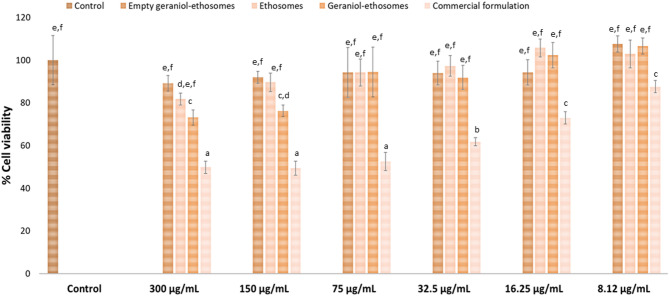 Figure 5
Peer Reviews
No public reviews on file for this paper yet. If you reviewed it on a platform where reviews are public (OpenReview, ICLR, NeurIPS, ICML), you can paste yours below so the community can read it here.
Videos
No videos yet. Explain this paper in a talk, walkthrough, or lecture? Add one.
Taxonomy
TopicsPesticide and Herbicide Environmental Studies · Plant Surface Properties and Treatments · Insect and Pesticide Research