Trans-kingdom conservation of mechanism between bacterial actifensin and eukaryotic defensins
Ivan Sugrue, Carolin Ade, Paula M. O’Connor, Jan-Martin Daniel, Paolo Innocenti, Nico Kirsch, Nathaniel I. Martin, Günther Weindl, Colin Hill, Tanja Schneider, R. Paul Ross

TL;DR
This study shows that a bacterial peptide, actifensin, shares similarities with eukaryotic defensins and could be a promising therapy against drug-resistant bacteria.
Contribution
The study reveals a conserved trans-kingdom mechanism between bacterial actifensin and eukaryotic defensins.
Findings
Actifensin inhibits peptidoglycan synthesis by binding lipid II and lipid I.
Actifensin does not cause membrane disruption or toxicity in human cells.
Actifensin belongs to a conserved trans-kingdom defensin subfamily with a GXGCP motif.
Abstract
Antimicrobial peptides are defense molecules found across all domains of life holding promise for developing therapies against drug-resistant pathogens. Actifensin, from Actinomyces ruminicola DPC7226, exhibits potent activity against gram-positive bacteria and shares structural similarities with eukaryotic defensins. This study characterized actifensin’s mechanism of action and therapeutic potential. The findings revealed that actifensin inhibits peptidoglycan synthesis by binding lipid II (Kd = 30 ± 20 nM). Unlike defensins, it also binds lipid I (Kd = 24 ± 27 nM) without significant difference, suggesting the N-acetyl glucosamine moiety of lipid II is not required for complexation. Membrane disruption was not observed with DiSC3(5) fluorescence, or synthetic unilamellar liposomes, indicating indirect cell death via cell wall weakening, visualised by phase contrast microscopy.…
Genes, proteins, chemicals, diseases, species, mutations and cell lines named across the full text — each resolved to its canonical identifier and authoritative record.
Click any figure to enlarge with its caption.
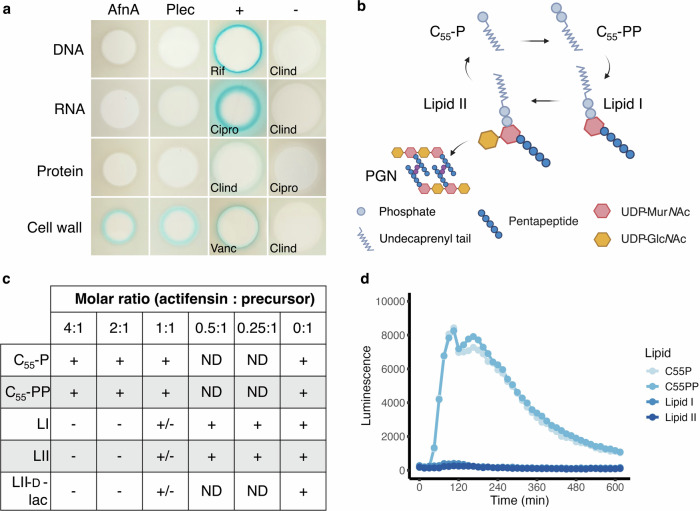 Figure 1
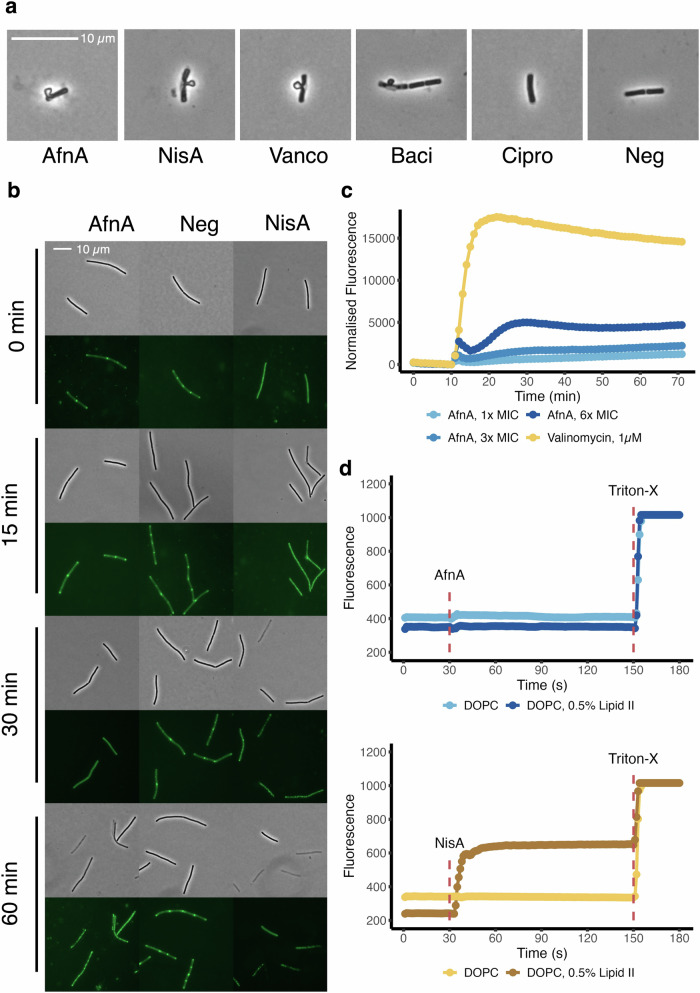 Figure 2
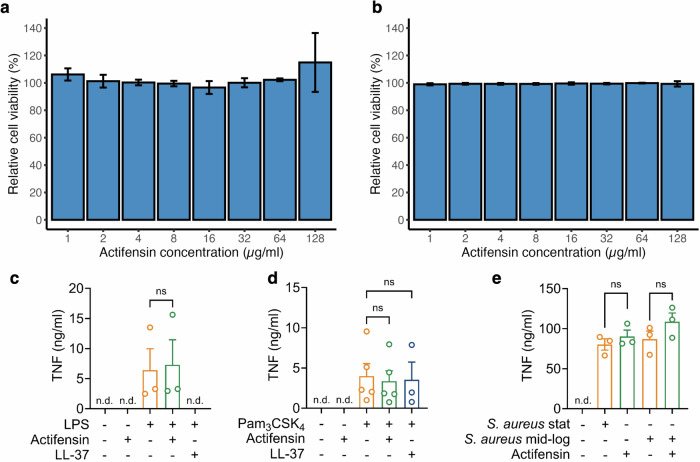 Figure 3
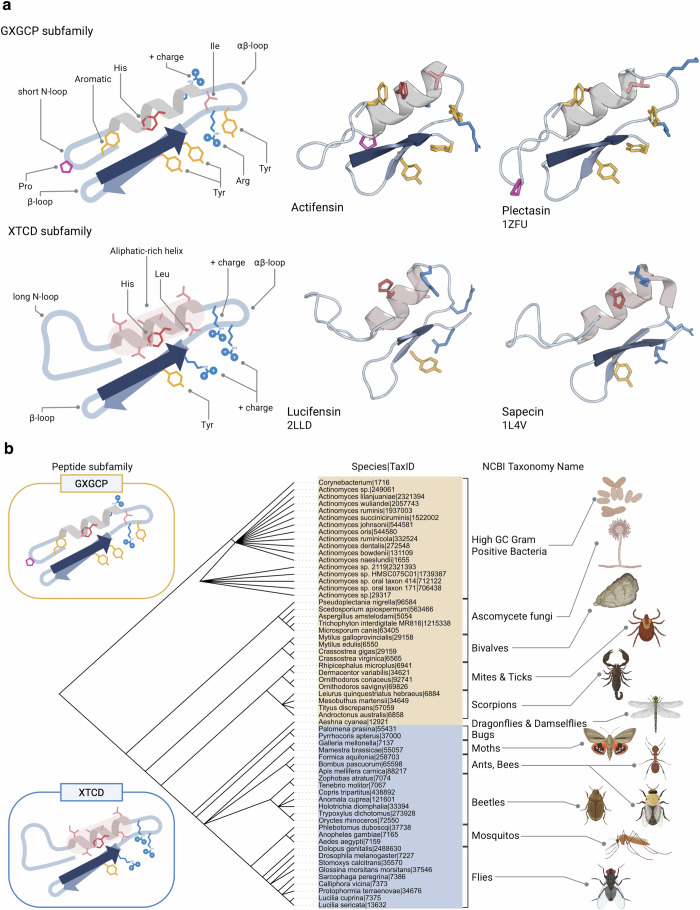 Figure 4
Peer Reviews
No public reviews on file for this paper yet. If you reviewed it on a platform where reviews are public (OpenReview, ICLR, NeurIPS, ICML), you can paste yours below so the community can read it here.
Videos
No videos yet. Explain this paper in a talk, walkthrough, or lecture? Add one.
Taxonomy
TopicsAntimicrobial Peptides and Activities · Biochemical and Structural Characterization · Invertebrate Immune Response Mechanisms