Nomogram for spontaneous reduction in pediatric intussusception: a retrospective study
Guangyu Wang, Zhongce Li, Guangqi Duan, Bangzhi Sui, Zhiyuan Jin, Zhenjie Chu, Rui Tang, Xiao Wang, Honglong Ma, Shiqin Qi, Jie Liu

TL;DR
This study created a reliable tool to predict if a child's intussusception will resolve on its own, helping doctors decide on treatment.
Contribution
A novel nomogram was developed using clinical data and statistical modeling to predict spontaneous reduction in pediatric intussusception.
Findings
The nomogram achieved high accuracy with an AUC of 0.922 in training and 0.932 in validation cohorts.
Older age and short-segment intussusception were significantly associated with higher spontaneous reduction likelihood.
Calibration and decision curve analyses confirmed the nomogram's clinical utility and net benefit.
Abstract
This study aimed to develop a nomogram to predict the probability of spontaneous reduction of intussusception (SROI) in pediatric patients. Clinical data of children diagnosed with intussusception and admitted to two hospitals in China from May 2023 to December 2024 were retrospectively analyzed. The eligible patients were randomly divided into the training and validation cohorts in a 7:3 ratio. The least absolute shrinkage and selection operator (LASSO) and multivariable logistic regression analyses were employed to identify essential variables for the development of the nomogram. The nomogram's performance was evaluated using receiver operating characteristic (ROC) curves, calibration curves, and decision curve analysis (DCA). A total of 290 cases were included, of whom 114 patients underwent spontaneous reduction. The study identified six predictors of SROI: age, presence of bloody…
Genes, proteins, chemicals, diseases, species, mutations and cell lines named across the full text — each resolved to its canonical identifier and authoritative record.
Click any figure to enlarge with its caption.
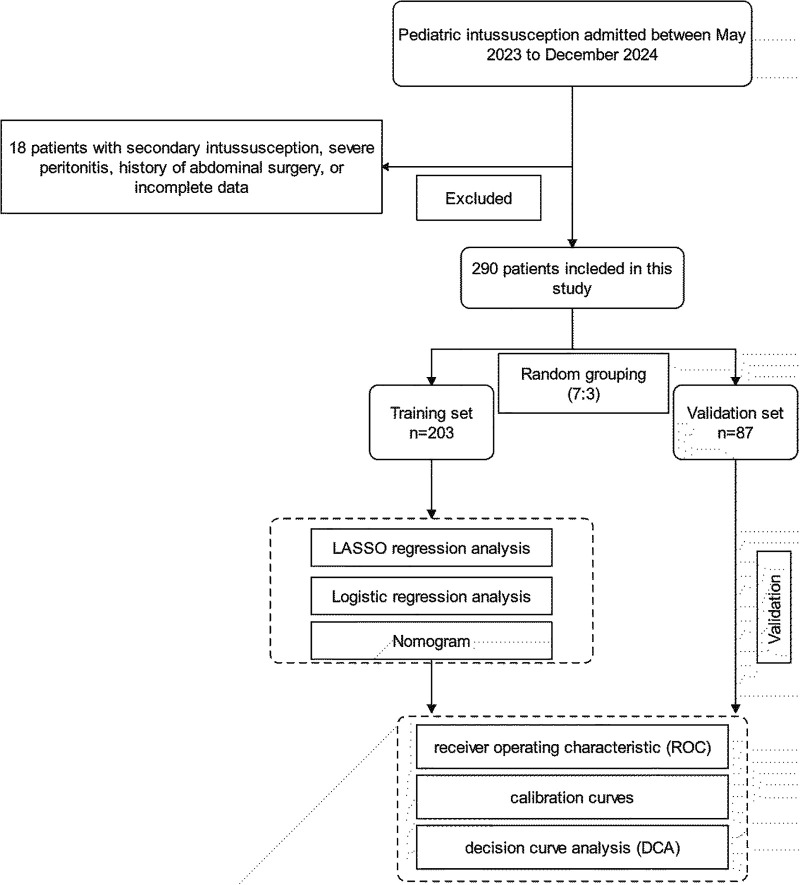 Figure 1
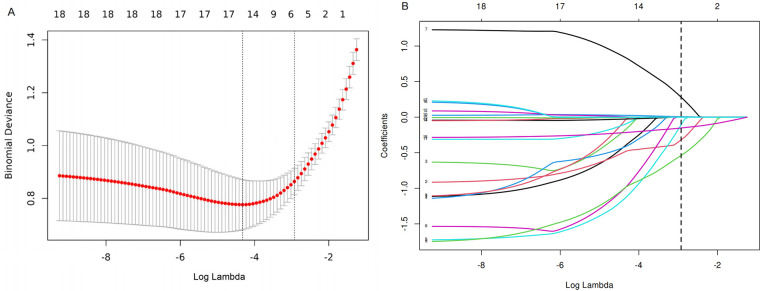 Figure 2
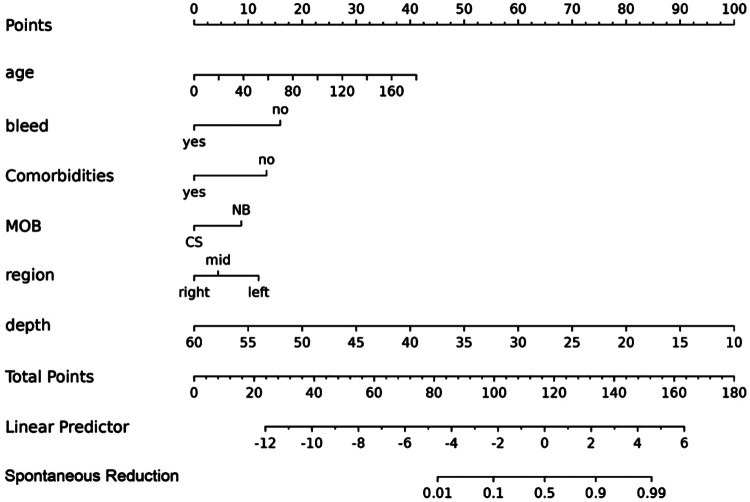 Figure 3
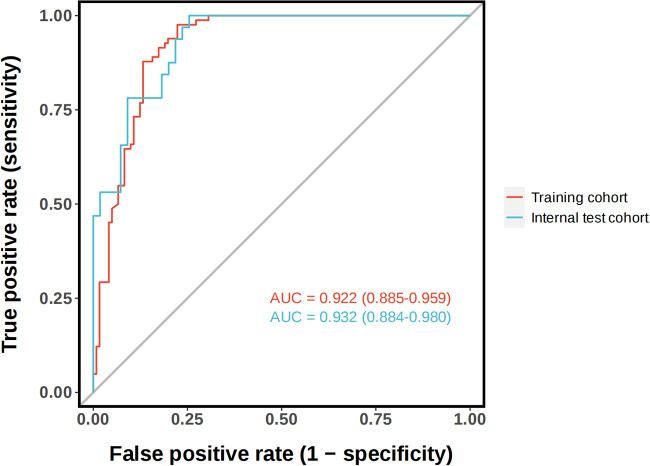 Figure 4
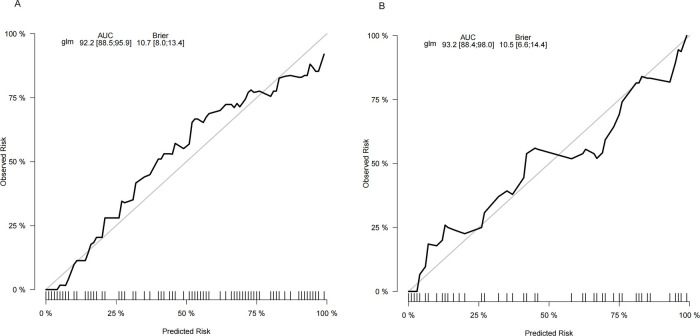 Figure 5
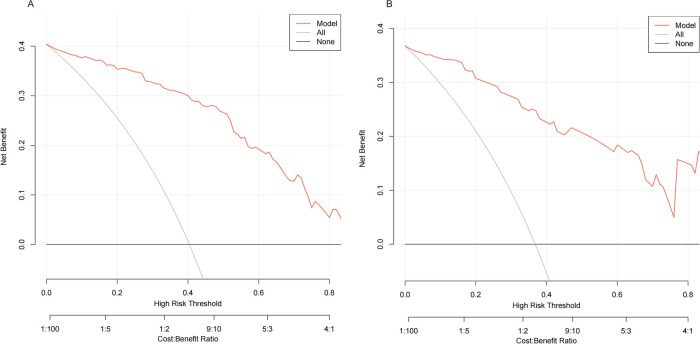 Figure 6
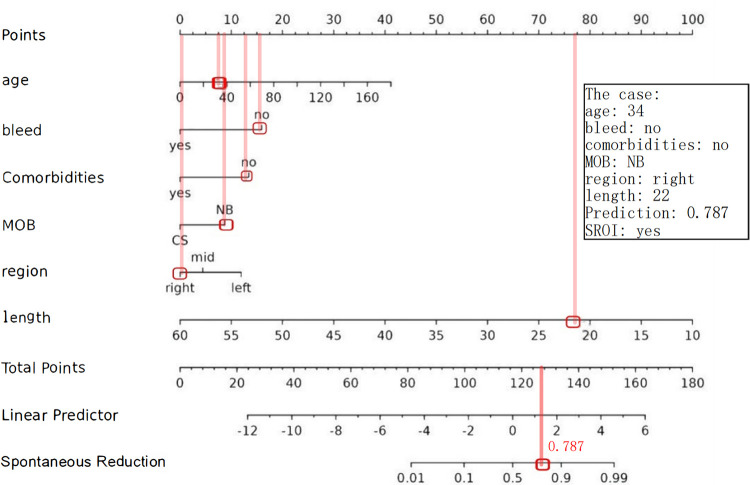 Figure 7
Peer Reviews
No public reviews on file for this paper yet. If you reviewed it on a platform where reviews are public (OpenReview, ICLR, NeurIPS, ICML), you can paste yours below so the community can read it here.
Videos
No videos yet. Explain this paper in a talk, walkthrough, or lecture? Add one.
Taxonomy
TopicsGastrointestinal disorders and treatments · Hernia repair and management