Policy agendas of the American state legislatures
Ethan Dee, Alex Garlick

TL;DR
This paper uses machine learning to categorize millions of state bills into policy areas, helping researchers study U.S. state legislatures.
Contribution
A transformer-based model is introduced to classify state bills into policy areas with high coverage and accuracy.
Findings
The model successfully coded 1.36 million bills into 28 policy areas since 2009.
The method outperforms traditional dictionary-based approaches in coverage and accuracy.
Abstract
State legislatures in the United States handle a number of important policy issues, but pose a challenge for researchers to observe because they are not organized by any central agency. We use a machine learning model based on the “transformer” architecture and contextual word-piece embeddings to code the universe of bills introduced in the states since 2009 (about 1.36 million bills) into 28 policy areas. Validation exercises show our method compares favorably with hand-coded estimates of bill policy areas while offering far greater coverage than legacy human-supervised “dictionary” methods. We explain how researchers can use these estimates to investigate sub-national governance in the United States.
Genes, proteins, chemicals, diseases, species, mutations and cell lines named across the full text — each resolved to its canonical identifier and authoritative record.
Click any figure to enlarge with its caption.
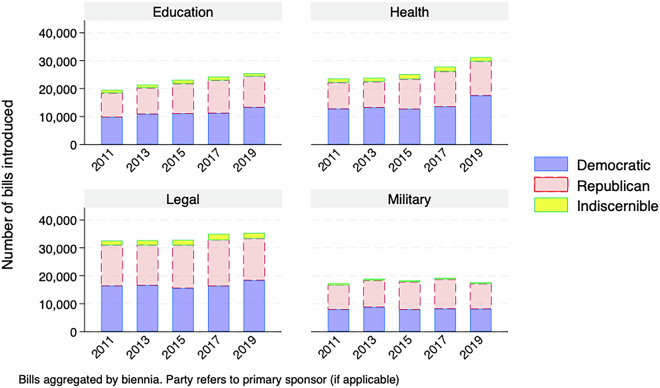 Figure 1
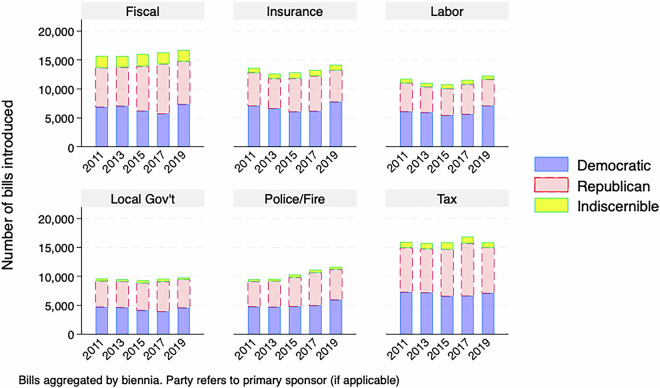 Figure 2
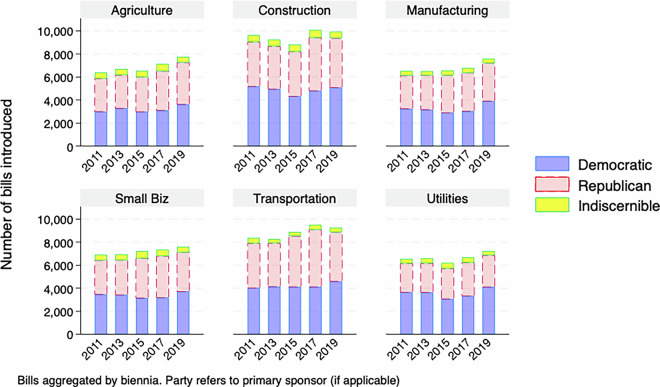 Figure 3
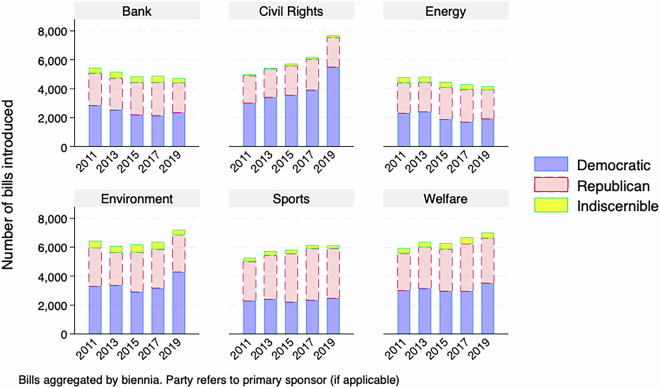 Figure 4
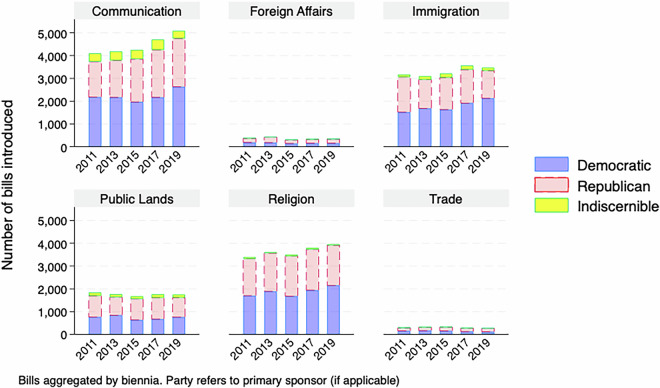 Figure 5
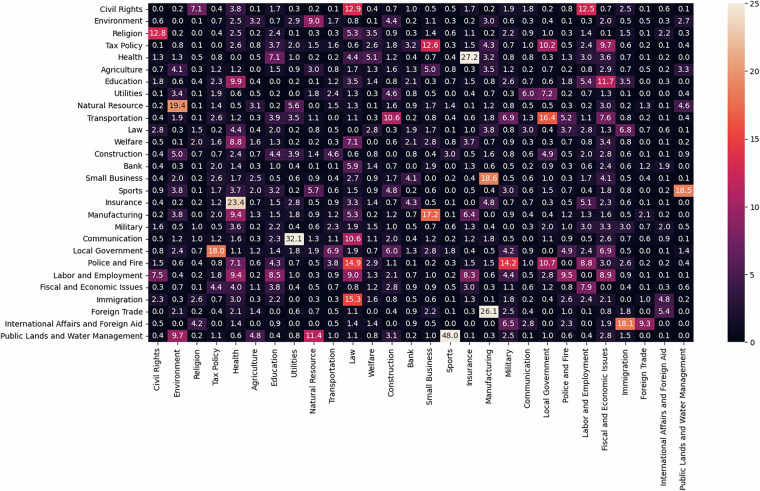 Figure 6
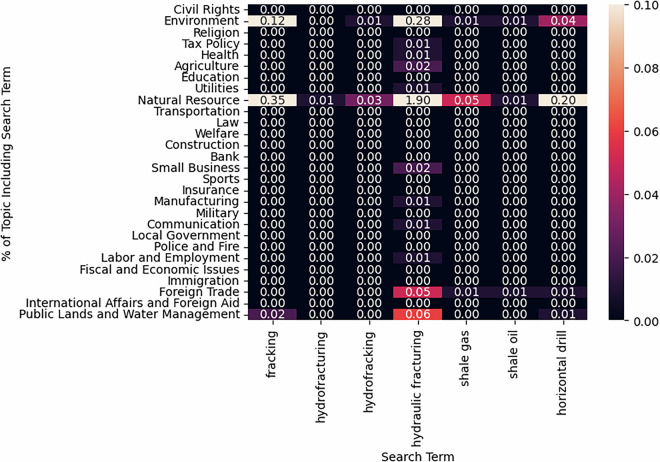 Figure 7
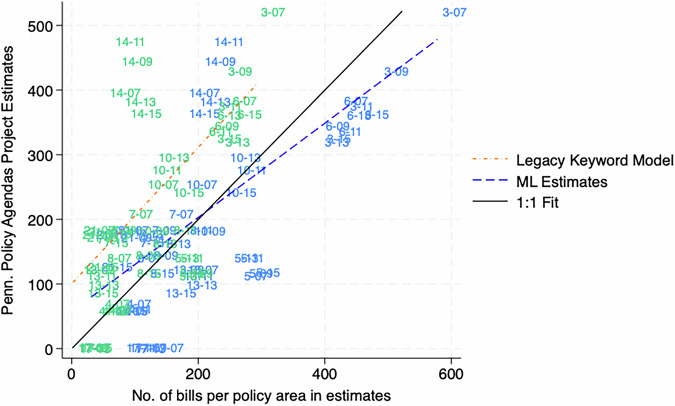 Figure 8
Peer Reviews
No public reviews on file for this paper yet. If you reviewed it on a platform where reviews are public (OpenReview, ICLR, NeurIPS, ICML), you can paste yours below so the community can read it here.
Videos
No videos yet. Explain this paper in a talk, walkthrough, or lecture? Add one.
Taxonomy
TopicsElectoral Systems and Political Participation · Computational and Text Analysis Methods · Judicial and Constitutional Studies