Long-term prescribed drug use in stage I–III rectal cancer patients in Sweden, with a focus on bowel-regulating drugs after surgical and oncological treatment
Sol Erika Boman, Stina Fuentes, Caroline Nordenvall, Anna Martling, Lingjing Chen, Ingrid Glimelius, Martin Neovius, Karin E. Smedby, Sandra Eloranta

TL;DR
This study found that rectal cancer survivors in Sweden use more bowel-regulating drugs long-term compared to the general population, indicating ongoing gastrointestinal issues after treatment.
Contribution
The study provides new insights into long-term drug use patterns in rectal cancer survivors, focusing on bowel-related medications.
Findings
Rectal cancer patients had higher dispensing rates of drugs for constipation, diarrhea, and gastrointestinal disorders up to 10 years after surgery.
Hartmann’s procedure was linked to higher digestive drug use, but this was mainly due to increased diabetic drug use.
Advanced cancer stage was associated with higher digestive drug dispensing, but not with chemotherapy or radiotherapy.
Abstract
To describe long-term prescribed drug use after rectal cancer treatment. We identified 12,871 rectal cancer patients without distant metastasis between 2005 and 2016 and 64,341 matched population comparators using CRCBaSe (a Swedish nationwide register linkage of colorectal cancer patients). Mean defined daily doses (DDDs) of drug dispensing during relapse-free follow-up were calculated by Anatomical Therapeutic Chemical drug categories. Incidence rate ratios (IRRs) and 95% confidence intervals (CIs) from negative binomial regression were used to compare drug dispensing between patients and comparators. The overall pattern of drug dispensing was similar among cancer survivors and comparators, although patients had higher mean DDDs of drugs regulating the digestive system. Excess dispensing of drugs for constipation (IRR, 3.35; 95% CI, 3.12–3.61), diarrhea (IRR, 6.43; 95% CI,…
Genes, proteins, chemicals, diseases, species, mutations and cell lines named across the full text — each resolved to its canonical identifier and authoritative record.
Click any figure to enlarge with its caption.
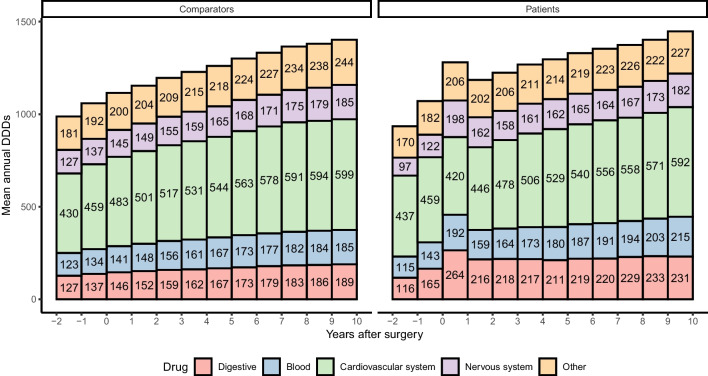 Figure 1
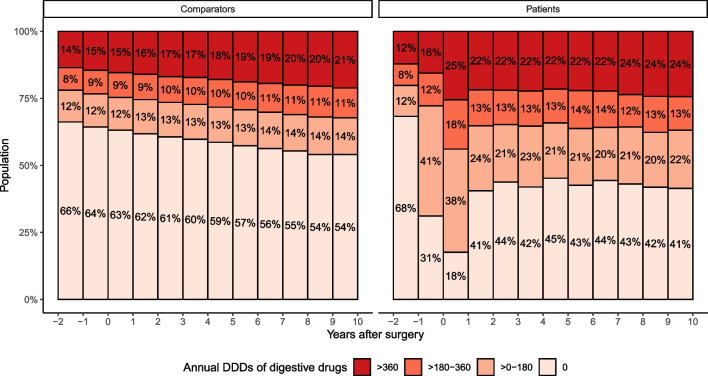 Figure 2
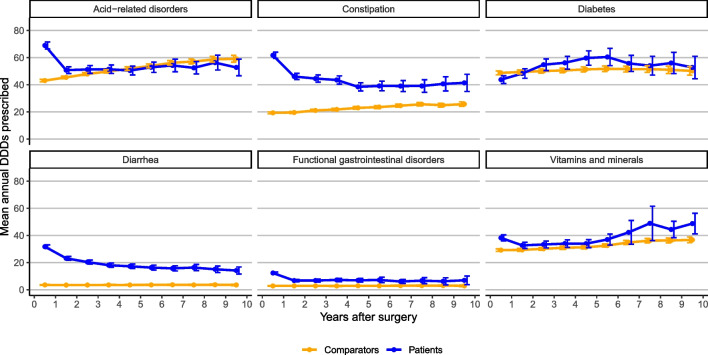 Figure 3
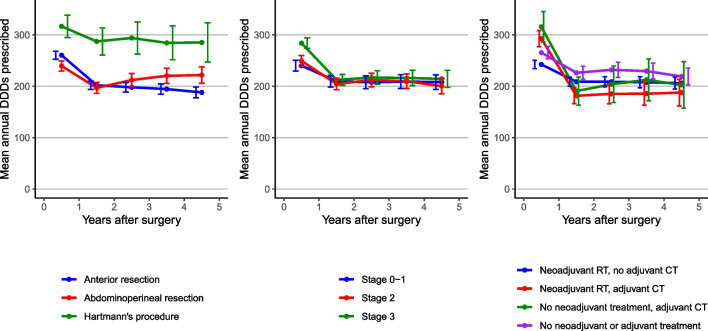 Figure 4
Peer Reviews
No public reviews on file for this paper yet. If you reviewed it on a platform where reviews are public (OpenReview, ICLR, NeurIPS, ICML), you can paste yours below so the community can read it here.
Videos
No videos yet. Explain this paper in a talk, walkthrough, or lecture? Add one.
Taxonomy
TopicsGastric Cancer Management and Outcomes · Economic and Financial Impacts of Cancer · Neutropenia and Cancer Infections