Anatomical distribution of hemorrhoidal piles in advanced disease: clinical insights and correlations
İ. Osmanov, E. Ergüder, J. Ahmadov, C. Ersak, S. Leventoğlu, B. B. Menteş

TL;DR
This study finds that hemorrhoidal piles are most commonly located in the left lateral quadrant and that their distribution changes with disease recurrence.
Contribution
The study identifies a predictable anatomical pattern of hemorrhoidal piles and links symptom duration to pile number.
Findings
Left lateral quadrant is the most common location for the largest hemorrhoidal pile.
Prolonged symptom duration correlates with an increased number of piles.
Left lateral predominance is more common in primary cases than in recurrent cases.
Abstract
A precise evaluation of the positional distribution of hemorrhoidal piles has not been distinctly conducted. We hypothesized that the distribution of hemorrhoidal piles follows a predictable anatomical pattern influenced by disease duration and recurrence. Our retrospective study analyzed the demographic data, surgical records, operative photographs, previous treatments, and associated colorectal symptoms of patients who underwent invasive procedures for advanced hemorrhoidal disease (2020–2024). Of the 171 patients (123 male; 71.9%; median age 41 ± 12.04 years, range 18–88), 35 had prior interventions (recurrent cases). The largest pile was most commonly in the left lateral quadrant (40.14%), followed by right posterior (31.97%), right anterior (23.47%), and atypical locations (4.42%). Left lateral predominance was significantly higher in primary cases than in recurrent cases (p =…
Genes, proteins, chemicals, diseases, species, mutations and cell lines named across the full text — each resolved to its canonical identifier and authoritative record.
Click any figure to enlarge with its caption.
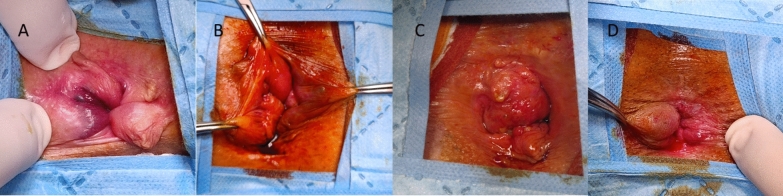 Figure 1
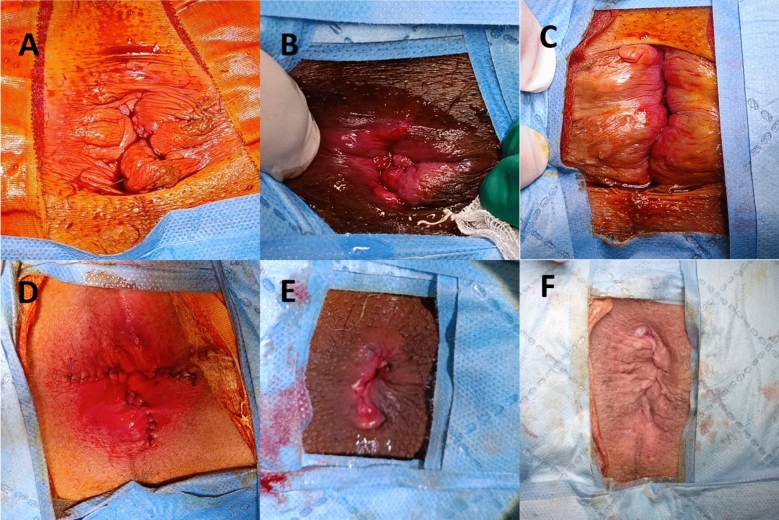 Figure 2
Peer Reviews
No public reviews on file for this paper yet. If you reviewed it on a platform where reviews are public (OpenReview, ICLR, NeurIPS, ICML), you can paste yours below so the community can read it here.
Videos
No videos yet. Explain this paper in a talk, walkthrough, or lecture? Add one.
Taxonomy
TopicsAnorectal Disease Treatments and Outcomes · Pelvic floor disorders treatments · Diverticular Disease and Complications